A Guide to the Best Construction Site Heaters

Construction sites are notoriously cold places, especially in the winter months. That’s why it’s so important to have a reliable heater on hand to keep your workers comfortable and productive. In this guide, we’ll look at some of the best construction site heaters on the market today. We’ll also provide some tips on how to choose the right heater for your needs and budget.

How to Choose a Construction Site Heater

When choosing a construction heater, there are several factors to consider.

  1. The first is the size of the space you need to heat. Smaller heaters are best for smaller spaces, while larger heaters can heat larger areas more effectively.
  2. The second factor to consider is the type of fuel you want to use. Propane and kerosene are common choices, but natural gas and electricity are also options.
  3. The third factor is the climate in your area. If you live in an area with extreme cold weather, you’ll need a heater that can handle those conditions.
  4. Finally, consider your budget. Heaters can range in price from a few hundred dollars to several thousand, so it’s important to find one that fits your needs and budget. With these factors in mind, you can narrow your selection.

Propane vs Electric Construction Heaters – Pros and Cons

Two of the most popular types of construction heaters are propane heaters and electric heaters. Each have their own advantages and disadvantages, so which one is best for your needs?

One advantage of propane construction heaters is they’re very portable. They run on portable propane tanks, so you can easily move them around the worksite as needed. Propane construction heaters also tend to be less expensive than electric models. However, they’re not as efficient as electric heaters, so they may not be the best choice if you’re looking to save money on your energy bill.

Electric construction heaters provide many benefits for both workers and employers. They are an efficient way to provide supplemental heat in large spaces, and can be used to target smaller, specific areas. Electric heaters are also relatively safe, as there is no risk of fire or fumes. Additionally, electric heaters are easy to set up and require little maintenance. As a result, they are ideal for construction sites where space is limited and safety is a concern.

Types of Electric Construction Heaters

There are a few types of construction heater available on the market, each with its own benefits. For example, an infrared heater is ideal for providing targeted heat to a specific area. This makes them perfect for use in construction sites where workers need to thaw pipes or dry out wet concrete. Infrared heaters also tend to be energy-efficient, making them a cost-effective option for construction sites.

forced-air heater is another type of electric construction heater. These heaters work by moving heated air throughout the space, and can be used to quickly and uniformly warm large areas. Forced-air heaters are frequently used in garages and workshops, since they can provide consistent warmth even in drafty regions.

Finally, radiant heaters are a good choice for construction sites where workers need to keep their hands and feet warm. Radiant heaters emit infrared waves that help raise the temperature of objects in their vicinity, making them perfect for outdoor construction sites.

Fostoria Electric Portable Salamander Construction Heaters

  • When working on a construction site, it’s important to have a reliable heater that can keep you and your crew warm. The best construction heaters are durable, easy to set up, and come with various features that make them perfect for any job site. Fostoria electric construction heaters come in various sizes and power levels, from 34,130 BTU to 102,390 BTU. Portable and easy to set up, these heaters are perfect for warming up a small space or providing supplemental heat for a larger area. With multiple heat settings and a built-in fan, they’re also great for drying out wet gear or thawing frozen pipes. Best of all, Fostoria heaters are made in the USA.

Don’t Let Cold Weather Slow Down Your Progress

Nothing stops progress on a jobsite faster than frozen hands and feet. It’s hard to concentrate on the task at hand when you’re physically uncomfortable. Shop our large inventory of construction heaters for both supply and rent to keep your jobsite moving. Our representatives are ready to help you heat all your winter jobs. Request a quote or call us at 1-844-671-2956 to learn more about our complete selection of construction heaters.

Negative Air Machine vs. Air Scrubber: What’s the Difference?

Managing dust and dangerous particulate matter on the job site is an important part of demolition safety. One of the most important pieces of equipment for demolition safety is the air filter. Air filters come in two main varieties: Negative Air Machines (NAMs) and air scrubbers. While both are effective at removing contaminants from the air, they work in different ways. It’s important to understand the difference between these two types of filters in order to choose the right one for your project.

What is a Negative Air Machine (NAM)?

Negative air machines, also known as construction air filters, are devices that work to improve indoor air quality. These machines are often used during construction or renovation projects, as they can help to remove airborne contaminants such as dust, pollen, and mold spores.

How Does a Negative Air Machine Work?

Negative air machines are an essential tool for any commercial contractor. These machines work by using a powerful fan to draw air out of the work area, and discharging it to the exterior of the building, creating negative pressure. This helps to prevent airborne particles from spreading throughout the space and contaminating the work site.

Negative air machines are often used in conjunction with other air filtration systems, such as HEPA filters, to create a safe and clean working environment. When used properly, negative air machines can effectively remove harmful contaminants from the air, protecting both workers and the general public.

What are the Benefits of Using a Negative Air Machine in Construction Projects?

Negative Air Machines have many advantages for those in the contracting business as well as homeowners.

  • One key advantage is that a NAM creates negative pressure inside the contained area. This lowers the chances of contaminated air escaping and keeps mold and other airborne contaminants sequestered.
  • For contractors, Negative Air Machines can help to improve job site safety and reduce downtime by reducing the amount of dust and other airborne contaminants.
  • Negative Air Machines can also help to improve indoor air quality in homes and offices, making them more comfortable for occupants.
  • For homeowners, NAMs can help to reduce the amount of dust and other allergens in the home, making it easier to breathe for those with allergies or asthma.
  • Negative Air Machines are also effective at reducing odors from cooking, smoking, or pets.

What are the Differences Between Negative Air Machines and Air Scrubbers?

Negative air machines and air scrubbers are both types of construction air filters. Negative air machines work by using a powerful fan to draw in contaminated air, pulling it through a series of filters. The contaminated air is then discharged out of the space to the exterior or to a different room. Air scrubbers, on the other hand, work by recirculating the room’s air through a series of filters. This filtered air is then discharged back into the room.

Both Negative air machines and air scrubbers are effective at reducing airborne contaminants, but Negative air machines are more powerful and can achieve higher levels of filtration since the bad air is removed completely from the space.

When should you use a Negative Air Machine instead of an air scrubber?

Negative air machines are used to cleanse air in a variety of locations and applications, including national disasters, construction sites, mold remediation, painting, grinding and welding shops. They may also be utilized to set negative or positive pressure Isolation rooms, which are useful for enclosing airborne pollutants.

Negative air machines are typically used in commercial applications such as

  • Medical facilities – Negative air pressure machines take advantage of the fact that air always tries to move from areas with higher pressure to those with lower pressure, in order to equalize the two. By directing unfiltered air towards HEPA filtration units instead of letting it mix with filtered air in patient rooms, these units make it easier to control infection and contain dust.
  • Construction sites – During mold cleanup or restoration, a Negative Air Machine is used to filter air and prevent contaminated air from entering other parts of the building. Negative Air Pressure assists in the collection and confinement of airborne contaminants like dust, smoke, gases, fungus, and mold.
  • Large warehouses and food plants where air quality testing is required

How do You Choose the Right Negative Air Machine for Your Project?

First you need to know the total volume of air (cubic feet) to be filtered. To get this information multiply the width of the room times the length of the room times the height. Multiply this number by the recommended number of air changes per hour then divide by 60. This will tell you the size of the machine(s) you need to properly filter the air in that room.

For instance, if you are working in a room that is 12′ x 20′ x 8′ high, you would have 1920 cubic feet of air. If the room required 6 air changes per hour, you would multiply that times 6 giving you 11,520. Divide by 60 to give you the necessary CFM of your NAM. That number is 192. Should your room need 10 air changes per hour, the CFM requirement for your NAM would be 320.

Pro Tool & Supply carries Negative Air Machines as well as other air quality equipment for sale or rental. Shop online or call 1-866-405-2985 to speak with a Pro Tool & Supply representative for more information.

Air Movers Increase Productivity and Reduce Moisture Levels on Job Sites

In the construction industry, where busy job sites are filled with various equipment, it is crucial to provide a safe, efficient, and comfortable work environment for the workforce. The work environment has a significant impact on productivity, and one key element for optimal conditions is ensuring proper ventilation. That’s where air movers like ventilators, portable air conditioners, and construction fans play a crucial role in creating a better working environment.

An Overview of Air Movers and Their Role in Ventilation

Air movers are specialized equipment designed to propel air within a building or an enclosure. They are utilized to maintain good air quality and ventilation, particularly in places like construction sites, warehouses, and factories.

Three common types of air movers seen on construction sites are portable air conditioners, construction fans, and ventilators.

Portable Air Conditioners

Portable air conditioners are highly useful on construction sites for various reasons.

  • Personal Comfort: Portable AC units provide fast cooling relief for workers, especially those in construction trailers, tents, and temporary offices, making their environment more comfortable and less heat-intense, particularly during hot weather.
  • Improved Efficiency: The use of portable air conditioners can aid heat-intensive work processes like welding by creating a cooler work environment, potentially improving the efficiency of these processes.
  • Faster Drying Times for Materials: Portable air conditioners accelerate the drying process more effectively than fans or dehumidifiers. They speed up the setting and curing of construction materials such as drywall compound, grout, caulking, paints, and adhesives.

Construction Fans

Construction fans offer many benefits on a job site.

  • Improving Heat Safety: Construction fans create a continuous air movement that cools down the working environment. This reduces health and safety hazards related to heat, particularly for workers wearing protective clothing. Fans engineered for construction sites can make workers feel up to 10°F cooler, reducing the risk of heat-related illnesses and maintaining a focus for safer operations.
  • Enhanced Mobility for Customized Airflow: The mobility of construction fans allows them to be transported and positioned flexibly according to the needs of the site and its workers. This ensures that air circulation is optimized across different areas of the construction site, following workers as they move, and providing comfort and safety in various environments.
  • Improving Air Quality: Construction fans can significantly improve air quality on construction sites, where dust, dirt, and potentially harsh chemicals are often present. The fans work by turning over the air several times per hour, creating uniform air distribution and helping to dilute any harmful gasses dispersed in the air. This can lead to improved focus and health conditions for the workers.

Ventilators

Ventilators improve air quality on construction job sites, particularly in underground construction scenarios, by supplying fresh air and preventing dangerous or harmful accumulation of dusts, fumes, mists, vapors, or gasses.

  • Reducing Hazardous Exposure: Ventilators effectively reduce workers’ exposure to hazardous substances, particularly in confined spaces. They operate by forcing fresh air into the area while simultaneously extracting harmful air pollutants. This constant air exchange significantly minimizes the risk of inhaling harmful substances, thus boosting safety measures on the construction site.
  • Enhanced Productivity: By ensuring a continuous supply of fresh air, ventilators can improve the overall work environment. Workers are less likely to experience fatigue or discomfort from poor air quality, therefore enhancing productivity levels and the quality of work produced.
  • Versatility and Adaptability: Ventilators come in various types and sizes to cater to different construction needs. For example, axial fans are perfect for general air movement, while centrifugal fans are best for areas with dust or fumes. Such diversity allows for targeted solutions, addressing unique requirements of specific sites or tasks.

Improve Air Quality in Areas That Have Experienced Flooding

In the aftermath of flooding, air moving equipment like blowers and construction fans prove to be invaluable tools for construction workers. These devices aid in quickly and efficiently drying out waterlogged structures, preventing the growth of mold and mildew, which could pose serious health risks. Moreover, they expedite the drying of soaked materials, reducing project delays and allowing work to resume faster. The use of air movers in such scenarios not only ensures the health and safety of the workers but also significantly reduces downtime, contributing to project efficiency.

Air Moving Equipment from The Pro Group

Portable Construction Air Conditioners

The HSC-14P is a portable 1.2 Ton spot cooler by Airrex. It operates in temperatures ranging from 65°F to 113°F, using an eco-friendly refrigerant. With a cooling capacity of 13,600 BTU, it features cold air discharge nozzles, swivel casters, and a HEPA air filter. The unit comes with a 1-year warranty and offers optional accessories like a condensate pump.

Construction Fans (Blower Fans)

The TPI PB 36-D is a 36-inch direct drive portable blower fan. It operates on a 120V, single-phase power supply and draws 5.5A of current. The motor is a 1/3HP permanent split capacitor type and is permanently lubricated. It is a 2-speed model, unlike the larger 42″ model that is 1-speed.

The 36″ and 42″ models have the capability to swivel 360° in 12-1/2° increments and lock in place with a steel locking pin. It meets OSHA standards and comes with a 1-year limited warranty.

Velocity Ventilators

The VAF1500 A/B is your ideal workhorse for small confined spaces. Whether it’s manholes or sewers, these compact blowers ensure maximum airflow, creating a safe, comfortable, and controlled work environment. Rely on the VAF1500 A/B models to provide a continuous flow of fresh air for your construction, utility, or telephone crews. If you need more power, the VAF 3000 offers more than double the CFM rating in a compact size.

Improve Your Construction Site’s Air Quality Today with Pro Tool & Supply!

Pro Tool & Supply offers a wide range air moving equipment for sale or rent. Contact us today to explore our selection of ventilation solutions for your project.

SAIT Flap Discs: The Perfect Grinding Solution for Steel

Selecting the proper angle grinder attachment for your steel work is critical for obtaining the desired results. When it comes to selecting the best metalworking tool, flap discs are the first choice of most fabricators. A flap disc is a coated abrasive attachment for an angle grinder used to smooth and form metals. This equipment is extensively used in welding, machining, heavy-duty machinery, industrial maintenance, agriculture, and food manufacturing enterprises.

What are SAIT Flap Discs?

A United Abrasives SAIT flap disc is an attachment for an angle grinder, which consists of overlapping abrasive pads known as “flaps,” which are applied to a fiberglass or metal, or plastic plates to function as angle grinder attachments.

A flap disc is less expensive and works as a grinding wheel in various applications. Flap discs are more popular because of their quick stock removal, as well as the ability to grind, mix, and finish in one use.

They are versatile, lightweight, easy to use, and convenient surface-finishing tools. Standard flap discs last up to 25 times longer than aluminum oxide resin fiber discs when used to smooth welds after grinding wheel.

Unique Characteristics

SAIT Flap Discs are constructed of a long-lasting aluminum oxide grit ideal for steel grinding. The 4-1/2″ discs have a speed of 12,400 RPM, while the 5″ disc has a maximum speed of 13,300 RPM.

  • Combines coated and non-woven abrasives, which allows you to grind and finish with one product, reducing time and labor.
  • High-performance ceramic is available in 40 and 60 grits, which have an outstanding life expectancy.

How are SAIT Flap Discs Used?

Flap discs are used in various ways, including: 

  • Cut off and finish weld spatter.
  • Remove paint.
  • Rust removal is another popular application for flap discs.
  • Flap discs are also useful for removing flash from molds and castings

Flap Discs vs Grinding Wheels

In terms of function, a flap disc and a grinding wheel are similar in that both are used to shape metal. Apart from this resemblance, the major distinctions between a flap disc and a grinding wheel are why and when you should use each one.

Flap discs are useful for cutting metal at right angles. They have a flexible nature and are an excellent abrasive tool for shaping metals with fine cuts.

A grinding wheel is used for general material sharpening tasks, like sharpening shovels, axes, shears, lawn mower blades, and other hand cutting tools. You can also use a grinding wheel to clean and remove undesirable surface debris, but they are not the best option for finishing jobs.

Why Flap Discs are the Best Metalworking Tool

Flap discs, designed specifically for industrial applications, can cut considerably more material (with less workpiece gouging) than a grinding wheel. Flap discs are employed for various reasons, because they are small, lightweight, easy to handle and store, low downtime for product changes, low vibration, and make little noise.

Using a Flap Disc for Stainless Steel

Flap discs made of stainless steel should be labeled as such. They are generally more expensive than flap discs designed for mild steel, although there is a reason for it. One factor is that they have a low iron content. Also look for the statement “the flap discs are contaminant-free” or “made from 0.1% iron, sulfur, and chlorine.”

The grit employed on the flap disc will be powerful enough to process your stainless steel nicely, while not gouging the surface. An excellent blade for cutting stainless steel using an angle grinder is United Abrasives SAIT ENCORE 4-1/2 X 7/8.

For help finding the right grinders and SAIT flap disc solutions for your team, our skilled technicians are always on hand. Request a Quote or call us at 1-866-405-2985 to speak with a Pro Tool & Supply representative for more information on our stock of construction dehumidifiers, ventilators, portable construction air conditioners, and fans.

7 Tips to Prepare for a Busy Summer Construction Season

It’s going to be a busy 2022 construction season, now is the time to prep. This means having a full staff, inventory levels adjusted for increased workloads, and safety measures in place to protect the crew.

Safety is important in all seasons, but it’s especially critical on summer construction sites because of the dangers associated with heat and exhaustion. To complete tasks on time and within budget, you’ll need to look ahead and consider how to increase site safety while also reducing material and equipment costs during the busy season. Here are seven ideas to help you out.

1. Have A Construction Fan On Hand

Construction sites without air circulation might cause heat and air quality hazards, as well as unforeseen problems such as noise control and fire risks. Because employees are generally on construction sites for a brief period of time, a construction fan is particularly useful for generating continuous ventilation. Mobile fans may be used to help create safe, healthy, and productive working environments in any location.

Large-diameter overhead fans are an effective method of increasing air movement and energy efficiency in more long-term settings such as construction equipment and vehicle storage depots. Pro Tool carries both pedestal and portable construction fans from 24″ to 36″.

2. A Construction Site Air Conditioner Can Save the Day

Without the advantages that air conditioning provides on hot summer days, we’d still be living in the stone age. A portable air conditioner adds cooled air to construction sites, helping to balance the heat generated by equipment and human bodies. Pro Tool stocks a variety of construction site air conditioners with wheels so they may be readily relocated. We carry units from 13,200 to 21,000 BTUs (the higher the number, the more heat it removes from the room).

3. Ventilators and Dehumidifiers

Construction projects used to take 6-9 months, during which time the building materials would typically dry out via natural ventilation once the structure was completed. However, today’s construction work is much more efficient and faster. While construction fans and construction site air conditioners can help, dehumidification and ventilation are necessary to remove the extra water from the numerous building components before they can be utilized.

When it comes to construction crews, humidity is one of the most unbearable weather-related conditions. Workers will have trouble focusing and that will increase the opportunity for substandard work, or worse, accidents. Our job site ventilators and dehumidifiers can help increase the effectiveness of both material and personnel.

4. Increase Staffing

It’s difficult to find exceptional employees, so you need to be proactive and hire early. You’ll want a fully staffed team of competent and prepared individuals before starting new projects or tackling each item on your summer schedule. The key to having the greatest possible crew is to recruit early, giving your employees time to become trained and accustomed to the company culture before getting caught up in work. Workers with excellent job ethics and specialized abilities will be quickly hired, so keep that in mind when recruiting.

5. Get Ahead of Supply Chain Issues

We live in an age when everything is scarce, and construction, like every other industry, has seen a significant increase in new business making it harder to find the tools and materials you need. Also, prices have risen as a result of the increased demand and limited transportation infrastructure. This means you must be vigilant in purchasing the materials needed for success and have dependable suppliers like Pro Tool and Supply on your team to keep your jobs moving forward.

Make a point of double-checking your inventory for any items you’ll require when undertaking projects on a larger scale. After you’ve looked over what you already have, you may notice some items that need to be updated or sections of your inventory that need to be included. This is the ideal moment to make these purchases before they’re needed. Consider:

  • Buying fasteners in bulk
  • Taking advantage of any downturns in the lumber/steel markets.
  • Assign the responsibility of inventory readiness to a qualified individual in your company.

6. Make Sure Your Equipment is Up-to-Date

Another crucial task to complete before beginning summer projects is to ensure that your equipment is up to date and ready to use. That starts with a thorough examination of your current equipment to verify that everything is in good working order.

  • Install new saw blades on portable and permanent equipment.
  • Service all tools powered by an engine.
  • Check warranties and replace any tools that are too old to be dependable or consider renting them from Pro Tools.

7. Ensure the Safety of Your Team

When on construction or renovation sites, all employees should wear proper protective equipment (PPE) at all times. Workers in the line of traffic from automobiles, should wear high-visibility safety vests. The upper half of the body should be concealed by clothing that extends to the wrists. Shirts without sleeves, short pants, sweatpants, runners, sandals, and high-heeled or open-toed shoes are all examples of inappropriate attire. Other PPE may be required depending on the circumstances and possible dangers:

  • Back belts
  • Dust masks/face shields
  • Gloves
  • Hearing Protection
  • Hand-wash Stations

For help finding the right job safety and climate control solutions for your team, our skilled technicians are always on hand. Request a Quote or call us at 1-866-405-2985 to speak with a Pro Tool & Supply representative for more information on our stock of construction dehumidifiers, ventilators, portable construction air conditioners, and fans.

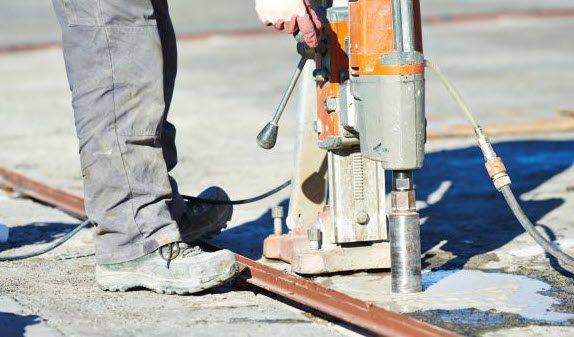
Concrete Core Drilling: Why Diamonds Are a Drill’s Best Friend

drilling concrete

No doubt you have your favorite tools and accessories for drilling concrete. But have you ever wondered about diamond core bits vs carbide core bits? Which is the best bit for concrete?

In this article, we’ll explain some key differences between these two bit types. But first let’s look at what to consider when drilling into concrete.

Special Considerations for Drilling Concrete

Before choosing between diamond core bits and carbide ones, it’s important to consider a few key factors associated with your drilling job.

Type of Concrete

There’s a difference between working with concrete blocks versus poured concrete. The concrete’s psi and aggregate mixture is also a factor that could have a significant impact on the life of your bits.

Cure State

Concrete that is still “wet” (i.e., not fully cured) is easier to drill into than fully cured concrete and will give you a smoother end result.

Hole Diameter Required

A hammer drill can drill up to 12 mm, while a rotary hammer can drill up to 100 mm diameter. Larger holes will require a non-impact core drill.

Wet or Dry Drilling

Wet drilling keeps the drill bit cooler and your job moving faster, but you’ll need to be sure there aren’t any power lines nearby.

Vertical versus Horizontal Drilling

Some larger drills may be difficult or impossible to use against a vertical surface.

Now let’s consider the question of diamond core bits vs carbide core bits. It turns out that one of them really is the best bit for concrete.

Carbide Core Bits for Concrete Drilling

Typically, carbide core bits are solid tungsten carbide, though some are metal with tips covered in a tungsten carbide cement. These bits are stronger than hardened steel, but not quite as durable as diamond bits. For example, carbide can’t drill through rebar or steel, so it may very well slow down your job if you find yourself needing to change bits.

Another factor to consider is that carbide core bits require coolant to prevent overheating. The powdered concrete dust will mix with the coolant and create a sludgy mess. If you’re working near a power source, this is risky.

Drilling Concrete with Diamond Core Bits

When it comes to drilling concrete with diamond core bits vs carbide core bits, it turns out that diamond is the best bit for the job. Although diamond core bits are more expensive than carbide, they tend to last much longer.

These bits have a thin layer of diamond dust that is extremely abrasive. Diamond dust grinds away at the concrete, resulting in a much smoother cut than you’ll get using carbide. And unlike carbide, they’ll cut through rebar and steel with ease.

Another benefit of diamond is that it’s better at getting rid of the heat that’s caused by the motion of the drill bit. This means you can work faster than you could with a carbide core bit.

Getting the Most Out of Your Diamond Core Bit

Clearly diamond is a highly durable material, but there are a few steps you can take to extend the already longer life of your bits:

  • After use, let the bit cool down, then wipe it clean.
  • Carry the bits in a case that holds them securely, minimizing any friction that could wear at the diamonds.
  • Store bits in a dry location.

There’s Nothing Like Diamond!

Diamond Products is a manufacturer with a strong reputation for making specialty concrete tools. Not only do they make core drills and bits, they also manufacture concrete cutting tools for cutting and sawing.

Our 35-year partnership ensures you have the best selection and prices for Diamond Products. Contact us for a quote.

How to Utilize Construction Dust Containment Solutions

Construction-related fields like remodeling, renovation, demolition, and restoration need to be concerned with construction dust containment. Since 2017, OSHA has required construction employers to limit their employees’ exposure to respiratory silica dust.

Respiratory silica dust is emitted into the air when construction workers drill into crystalline silica-containing materials (concrete, stone, and mortar). Workers breathe in the minute particle dust that has the potential to cause lung damage over time.

Along with dust containment solutions like ventilation and wet methods for cutting and sawing (as explained on the OSHA website), ZipWall and Poly America products help with dust protection. Let’s take a closer look at the dust protection products from these companies.

ZipWall’s Dust Containment Solutions

Zipwall Dust Solutions

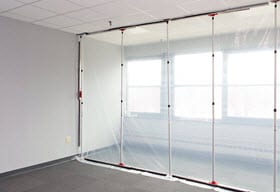
ZipWall manufactures several items that you can use to contain dust in a smaller area. The solution consists of plastic sheeting (or reusable panels) held in place with poles and rails.

The poles and rails brace sheeting tightly in place against the ceiling, floor, and walls, which limits dust exposure to other workers. Here’s a summary of the key pieces of ZipWall’s construction dust containment solutions:

ZipPoles

ZipPoles are braced every ten feet between the ceiling and floor to hold the sheeting in place. They are spring-loaded and extendible to achieve a very tight fit. Different pole lengths (10, 12, or 20 feet) accommodate different ceiling heights.

FoamRail Spans

Install spans between ZipPoles horizontally (at the ceiling and floor) and vertically (along walls). This helps to form a tapeless seal all around the dust containment barrier.

Spans are available in the following widths:

  • 2’3” to 4’ (expandable)
  • 3’ (wall mount kit)
  • 4’ (as a 2-pack)
  • 4’ 3” to 8’ (expandable)

Note: Use the FoamRail Spans with the ZipWall SideClamps or SideBridges along the sides to make a secure seal.

Heavy-Duty Zippers

To create a door in a dust barrier wall, attach the length of the two heavy-duty zippers, beginning at the floor. Keep the zippers parallel to each other and about 3 feet apart. Affix the zippers to the barrier material with the self-adhesive and use a special ZipWall cutting device to cut slits behind each zipper.

Magnetic Door Kit

Use the magnetic door kit to cover up an entryway that doesn’t have a door (or create an entry in a plastic barrier). It has a single opening for people to pass through, but it remains closed with sewn-in self-closing magnets.

Protect Equipment and Tools from Silica Dust

Dust containment solutions can help extend the life of your equipment and tools. Flying dust can settle on greased areas and cause damage over time.

Poly-America Sheeting for Construction Dust Containment

The Poly-America company manufacturers several different types of plastic sheeting that work well for dust containment:

  • 4ml 9 feet 4 inches x 100 feet (fire retardant)
  • 4ml 10 feet x 100 feet (fire retardant)
  • 4ml 20 feet x 100 feet
  • 6ml 20 by 100 feet

Any thickness of plastic sheeting will contain dust, and it may be tempting to buy something thinner at a lower cost. However, the thicker 4ml and 6ml will stand up better to the activity around a job site.

Get Quick Quotes on Dust Protection Products

Visit our website to learn more about dust containment products like dust collection systems. While you’re there, look at other types of sheeting and tarp that can make your jobs easier.

By containing dust in a smaller area, dust protection products can help keep workers safe and prevent damage to your equipment and tools. Another benefit is that you’ll have less cleanup and happier clients. Pro Tool would be glad to provide you with a quote for ZipWall or Poly-America sheeting!

Advantages of Working with the Construction Equipment Parts Department

No matter how well you care for your equipment and tools, they will sometimes break down. At that point, you have two major hurdles: either finding the right replacement construction equipment parts or getting the equipment fixed as soon as possible.

The Pro Group can help you clear those two hurdles with ease. Not only do we stock high-quality, durable tools and equipment, we pride ourselves on our expertise, support, and repairs.

Let’s look at the advantages of working with a construction equipment parts department.

Equipment Parts Inventory Is Constantly Growing

Established manufacturers are always producing, and new manufacturers occasionally enter the market. We stay aware of what’s new as well, and we note what parts will soon be needed for equipment that’s aging.

Our parts department carries only new, OEM (original equipment manufacturer) parts from the manufacturer. It’s one of the many ways we ensure that you receive high-quality, reliable parts.

Tip: Even though we don’t carry used equipment parts, we do sell used construction equipment from our rental fleet. It’s a cost-effective way to purchase well-maintained and refurbished equipment from leading brands.

Access to 700+ Manufacturers

With over forty years in the business, we have access to hundreds of manufacturers from across the world. We have construction equipment parts from the large manufacturers as well as the smaller ones.

Here’s a small sample of the brands whose parts we carry:

  • Black & Decker
  • Bobcat
  • Bosch
  • DeWalt
  • Milwaukee

Besides our variety of manufacturers, we have a wide variety of stock that range from small parts to heavy-duty equipment.

On-Site or In-House Construction Equipment Repair

To get equipment up and running as quickly as possible, Pro Tool and Supply provides 24/7 emergency breakdown service in which our mechanic visits your site to diagnose the problem. If all goes well, we can perform the repair right there.

If on-site repair isn’t possible, we’ll bring the equipment to one of our four locations for repair where we have several factory-trained and certified mechanics.

While your equipment is in the shop, it’s highly likely we’ll have what you need to rent from our rental fleet. We carry several categories of equipment, from hand-held tools to generators to heavy equipment.

Emphasis on Maximum Uptime and Fast Shipping

To get your equipment back to work quickly, we provide a fast shipping turnaround:

  • If the part you need is in stock, we’ll ship it within 1 business day.
  • If the part you need is not in stock, we can ship it in 3 – 4 business days.

Tips for Long-Lasting Construction Equipment

So much is riding on the reliability of your equipment and tools. Our parts department has several tips to help them last a long time:

  • Buy the best equipment your budget allows.
  • Replace only with OEM parts, not used equipment parts.
  • Inspect equipment daily.
  • Address strange noises or performance problems immediately.
  • Perform regular maintenance on equipment.
  • Store equipment away from dust and moisture when not in use.

Stay On Schedule with a Knowledgeable Parts Staff

Dealing with construction equipment repair can be frustrating. But if you have a knowledgeable parts supplier and repair shop a phone call away, you don’t have to dread breakdowns.

When equipment breaks, we can help you track down construction equipment parts, provide quotes, and make the necessary repairs. We can also help you purchase or rent new and used construction equipment and perform routine maintenance.

Contact us, then put us on your speed dial – just in case!

Construction Guide to Winter Safety Products

A slip-and-fall incident takes a split second, but its repercussions can be long-lasting. Slip-and-fall accidents increase in number with our Northeastern winter weather, but it doesn’t have to be that way for you as long as winter safety for construction workers and others is top of mind.

The best way to have peace of mind? Stock up on winter safety products and use them wisely and regularly.

This article focuses on how three types of products can help keep workers and visitors safe on winter construction job sites: industrial ice melts, snow tarps, and snow and ice removal equipment.

Industrial Ice Melts for Safer Outdoor Surfaces

Ice melt products are forgiving winter safety products. The reason is, they are effective even if you forget or are unable to lay them down before the precipitation arrives.

The most crucial feature of ice melt is the lowest outdoor temperature at which it is still effective. For example, Urea and Peladow melt snow and ice at 15 degrees and -25 degrees Fahrenheit, respectively.

Besides the temperature, you need to consider the areas that require ice melt. The corrosive elements of some ice melts can damage concrete and metal, and the product can also be harmful to bushes and other plants.

Other considerations when purchasing ice melt include the size of the areas you need to cover. You’ll need to calculate the square footage for places like:

  • Driveways
  • Entryways
  • Parking lots
  • Steps
  • Walkways

Finally, think about how you’ll apply the ice melt product. You can easily cover smaller areas by tossing the ice melt from a grain scoop. For large areas, consider a commercial-grade ice melt spreader.

Snow Tarps to Stay One Step Ahead of Winter

Using snow tarps is another way to outwit Old Man Winter. These tarps catch the snow as it’s falling, making it simple to haul away.

Unlike ice melt products, the heavy-duty, reinforced snow tarps don’t work unless you lay them before it snows. After the snow is over, slip the tarp’s outer loops onto a front-end loader or other heavy equipment. Then, lift the tarp away along with hundreds of pounds of snow.

It is important to choose a high-quality snow tarp that will last many years:

  • Weather-resistant
  • Mildew-resistant
  • Tear-resistant
  • Heat-sealed and reinforced edges
  • Heavy-duty lift straps

When it comes to fighting snow, ice, and cold, snow tarps are just the tip of the iceberg! You can also use other winter protection products like heating pads, reinforced sheeting, and curing blankets to keep concrete, equipment, and workers warm.

Clear Snow and Ice by Hand or by Machine

construction-winter-snow-removal

Despite our best efforts, it’s not always possible to outwit Old Man Winter. Sometimes you’ll need to remove snow by hand or machine with construction snow removal equipment and tools.

Skid-steer and wheel loaders are invaluable for removing the huge mess that storms leave behind if you usually have large construction job sites. Just make sure you have the appropriate snow shovel attachments.

For small parking lots and walkways, professional-grade snow blowers work the best. And for tight areas like entryways, a simple shovel gets the job done quickly and efficiently.

Improve Winter Safety for Construction Workers

With all the dangers that winter weather presents to you, your workers, and job site visitors, it’s essential to stock up on winter safety products. You’ll also appreciate how much faster the job goes when you don’t have to spend time removing snow and ice.

Pro Tool would be glad to help you choose what’s necessary as well as what’s nice to have for harsh winter weather. We have information on all of the items mentioned above, plus a lot more winter products to keep the snow, ice, and cold at bay.

Whether it’s industrial ice melt or construction snow removal equipment, the knowledge and products are at our fingertips! Contact us, and we’ll get back to you as soon as possible with quotes and answers to your questions!

The Importance of Thermalay Heated Blankets & Electric Heaters

The winter season brings us holiday gatherings with family and friends to compensate for the colder weather. But for those who have to work outside, especially in the northern climates, winter weather is hard.

Heated Blankets and Electric Heaters for a Safer Jobsite

When you work in locations where the temperatures are regularly below freezing, it’s rough on equipment and building materials. Here are just a few of the common problems caused by cold winter weather:

  • Workers are at risk of frostbite, trench foot, and hypothermia.
  • The frozen ground can cause wheeled equipment to skid.
  • Liquid material can separate or freeze solid.

Any of these problems can lead to downtime and missed deadlines. But with the right construction equipment, you can be prepared and avoid these issues.

Heated blankets and electric heaters can protect workers, equipment, and materials. With these two items on hand, you can keep the frigid temperatures from slowing down your construction or renovation work.

All About Thermalay Heated Blankets

Heated blankets aren’t just for mattresses! Construction heated blankets, like those made by Thermalay, have multiple uses on the jobsite:

  • Cure concrete:
    • Concrete needs warmer temperatures to cure properly.
    • Without proper curing, concrete can have quality problems, such as cracking.
  • Heat the ground:
    • Makes digging and trenching easier.
    • Prevents slipping, skidding, and falling.
    • Great to use before laying pavers or other stonework.
  • Maintain material above freezing temperature:
    • Prevents liquid material from separating or congealing.
    • Keeps shingles, gravel, and sand from freezing and sticking together.
 Tip: Don’t lose precious daylight time thawing out the ground, material, or equipment. Before leaving the job site at the end of the day, lay the heated blankets down overnight. 

How Thermalay Heated Blankets Are Constructed

Thermalay heated blankets are constructed with all four edges of the blanket sealed. This keeps the warmth in the blanket and repels moisture, snow, and ice.

The blankets have several layers comprised of:

  • Heated coil elements
  • Micro foam insulation
  • Waterproof reinforced PVC

What You Should Know About Construction Electric Heaters

An electric heater works by blowing air over a heated coil. The coil heats the air as it passes through it.

wide variety of construction electric heaters are available (such as forced air, infrared, and propane). However, electric heaters are popular on construction jobsites because they:

  • Are easily moved from one location to the next
  • Raise the temperature from 30 – 90 degrees (depending on the BTU rating)
  • Move warm air to different indoor areas with a building’s duct system

How to Choose an Electric Heater

When choosing a heater, you’ll want to consider:

  • The highest level of temperature you’ll need
  • The size of the areas you need to heat

In general, the higher the heater’s BTU rating, the higher it can raise the temperature. Before purchasing or renting a construction electric heater, make sure the proper electrical outlet is available for the heater.

The two most common style of electric heaters include the milkhouse and salamander.

Milkhouse-style heater:

  • Easy to carry
  • Good for heating small rooms

Salamander-style heater:

  • Better for large rooms
  • Has wheels for easy portability

Keep Workers, Equipment, and Material Toasty Warm

It takes a few extra steps to keep your workers, equipment, and material warm during the winter season, but it’s worth it. Besides being safer, your workers will be more comfortable. They also won’t have to deal with the frustration of ruined work materials or damaged equipment.

A smoothly running jobsite helps you build a good reputation. A business that is known for meeting deadlines on time and under budget will never be short of work!

Search For Products

Product has been added to your cart