The Pro Group Awarded Most Improved in Overall and Compact Sales by Wacker Neuson

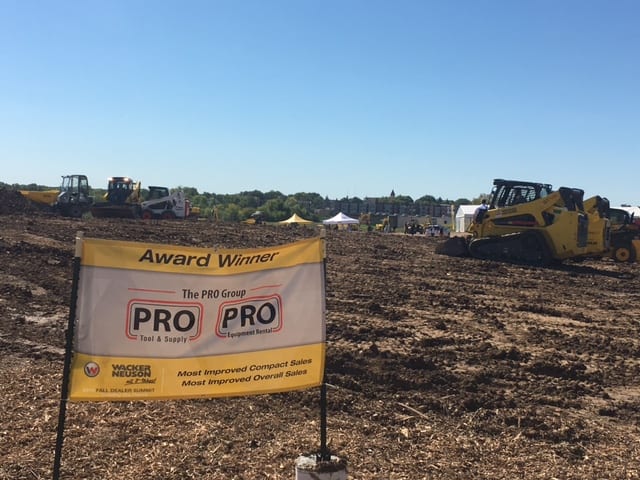
The Pro Group is proud and excited to announce that we have received the Most Improved in Compact Sales award and Most Improved in Overall Sales award by Wacker Neuson.

Wacker Neuson is a global organization that develops, produces and distributes compact equipment, worksite technology, concrete technology, and more. This family-owned company recognizes dealers who have performed outstandingly at representing the brand at their yearly dealer summit.

Over 100 contracted dealers from the US and Canada were in the running at this event, so we at The Pro Group are honored to receive such an award.  The criteria for both awards centered on the dealer that achieved the greatest percentage year-over-year growth. The pool consisted of over 100 U.S. contracted dealers, and was limited to those whose sales were in the top 50% of the group.

With achieving an increase of over 725% in compact equipment sales and over 350% increase in overall sales, we are proud to be a reliable supplier to contractors. We will continue to work diligently towards being a leading construction distributor to contractors within the New England area.

Learn more about other awards and certifications The Pro Group has required and discover why we can get your construction job done better, faster, and safer.

Download this PDF to learn more about this award.

Choosing Light Tower Rentals for Your Construction Project

Much construction and maintenance work must be conducted in less-than-ideal lighting conditions. Whether it’s road repair performed at night when traffic is lightest, new construction initiated before electrical infrastructures have been installed, emergency repairs following a natural disaster, or a myriad of other applications, temporary lighting can often be a life-saver.

But all light tower rentals are not created equal. Each is engineered with specific features that make them most beneficial in particular situations and applications.

The most prominent features to consider when contemplating a light tower rental are:

  1. The height of its mast
  2. The power of its lights

The combination of these two specifications determines the area of illumination and intensity of light needed within a certain space. The power source determines the length of time lighting will last before refueling or recharging is required. Additional power options, such as solar panels, extend use beyond the primary power source.

Trailer-mounted

When large outdoor areas and long time periods must be illuminated, reliability and coverage are key. Towable lights deliver the lighting power that is needed for concrete pours, parking lot paving, site prep, and other large-scale projects require. The best trailer-mounted light tower rentals are compact, with narrow bodies that allow for efficient towing and storage.

Wacker Neuson’s LTN series comes with a 30-foot adjustable tower with full 360-degree rotation, so operators can position lighting exactly where they need it. The tower, places lamp assemblies far above the work area to reduce glare, maximize coverage, and produce true, bright, uniform light. Ideal for isolated and rugged jobsites, the light towers’ plastic doors are dent proof and never rust. Wind and ungraded surfaces are no match; its four-point jack stands level out the most uneven terrain and provide stability in difficult conditions.

Portable Lighting Carts

Easy, one-person set-up, and ultra-compact design make portable lighting carts a strong choice when working in cramped quarters, true color and detail rendering is needed, or strong lighting must be moved often to different work areas.

Construction Electrical Products’ metal halide carts come with powerful 1000-watt elliptical lighting features. The elliptical design places lamps side by side, focusing light directly on the work area. Bulbs, rated for 10,000 hours and durable light heads are easy to install and remove from ballast, making for full portability and rapid deployment. Safety features include bright yellow powder coating and construction of tough 12-guage square steel tubing.

Portable Quartz Lighting

Durable and capable of withstanding the most brutal outdoor construction applications, quartz lighting can be the best light tower rental selection for working in wet weather. Waterproof housings and shatter-resistant lenses make them reliable and safe. Most quartz towers come standard with cord-wrap mechanisms and sturdy tripod bases to reduce the chance of tipping. In addition, top-quality quartz lighting towers incorporate all-metal components, with no plastic to break or crack.

The Construction Electrical Equipment quartz lights resist not only water, but salt and other corrosive materials. They are built of heavy wall-tube steel with fully adjustable telescoping masts. The light units themselves project a radiant spectrum that closely replicates sunlight, making them ideal for use in color matching or precision work is required.

Perform Longer with Light Tower Rentals

The Pro Group carries quality temporary lighting for any application for both supply and rent. Click here to browse our for purchase supply and our for rental supply. If you want more information on our inventory or pricing, or need further help selecting the right equipment for your job, request a quote or call us at 1-888-776-0007 to speak with one of our experts.
3 Things to Consider When Renting Concrete Floor Grinders

Whether they will be left bare or used as a substratum for tile, carpet, or linoleum, concrete floors must be properly prepared to ensure long life and optimal performance. A concrete floor grinder rental offers an efficient, economical way to level new floors, repair existing slabs, remove old coverings, and more.

Use this guide to select the proper concrete floor grinder rental in order to ensure success with your next project.

1. Head Count

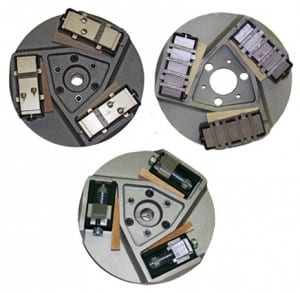
Floor grinders get the job done by scraping the concrete surface with rotating discs mounted onto the bottom of the equipment. The number of disks determines not only the area that can be ground with each pass of the machine, but also the best application for the machine.

  • One Head: With a small footprint, these grinders work best in corners, against walls, and in other tight spaces. However, their gear-driven rotary disc rotation gives them aggressive grinding action that can leave irregular scratch patterns, making them inapt for floor polishing.
  • Two Heads: The extra head gives more floor coverage, saving time. With the rotary machines’ weight concentrated on just two heads, there is plenty of pressure to effectively grind the surface and obliterate thick paint and adhesives.
  • Three Heads: Perhaps the best option for all-around performance, the three-head configuration distributes the machine’s weight providing greater balance, while still creating sufficient mass to ensure strong grinding. The additional head means large surfaces can be covered quickly. Three heads and the use of planetary action also makes these machines a better option for polishing concrete floors.
  • Four Heads: While still a strong option for grinding large surfaces in a short time, four-headed grinders exert even less pressure on each spinning head, adding to the machines’ effectiveness at polishing. Two heads spinning clockwise and two counterclockwise, negating excessive torque and the effort necessary for the operator to keep the grinder in line, cutting down on fatigue.

2. Power and Size

The wider a floor grinder’s working dimension – the amount of floor it can cover with each pass – the less time it should take to finish the job.

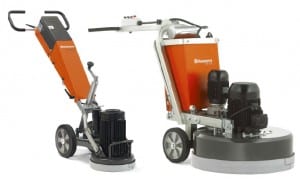
husqvarna concrete grinder rentals

The machine’s size to some extent is dictated by the number of heads. In turn, the size and grinding intensity determines how much power is required to run it. Grinding intensity takes into account the machine’s gross weight, the amount of contact between the grinding tools and the concrete, and the grit rating of the tools. Coarser grits and more surface contact increases resistance and requires more power to achieve results.

3. Safety and Health

Operating all equipment safely is the first order of business on any project. While concrete floor grinder rentals are not particularly dangerous, they can present health concerns if not operated properly:

  • Ventilation: Gas usually offers the most consistent and available power source for concrete floor grinders, but electricity or propane should be used in all indoor and poorly ventilated areas.
  • Dust Control: Users have two options for keeping irritating dust out of the air during grinding operations. Many rental grinders come with built-in vacuum capabilities, while others are capable of accepting separate vacuum units. Other grinders include a water tank. Wet grinding tamps down much of the dust as it is created. The wet dust is then vacuumed into the grinder, where it can be disposed of properly.
  • Personal Protection: Users should always wear respirators, sturdy shoes, and eye and ear protection when operating a floor grinder. Avoid loose clothing that can potentially get caught in the grinder disks.

Browse our Concrete Floor Grinder Rentals

Browse our selection of concrete floor grinder rentals which include models from Husqvarna and Edco. Still not sure which concrete floor grinder rental is right for you? Call The Pro Group at 1-888-776-0007 to speak with a representative who can help you select the concrete floor grinder rental that’s right for you. Rentals are available from one day to long-term.

Construction Safety Guide For Using Aerial Lifts

Many construction, industrial, and maintenance projects require tasks to be performed at heights that are difficult or impossible to reach. Aerial work, however, presents safety concerns.

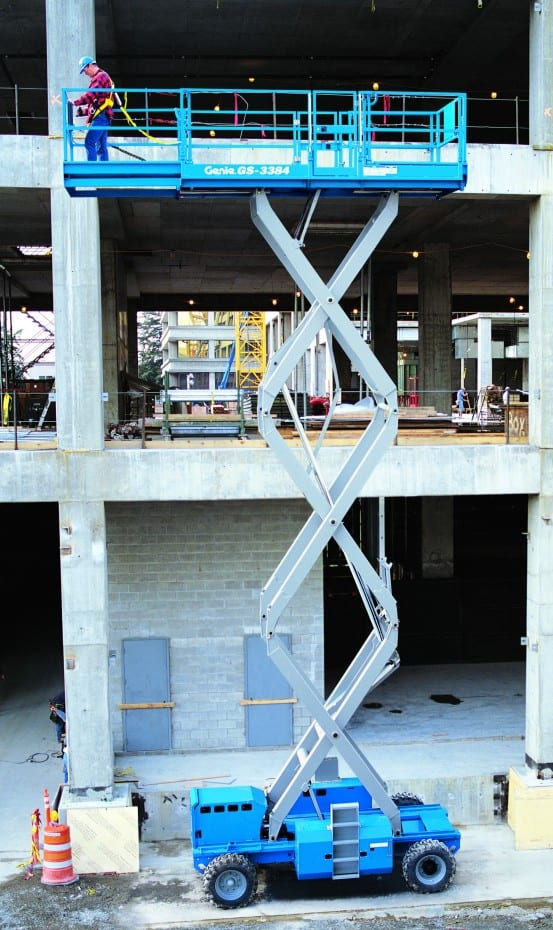
Falls, collisions, and electrocutions claim too many victims each year. Telehandler and man lift operators must remain vigilant. No cost savings or expediency is worth cutting corners and risking job delays or construction injuries caused by improper or unsafe use. Follow this construction safety guide to ensure safe and efficient operation when using these machines.

Before You Begin Getting Your Aerial Lifts

Construction safety with lift equipment begins before you even start using the equipment at the jobsite. When buying or renting a man lift or telehandler make sure to speak with an expert about which machine is best for your job.

Different applications such as whether you are working indoors or outdoors, or on rugged terrain, call for different machines and safety concerns, including size, lift height, maneuverability, etc. For example, the right size will eliminate the temptation to erect a ladder on the platform or use boards as “scaffolding” across the equipment’s guardrails to increase workers’ reach.

Step 1: Inspect Your Jobsite

When the equipment arrives at the jobsite, thoroughly inspect the work area to identify potential hazards:

  • Overhead obstructions (especially power lines!)
  • Loose gravel and ice
  • Obstacles
  • Confinements
  • Drop-offs

Also, take special note of high winds and thunderclouds. On a work platform 50 feet in the air is the last place you want your workers when lightning strikes or gale forces blow.

Lastly, don’t forget to inspect the equipment as well. Make sure there are no inflated tires, low fluids, etc.

Step 2: Operate Man Lifts and Telehandlers Safely

Safe operations means taking all possible precautions BEFORE initiating a lifting procedure:

  • Always use outriggers, brakes, and wheel chocks, even when working on level ground.
  • Obey the manufacturer’s load limit. And don’t forget to include the operator’s weight and any tools in the total.
  • Lift loads slowly, checking at regular intervals that the telehandler’s frame remains level.
  • Always know where the platform is headed in order to avoid pinch points.
  • Always lower the boom and the load before moving the equipment.
  • When moving the machinery to a new location, negotiate slopes at a 90-degree angle. That is, go up, over, and down slopes, rather than across their faces, which would cause the lift to lean.

Step 3: Keep Your Workers Safe

Keep your equipment operators and other workers safe by insisting they wear appropriate personal protective equipment, including:

  • A hardhat
  • A full body harness and lanyard anchored per manufacturer’s recommendations when operating boom platforms.
  • Always where your seatbelt if your equipment comes with it (i.e. Telehandlers)

Operators are also responsible for keeping others safe:

  • Ensure jobsite visitors and onlookers keep a safe distance for the work performed.
  • Never lift the boom over anyone’s head.
  • The operator is the only person allowed in the telehandler.
  • Keep feet firmly on the work platform’s floor.
  • Never climb on the boom or the guardrails.

Construction Safety Is Our #1 Priority

The Pro Group carries various aerial lifts and equipment for both purchase and rent within the New England area. When you’re ready to rent or purchase a man lift or telehandler, call us at 1-800-776-0007, and we’ll help you choose equipment meets the jobsite conditions, your reach and load requirements, and your budget.

Mini Excavation Equipment Rental and Safety Guide

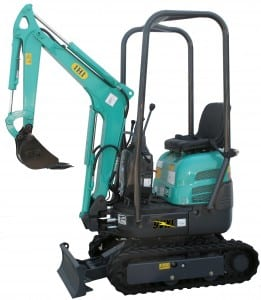
Mini excavators are relatively easy to use and maneuver, making excavation equipment rental a viable option for small construction projects and larger ones that require working in confined spaces. But just because these small diggers feature simple controls and compact footprints does not mean that any mini will work for all applications or that operators can skip safety precautions. This handy guide will ensure you rent the correct excavation equipment and use it safely on your project.

What To Consider When Choosing a Mini Excavation Equipment Rental

Consider the scope of work to decide which excavation equipment rental will get the job done, including:

  • Depth: Are you digging foot-deep post holes or 8-foot-deep holes? Select a mini excavator with digging depth sufficient for your needs.
  • Arm length: Will you be loading excavated dirt into a truck? Or are you lifting rocks into an elevated crusher? Make sure the arm will extend high enough without encountering overhead.
  • Tracks and Weight: Rubber tracked mini excavators may be preferable to steel-tracked versions if there are concerns about disturbing landscaping. Heavy-duty steel tracks perform best when digging or removing debris from rugged areas. Balance the bigger machines’ (7- to 10-ton) ruggedness with the nimbleness and maneuverability of smaller models (3 to 4 tons).
  • Offset Digging: Offset digging allows the operator to swing the boom away from its base to dig “beside” the tracks rather than in front of them. This feature comes in handy when you need to dig next to a structure or extend a trench.
  • Tail Swing: Tail swing refers to how much the excavator’s cab extends over the tracks when the cab is rotated. With zero tail swing, if you can drive the excavator into a space, you can rotate the cab 360 degrees without hitting anything.
  • Bucket Size: While the bucket size is generally governed by the weight of the machine, there is room for slight increases and decreases. Smaller buckets can make digging in small spaces easier. Larger buckets can speed up the job. However follow the excavator’s manufacturer guidelines to never exceed recommended lift weight.
  • Attachments: Thumbs, augers, breakers, compactors, and other rented attachments make excavation equipment rental even more economical by expanding the machines’ capabilities. Many models also come with dozer blades installed, allowing for easy trench backfilling. Only use manufacturer-approved attachments that are properly installed.

What To Keep in Mind To Safely Operate Your Mini Excavation Equipment Rentals

Improper operation of mini excavators can prove deadly for users and bystanders as well. Follow these individual safety measures:

  • Several days before work is scheduled to begin, dial 811 and ask the national Call Before You Dig service to mark the locations of underground utility lines. Do not dig until the lines are identified.
  • Thoroughly inspect the site to discover ground-level or overhead conditions that might make using your rented excavation equipment difficult: steep slopes, rain-softened turf, ingress/egress confinements.
  • Incautiously raising the bucket arm can damage or hinder the arm’s extension, but power lines create the most critical overhead concern. The excavator operator must be aware of the potential hazard before the job commences.
  • Wear a hardhat sturdy, non-skid shoes, and ear and eye protection.
  • Use the seatbelt and read all mini excavation equipment rental manufacturer instructions.
  • Rent only machines with protective roll-over canopies.
  • Consider an enclosed cab if operating in extreme heat or cold.

Mini excavators are smaller than their full-size cousins, but they are not toys. Never allow passengers – either in the cab or in the bucket! Keep onlookers a safe distance away.

Mini but Mighty: Compact Excavators Get the Job Done

The Pro Group carries a full line of mini excavators for rentRequest a Quote or call 1-800-776-0007 to speak with our excavation equipment rental experts for more information on our rental terms and pickup and delivery options.

To work with excavators you must have a permanent Hoisting Engineers License or a Temporary Permit. Click here to learn how to get yours today.

The Pro Group Receives Evergreen Marketing Group Distributor Member of the Year Award

The Pro Group is pleased to announce that we have been recognized as the 2015 Distributor Member of the Year by The Evergreen Marketing Group!

The Evergreen Marketing Group is a member-owned cooperative organization founded in 1989. With a focus on driving growth and profitability in the construction industry, they have developed an on-going program of training and education, business development and partnering. Working together, the supplier and distributor members are leaders in the construction industry providing the highest quality construction and industrial tools, equipment and services.

The Evergreen Marketing Group recognizes the top distributors based on:

  1. Contribution to the group
  2. Growth
  3. Participation
  4. Member input

The Pro Group is honored to have received this award and will continue to strive to be a leading distributor in the construction industry to New England and surrounding areas.

Learn more about the industry associations The Pro Group is a member of and call us at 1-888-776-0007 for information on our products and services.

3 Phases Where Wacker Dehumidifier Equipment Can Improve Your Building Construction Jobs

Moisture is not the construction contractor’s friend. Framing lumber, plasterboard, and hardwood flooring, in particular, require dry conditions to perform properly. But Mother Nature does not always cooperate. Spring showers and high summer humidity can lead to construction delays and liquidated damages.

Fortunately, the right dehumidifier can bring your jobsite to peak moisture content and ready for finish work in no time. Wacker’s low-grain refrigeration dehumidifiers gradually reduce the relative humidity in buildings under construction by attracting water vapor that is trapped in wood, concrete, drywall, and other building materials. How much and how fast the drying takes place depends on the materials, the ambient temperature and humidity, and how powerful and how many dehumidifiers are used.

Wacker equipment is especially useful in three phases of building construction:

1. Framing

Wooden framing members shrink and swell as they absorb and relinquish water to and from their fibers. Only when the wood absorbs and holds more than the fibers’ capacity – about 28% saturation – will it begin to deteriorate. Lumber that gets wet – either before or after it is nailed into framing – should be dried as soon as possible, both to stave off rot and to bring the moisture content down to a workable level. Even in the absence of rain, wood will absorb water vapor from the air. Often even this equilibrium moisture content is high enough for mold to flourish.

Generally, dehumidifiers should be used until moisture content readings fall to between 15% and 19%, depending on the climate in your region. Only then is it advisable to proceed with the next phase of construction.

2. Drywall

That next phase, drywall, effectively seals the framing, inhibiting air flow and virtually cutting off the drying process. The wood must be below 19% moisture content to prohibit the growth of mold on the framing and the back of the plasterboard panels. The drywall itself can absorb water vapor, causing cracks and nail popping as the wallboard swells and shrinks. Drywall joint compound, or “mud” is a notoriously slow dryer.

When humidity invades the building under construction, a dehumidifier can make the difference in drying the mud enough to sand. The dehumidifier also will draw moisture from the drywall itself. Only when the content is driven down to less than 1% can paint be expected not to crack.

3. Flooring

Laying vinyl, carpet, and especially hardwood flooring materials on a concrete slab that has not been dried with dehumidifying equipment is asking for trouble. Excess moisture in the slab not only provides an attractive medium for mold, it also causes cupping. As water vapor escapes the concrete it is absorbed into the bottom of the planks, causing the plank edges to lift, creating concavity. Dehumidifiers pull the vapor from the slab before the hardwood and engineered wood flooring is placed atop it.

By extracting the excess moisture content from the concrete slab, contractors also make adhesives more effective in securing carpet vinyl, and rubber floor coverings and eliminate the possibility that moisture will soak emerge from the concrete later and cause staining as carpet or vinyl absorbs it.

Dry Your Site and Speed Construction with Wacker Dehumidifiers

The Pro Group carries Wacker equipment and Wacker dehumidifiers, which pre-cool the ambient air, conditioning it in order to remove significantly more humidity that traditional dehumidifiers. This pre-treatment of the air makes them effective in drying the most stubborn construction materials – even in relatively low-humidity conditions.

Check out our supply and rental line of Wacker equipment or call us at 1-888-776-0007 for more information on Wacker dehumidifiers or to discuss how to best remove excess moisture from your construction site.

How to Choose the Right Compaction Equipment for Your Construction Site

Proper compaction of soil, asphalt, and concrete is perhaps the greatest determinant of a project’s lifespan. When performed properly, compaction adds to load-bearing ability and prevents expansion, contraction, and seepage. Improper compaction can cause potholes, poor drainage, cracked drywall, and worse problems. Selecting the proper compaction equipment is the first step toward making a project foundationally sound.

Several considerations bear on choosing the right kind of compaction equipment.

  1. Vibratory compactors “shake” soil particles to reduce friction and allow them to fall into close proximity to one another.
  2. Static compactors rely on the machine’s weight to compress soil particles closer together.

Rammers Achieve Compaction in Tight Spaces

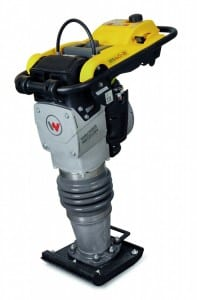
Rammers use gasoline or diesel engines to drive the rammer foot down into the soil, delivering around 10 concentrated, high-velocity punches every second to compact the soil in construction footings or other tight spaces, such as backfilling trenches. Balanced slightly forward, to allow the rammer to bounce and advance slightly with each stroke, rammers are also known as Jumping Jacks.

Jumping Jacks have a smaller foot and are often used to compact backfill in narrow trenches for utility work and applications in clay, silt, and other cohesive soils because the rammer’s shearing action pushes out air and water pockets. They generally are ineffective on granular materials.

Plates Compact with Maneuverability

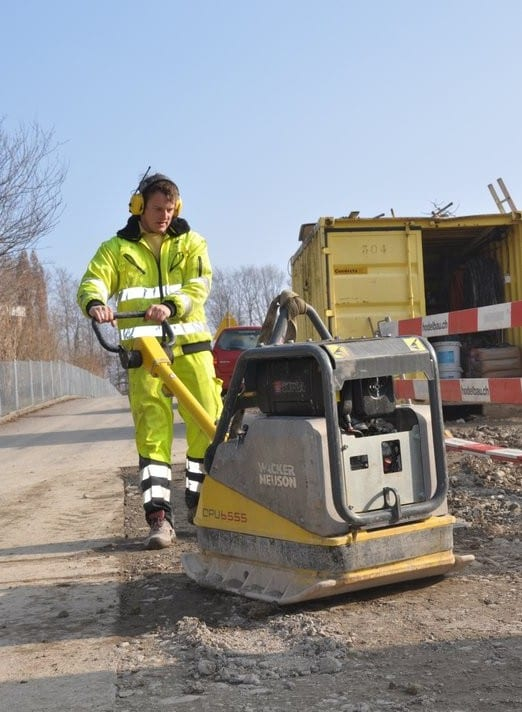
Commonly used to prepare the ground for paving stones, walkways, and other landscaping applications, vibratory plate compactors combine a compact design with the ability to handle sand, gravel, and other granular substrate. They create frequent vibrations – often up to 10 times faster than rammers – harnessing both pressure and vibration to break particles apart, allowing gravity to pull them into a stable position.

Common plate sizes range from 12 to 24 inches, allowing more surface contact than rollers, and their vibratory action propels the machine along, making it maneuverable. They usually are the best choice when the area to be compacted is small enough that it does not require a large walk-behind or ride-on roller. Larger models can work in reverse as well as forward, adding maneuverability, and allowing operation while stationary.

Rollers Quickly and Efficiently Compact Large Areas

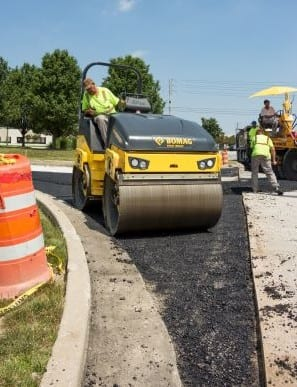
When the project requires a large, flat, surface in granular soil, rollers may be the best option. Rollers come in various sizes and weights. Long stretches of roadway call for heavy hitters – ride-on rollers with single or double drums weighing from one to several tons to compact gravel and asphalt bases. Double-barreled walk-behind models can handle most jobs. They use smooth vibrating drums to quickly and efficiently compact and smooth the substrate for parking lots and concrete warehouse slabs. In rough conditions or when working with highly cohesive soil, rollers with padded feet help shear the soil for more thorough compaction.

When space confinements require smaller footprints and a plate compactor is not feasible, a remote-controlled trench roller could be the best choice. These come equipped with padded, or sheepsfoot. Rollers built to effectively compact the clay and other cohesive soils are often found in utility trenches.

Get the Right Compaction Equipment for Your Next Job

The Pro Group carries many of the most popular plate compactors, rammers, and rollers for every size job. Our experts can walk you through the selection process by helping you find the right compaction equipment fit for your job, whether you are looking to buy or rent.

Request a quote or call us today at 1-888-776-0007 to speak with a representative.

How to Pick the Right Pumps for Construction Site Dewatering

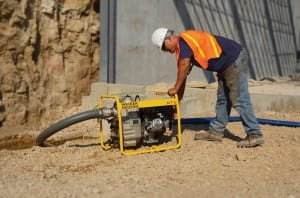
With all the snow, sleet, and rain New England gets throughout the year, one of the challenges construction crews must deal with is flooded or wet construction sites. As winter brings snow and ice, spring melts that snow and ice at rates that sometimes leave construction sites flooded. Add to that challenge, construction sites that are built on or near high groundwater tables and you’ve got a strong need for dewatering New England construction sites. Thankfully, site supervisors can rely on supply or rental construction equipment to handle the occasional build up of water on site surfaces.

How Do You Select The Right Pump?

There are a few criteria to use when choosing the right pump for your location.

  • Pump size – removal capacities vary among brand lines, so it’s important to match the pump size with the anticipated load. Construction site pumps can run from 1-2kW up to over 10kW. If water extraction is expected to continue for an extended period over a wide surface area, we often recommend renting multiple pumps for distributed removal.
  • Flow rate – you want to install a pump that will flush the site of water at the right flow volume. For light flow management, 50-200 gallons per minute is an adequate rate. During heavier extraction, you should select a pump that enables 1000 gallons or higher per minute.
  • Location flexibility – when flood areas are located at various site points, having the ability to move a pump to different spots is critical to fast removal. Gas-powered units provide the greatest flexibility. However, electric water pumps with extended cord lengths can be effective as well.
  • Waste/Sludge removal – in some cases, sludge, construction materials, and other components must be extracted along with the water. Contractors have options to handle any composition:
    • Drainage pumps – for pumping water with less abrasive solids
    • Sludge pumps – for non-abrasive sediment and sludge removal
    • Slurry pumps – for removing water with abrasive suspended solids like sand, gravel or concrete

Construction Equipment Rental Pumps Right To Your Jobsite

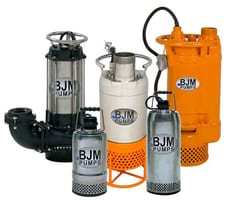
At The Pro Group, we offer a selection of construction equipment rentals including gas/diesel pump and electric submersible pump rentals from leading brands including Wacker, BJM, and Tsurumi. Request a quote today or call us at 1-888-776-0007 to speak with one of our knowledgeable equipment specialists on our stock of dewatering pumps and our on-site construction equipment rental delivery options. We also offer dewatering pumps for purchase.

Milwaukee Lunch and Learn on the Latest Cordless Construction Tools

We want you to have the product knowledge you need to be successful on the job, so about once a month, we host lunch and learn sessions at one of our four locations with some of today’s most popular construction tool manufacturers. This gives you a chance to see demonstrations and talk directly with tool makers.

We recently held a session with Milwaukee Tool, where contractors got a hands-on look at the company’s latest cordless products and were able to test out the construction tools themselves. During the session, contractors were introduced to products including:

  1. M18 Force Logic High Voltage Crimper and Cutter, which enables you to make accurate cuts and crimps to any wire.
  2. M18 Fuel impact wrench, which provides multiple torque settings for various fastener applications.

Our customers also had a chance to learn about and test several products in Milwaukee’s M12 and M28 lines, and check out the latest outdoor construction site work wear.

If you want to know more about our lunch and learn series, call us at 1-888-776-0007 or visit our services section.

Search For Products

Product has been added to your cart