Anchor Your Team: Protect Workers from Falls

According to the Occupational Safety and Health Administration, falls are by far the most common cause of construction worker deaths in the United States. Nearly 39 percent of all fatalities on construction sites are attributable to falls from structures, ladders, or other heights. In 2015, an average of one construction worker per day fell to his or her death. Unsurprisingly, violations of fall-protection standards are the most frequent citations issued by OSHA.

Many times, workers are injured in falls not because they fail to wear safety gear, but because they wear the wrong harnesses for their trade or use them incorrectly. Pro Tool & Supply knows that as a responsible employer you want to protect your workers and stay in compliance with OSHA regulations. We are here to assist those efforts. We carry a full line of fall-protection gear and have the expertise to help you choose the right equipment for your situation.

A proper fall arrest system consists of three parts:

Harness
Werner-Harness

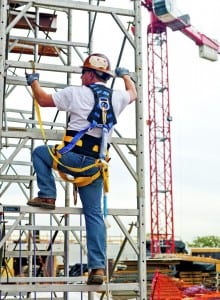
The harness is the part of the fall-protection system the worker wears, and only full-body harnesses should be considered. Dozens of designs have been created to maximize comfort and maneuverability, but the primary consideration when choosing a harness is safety and appropriateness for the job being performed. Harnesses are designed with different strap widths, D-ring placement, webbing, and other features to provide the best protection in any situation. For instance, if you employ welders or electricians look for harnesses made of materials that resist extreme heat and flames. If you employ painters, find crossover harnesses with front D-rings for tying off while climbing ladders.

A harness must be removed from service after it has been involved in a fall. Werner’s Blue Armor 1000 full-body harness incorporates technology that makes fall involvement, as well as wear and damage, evident. This model also uses special guides and loops to keep straps and webbing snug, organized, and free from tangles. See page 4 of Pro Tool & Supply’s safety catalog.

Anchorage

The anchorage is the strong, solid structure that anchors the fall-arrest system and the equipment that attaches the connecting device to it. The anchorage “catches” a falling worker before he hits a lower level. Tie offs must be able to support 5,000 pounds per worker attached to them. The strongest overhead – steel and concrete are best – usually provides the best anchor. Anchoring directly overhead can eliminate the hazard of fallen employees swinging like a pendulum into walls, beams, scaffolding, etc. Never anchor to a point below the worker; this would increase the distance of the fall.

For roofers or steelworkers, you may want to provide lifelines, like Werner’s R530011-R. They are self-retracting, allowing free movement while stopping falls within three feet. For more details check out page 2 of the Pro Tool safety catalog.

Connecting Device
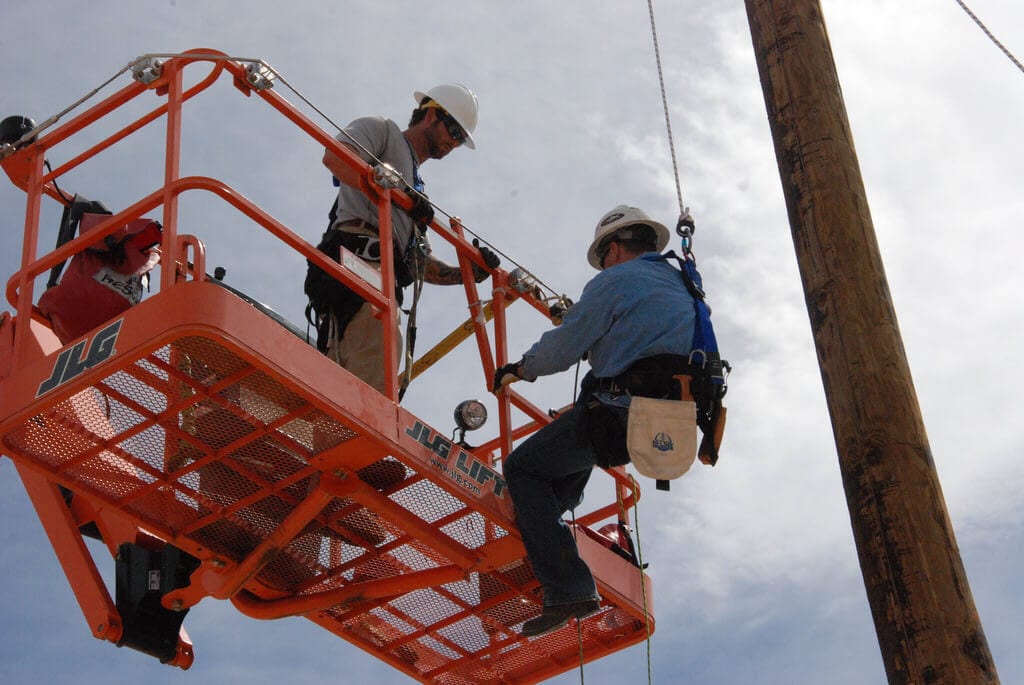
pro tool fall safety protection

The connecting device is the line or strap that attaches the harness to the tie off point. These devices include lanyards, self-retracting lifelines, rope grabs, etc. They also serve as shock absorbers, stretching to minimize the impact of the fall being stopped. Be sure to account for this elasticity and select a connector short enough to stop a fall short of any impact point below. Except for ladder-type fall arrests, always attach the lanyard to the D-ring on the back of the full-body harness. Harnesses may come with D-rings on the sides, but these are not for fall-arrest connectors; they are used for worker positioning only.

Read more about our construction safety products and solutions, or contact Pro Tool & Supply’s safety associates for guidance in choosing the proper fall protection for your workers. They can help you select the appropriate safety features and the harnesses with the adjustability, comfort, and maneuverability allowances to keep your employees safe and productive throughout the workday.
New OSHA Regulations on Silica Take Effect June 23

About two million construction workers are exposed to hazardous silica dust on jobsites, according to the Occupational Safety and Health Administration (OSHA). While regulations limiting silica exposure on the job have been in effect since 1971, and have led to significant reduction in silicosis deaths, OSHA, in a bid for greater construction safety, is about to begin enforcing even stricter rules to protect workers who cut, grind, chip, and drill concrete. Contractors in New England should be particularly conscientious, as OSHA already concentrates considerable resources to enforcement in the region.

Beginning June 23, construction companies must implement engineering and/or workplace controls to ensure workers are exposed to an average of less than 50 micrograms of silica per cubic meter during each eight-hour shift. These new permissible exposure levels are about 80 percent lower than the current limits. Companies can comply with the silica rule either by adopting OSHA-approved, task-based methods for reducing silica production or measuring worker exposure and adopting their own methods for keeping it below the new threshold.

Brief OSHA Regulation Breakdown

OSHA outlines its approved mitigation practices in Table 1 of the regulation. For example, the table specifies handheld grinders for mortal removal should be equipped with shrouds and dust-control systems capable of providing a minimum of 25 cubic feet per minute of airflow per inch of wheel diameter. They must include a filter with at least 99 percent efficiency and a pre-separator or filter cleaner attached. Operators must also wear respirators. OSHA has promulgated accepted measures for walk-behind saws and milling machines, hand-held tools, jackhammers, and other equipment. The dust-control system requirements are designed to prevent as much silica dust as possible from becoming airborne, while the respirator requirement aims to protect workers from breathing in the dust that does escape into the air.

Alternative Construction Safety Measures

Contractors that do not implement OSHA’s approved methods must test airborne crystalline silica and provide construction safety tools and equipment to ensure worker exposure remains below the permissible limit. Several methods may be appropriate, depending on the work conditions:

  • Wet cutting – Water is delivered to cutting blades and bits to keep dust out of the air.
  • Limit use of fine cutting tools – Break concrete into larger pieces to reduce the dust created.
  • Incorporate vacuums equipped with HEPA filters – High-efficiency particulate air filters can remove well over 99 percent of dust particles from the air.
  • Use respirators – Must be used by all workers in the area, not just tool operators, when other measures cannot clean the air sufficiently.
  • Physically seal off work areas where silica dust is created – This protects workers and excuses everyone but the operator from wearing a respirator.

The alternative control methods require complete and accurate records of all silica-level measurements taken, including the date, task tested, methods used for sampling and analysis, and results.

Other Silica-related Requirements

All contractors, regardless of whether they opt for the OSHA-recommended procedures or they “measure and mitigate”, must also adhere to several other construction safety precautions, including:

  • Preparation of a written plan for protecting workers from silica dust
  • Designation of a “competent person” with the knowledge and authority to carry out the plan, including ordering additional safety measures when needed
  • Safety training of workers tasked with working with concrete
  • Provision of medical exams every three years for workers who wear respirators for 30 days or more per year.

To learn more about OHSA’s new silica rule and how to prepare your company and equipment for June 23, call Pro Tool experts at 1-844-671-2956.

Clear the Air with E-Z Drill’s Dust-Collection System

Contractors as well as the Occupational Safety and Health Administration know the importance of suppressing and collecting the dust generated by construction drilling into concrete. The silica particles are known to cause lung cancer, silicosis – scarring of the lung tissue, limiting their ability to ingest oxygen – and other debilitating diseases. And as of September 2017, additional OSHA regulations require more stringent engineering controls to limit worker exposure to airborne crystalline silica.

Safety Measures When Concrete Drilling

Fortunately, common equipment is available to improve construction safety. Any worker who drills, cuts, or crushes concrete should include in their safety wardrobe:

  • A face mask and respirator to avoid inhaling particulates
  • Earplugs to block the noise created by the drill and the air compressor
  • Safety glasses to keep chipped concrete debris from damaging the eyes

But the most effective construction safety measure for combatting silica dust are dust-suppression and dust-collection measures. Suppression kits use water to dampen down the dust and keep it from becoming airborne. However, water-based methods are not always practical or even possible in the field. Dust-collection tools use powerful vacuums to suck the dust out of the air before it can find its way to workers’ respiratory systems.

Benefits of Dust-Collection Systems

Vacuum components enjoy other advantages over water-based suppression methods. While worker protection is the best reason to employ a dust-collection system in construction drilling, keeping concrete dust out of the air provides productivity benefits as well. Flying dust can easily settle on greased areas of the drill. The gritty silica is abrasive, making the lubricant ineffective. When concrete dust mixes with water it turns to, well, concrete, which can settle and harden on drill controls.

Vacuums also can draw dust particles not only from the air, but from the holes being drilled as well; holes are left clean and epoxy-ready. Water suppression kits can leave a slurry at the bottom of blind holes.

The E-Z Drill Solution For Concrete Drilling Safety

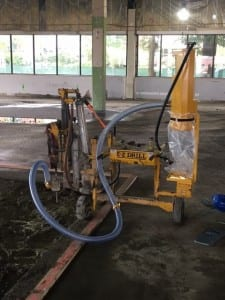
Pro Tool and Supply is proud to distribute the simplest, most efficient, and most cost-effective dust-collection system on the market for construction drilling. E-Z Drill has developed an attachment that fits any of its premium drills. It includes a “boot” that surrounds the bit guide and contains the dust. As the bit penetrates the concrete, the vacuum captures the dust flying from the surface and sides of the hole as well as particles and chips that fall or are pushed by the bit into the hole. The pneumatically powered vacuum runs off the same compressor that runs the drill, saving space and making set-up a breeze.

Request a quote today to learn more about this E-Z Drill vacuum and the other construction safety supplies we carry, or call us at 1-888-776-0007 to learn how E-Z Drill’s vacuum attachment can make your construction drilling safer and more effective.

Winter PPE Keeps Construction Jobsites Safe and Productive

When it comes to construction no matter what the weather, the show must go on. Still, winter weather requires even greater focus on construction safety. Outfitting employees in the proper road construction equipment and safety clothing reduces the risk of accidents due to cold, windy, and wet conditions, while also keeping them comfortable. When workers know their gear will protect them from inclement weather, they are more comfortable and more productive.

Check out this buying guide to help you choose all the construction safety gear you need to keep your road construction crew or construction employees protected and working at peak productivity.

Gloves

Many workers are tempted to work without gloves, because they believe the material precludes the precision required to perform their tasks. But the manual nature of construction makes protecting craftspeople from sharp tools, metal shards, and extreme cold a primary concern. Constructed from patented Dyneema material, that’s pound-for-pound 15 times stronger than steel, Pro Tool & Supply’s construction gloves can guard fingers, palms, and wrists from the potentially devastating abrasive and puncture hazards common to any jobsite. Perhaps more important, these gloves are easy to wear; their comfortable fit allows workers to do their jobs with little loss of “feel,” grip, or dexterity.

construction gloves

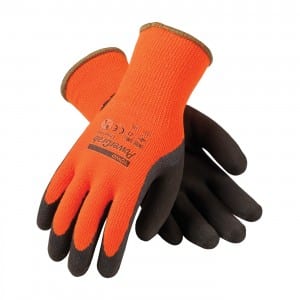
Similarly, the foam latex palm incorporated into its heavy-duty acrylic knit gloves provide just the right tackiness to create a sure, firm grip on tools, work pieces, and safety equipment, no matter how cold the conditions. Some of the most ergonomically designed work gloves on the market, our high-visibility acrylic gloves with latex MicroFinish also adds a level of cut protection as well as many other benefits:

  • Thermal insulation for warmth
  • Moisture wicking for dry comfort
  • Seamless construction to eliminate irritation and chafing
  • Washable for extended life
  • Flexible coating that will not impede work processes
  • Fitted wrist as a barrier to dirt and debris

Bomber Jackets

construction bomber jackets

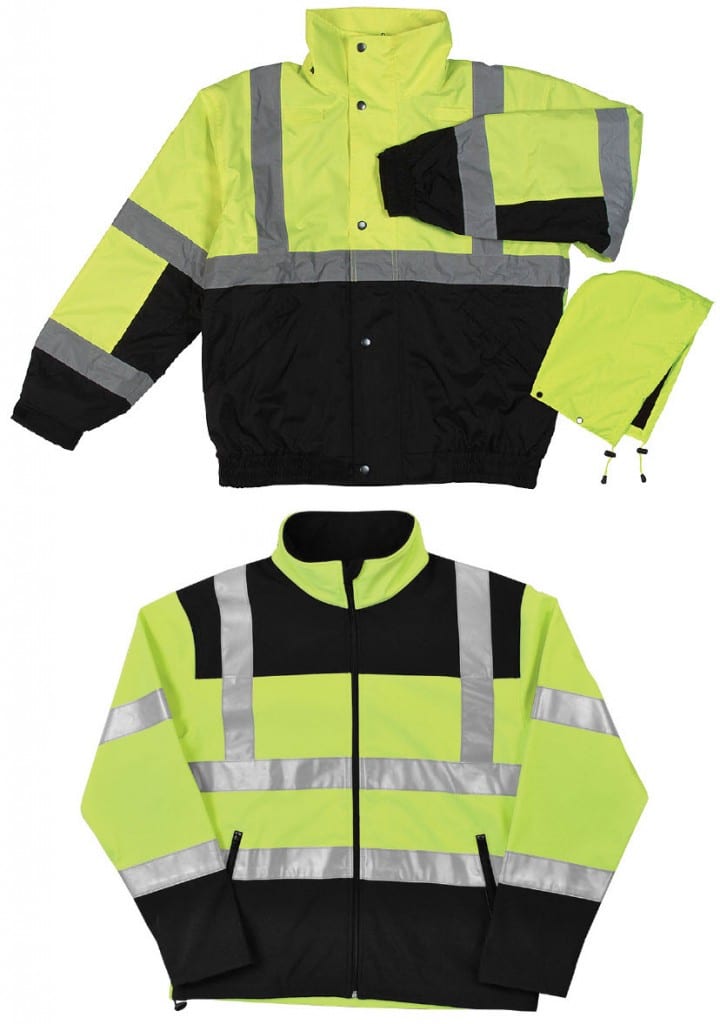
One of the most basic cold-weather protectors, bomber jackets’ elasticized cuffs and waist, flip-up collar, and toasty fleece lining keep body heat in and winter out. With a stable core temperature, workers can ply their crafts without worrying rain or sleet – water rolls off the polyurethane coating, and rugged polyester stops wind in its tracks. Pro Tool & Supply’s supply of bomber jackets conform to ANSI Class 2 standards, including high-visibility yellow chest and sleeves and reflective stripes. Store the detachable hood in the jacket’s collar or pull it out to keep heat loss to a minimum. Three pockets are perfect for cell phone or radio storage, and mic tabs ensure workers have hands-free communication.

Rain Gear

Working in a cold rain can be disheartening as well as potentially dangerous. Polyvinyl rain jackets and pants are critical road construction equipment. Fully taped seams, snap closures, and snugly fitting cuffs, waist, and collars maintain waterproof integrity. The hood secures with a drawstring to keep moisture off the neck and head so workers can work in total comfort. The heavy polyester construction shields wearers from the wind, but hidden vents allow air flow and heat circulation. High-visibility yellow and reflective stripes stand out even in heavy snowstorms and against gray winter skies.

Hardhat Liners

A combination of fabrics and materials make Pro Tool and Supply’s hardhat liners must-have winter road construction equipment. Whether you outfit your crew in liners with fire-resistant knit polyester shells to keep cold air at bay, comfortable natural cotton, or insulating fleece, we have the ideal solution for your application. We have hardhat liners that are compatible with welding masks, goggles, respirators, earplugs and other construction safety equipment. All our liners are lightweight. They fit snugly to the hat and worker’s heads and faces for unobtrusive safety in snowy, windy weather.

Don’t let Old Man Winter wreck your construction schedule. Call Pro Tool and Supply today at 1-888-776-0007 or request a quote to order the winter construction safety gear that will keep your crew productive and safe through the cold months ahead.

5 Construction Winter Protection Products To Avoid Downtime

construction winter products

When the snow falls and bone-chilling winds blow, it is natural to want to curl up in front of the fireplace with a blanket and mug of hot chocolate. But you’ve got construction work to do, and thankfully, construction tarps, covers, and sheeting will protect your construction tools, workers, and equipment so they can perform at maximum efficiency even when the weather doesn’t cooperate.

Concrete Curing Blankets

Don’t let a sudden cold spell delay your planned concrete pour or rob your slab of the moisture it needs to cure properly. Cold, dry winter weather makes concrete curing blankets must-have construction equipment in New England and throughout much of the United States. Curing blankets help concrete maintain the long-term temperatures water content it needs after placement and finishing to develop proper strength and crack resistance. Curing blankets not only prevent the water in concrete from freezing, which can lead to future fracturing, they also elevate the slab’s surface and internal temperatures to speed curing. Using curing blankets to raise concrete’s temperature from 40 degrees to 70 degrees Fahrenheit can cut curing time in half, saving time and money.

Flame Retardant Tarps

Snow and sleet can wreak havoc on expensive construction tools. Blades rust, power cords short, and even the most rugged construction equipment can fail when exposed to wet and frigid conditions. What’s more, working in the cold and wind is detrimental to morale and productivity. Tarps shield tools and personnel from wind, snow, and rain and contain ambient heat.

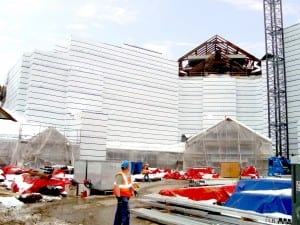
Flame-retardant tarps go a step farther, by allowing construction equipment and workers to operate in temporary enclosures warmed by generated heat. Creating scaffold enclosures or temporary “walls” during framing from flame-retardant tarps to contain forced air, allows work to continue in comfortable conditions. The tarps keep warm air in and cold air out, reducing heating costs while maximizing time on the job.

Electrically Heated Pads

Everything – people, liquids, and construction processes – seems to move more slowly when the temperature drops. Frozen ground defies excavation, lubricants lose viscosity, construction tools strain in the cold, and workers spend valuable time trying to stay warm. Electrically powered heating blankets are easy-to-use sources of portable, direct heat. They can:

  • melt snow and frost
  • thaw dirt for trenching operations
  • safely warm fuel lines and cylinders
  • keep palletized materials primed and ready to use.

Suitable for use in the field, on staged construction equipment or in unheated warehouses, electrically heated pads use considerably less fuel and deliver more concentrated heat than other options, while eliminating hazards associated with heating belts and ovens.

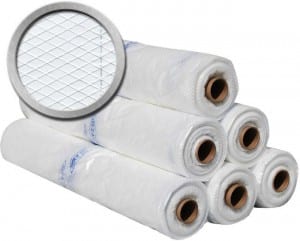
double reinfoced poly scrim

Reinforced Poly Sheeting

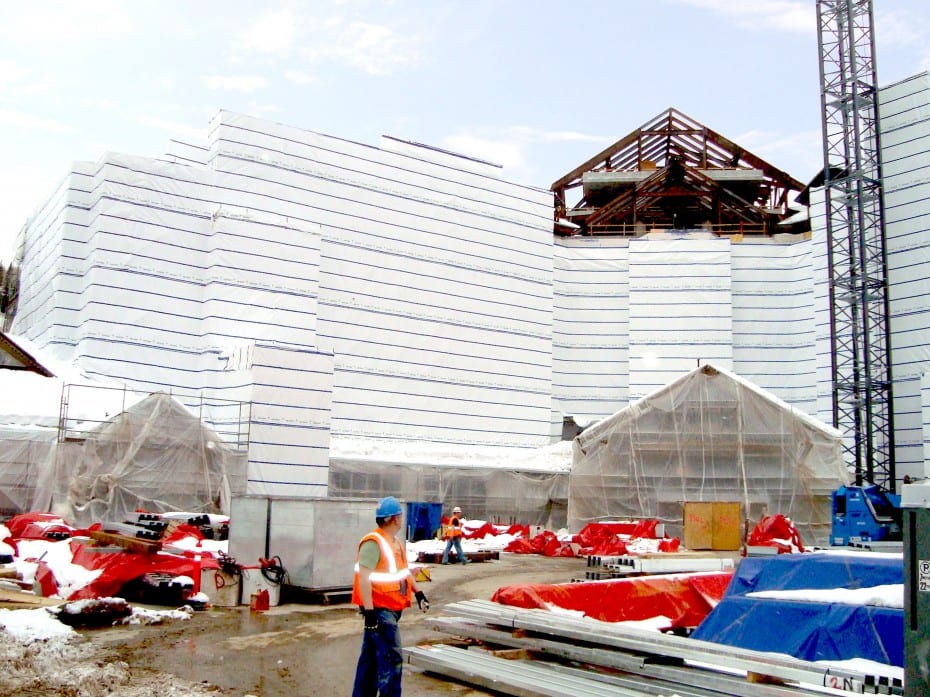
Strong and inexpensive, poly sheeting protects workers and passers-by from weather, debris, dust, and fumes. Non-fire-retardant versions are clear, allowing daylight and ambient illumination to pass through, cutting energy costs on the jobsite. High tensile strength and ease of handling makes reinforced poly sheeting ideal for sealing off scaffolding, walkways, and debris enclosures.

Scaffold Sheeting/Monarflex/Scaf-life

Specifically, we carry the SCAF-LITE and Monarflex brands of poly-based scaffold enclosure sheeting, and weather protection. Scaf-Lite’s bungee connectors and reinforced eyelets ensure secure, life-of-the-project attachment to scaffolding. Monarflex uses grommets to make installation fast and dependable. Options can make the sheeting water tight, resistant to high winds, and fireproof.

Beat The Winter With Construction Winter Jobsite Protection

The Pro Group can set you up with the construction equipment and materials you need to work through the winter with a minimum of weather-related delays and hardships. Request a quote for our supply or call our customer service representatives today at 1-888-776-0007.

DBI-SALA Lad-Saf™ Sleeve Recall

PRODUCT STOP USE AND RECALL / REPLACEMENT NOTICE IMMEDIATE ACTION REQUIRED

Below is a message from 3M about a recent recall of DBI-SALA Lad-Saf™ Sleeve.

“After more than 30 years of use in the fall protection industry, the original Lad-Saf™ sleeve has been replaced by a completely redesigned next generation Lad-Saf sleeve.
 
Capital Safety/3M recently reviewed the performance of the original Lad-Saf sleeve in the field, including a limited number of incidents involving a serious injury or death in the United States while using the sleeve. Although our review did not reveal product hazard or risk scenarios that would arise in the ordinary and proper use of the product, it did reveal potential misuse scenarios that could result in serious injury or death. The potential misuse scenarios include interference with the braking mechanism (such as entanglement with cords, lanyards, clothing or other materials, or grasping the sleeve prior to or during a fall), or result from the user attaching the sleeve upside down (user inversion). No safety regulator has made a finding that the design of the original Lad-Saf sleeve is defective.
 
At 3M, customer safety and confidence are high priorities. In light of the reported incidents and potential misuse scenarios, we have discontinued sale of the original Lad-Saf sleeve, and are voluntarily initiating a full recall of all original Lad-Saf sleeves. Owners / Users of original Lad-Saf sleeves must:

  1. Immediately stop using and quarantine all original Lad-Saf sleeves. Affected part numbers are:6100016, 6116500, 6116501, 6116502, 6116503, 6116504, 6116505, 6116506, 6116507, 6116509,6116512, 6116535, 6116540, 6116541, 6116542, 6116500C, 6116500SM, 6116507/A, 6116540b
  2. Contact 3M Customer Services at 1-800-328-6146 (ext. 2012), or email us at LADSAFNA@mmm.comto discuss the replacement of your returned units with an X2 or X3 sleeve, depending on your needs,at no cost to you.

3M remains committed to providing quality products and services to our customers. We apologize for any inconvenience that this situation may cause you, but we are confident that you will be very pleased with the latest generation X2 and X3 Lad-Saf sleeves to keep your workers safe at height. We appreciate your continued support of 3M Fall Protection products and services. 3M Fall Protection – August 30, 2016″

Download PDF Version

If you have any questions please contact DBI Sala directly at 1-800-328-6146.

Construction Safety Guide For Using Aerial Lifts

Many construction, industrial, and maintenance projects require tasks to be performed at heights that are difficult or impossible to reach. Aerial work, however, presents safety concerns.

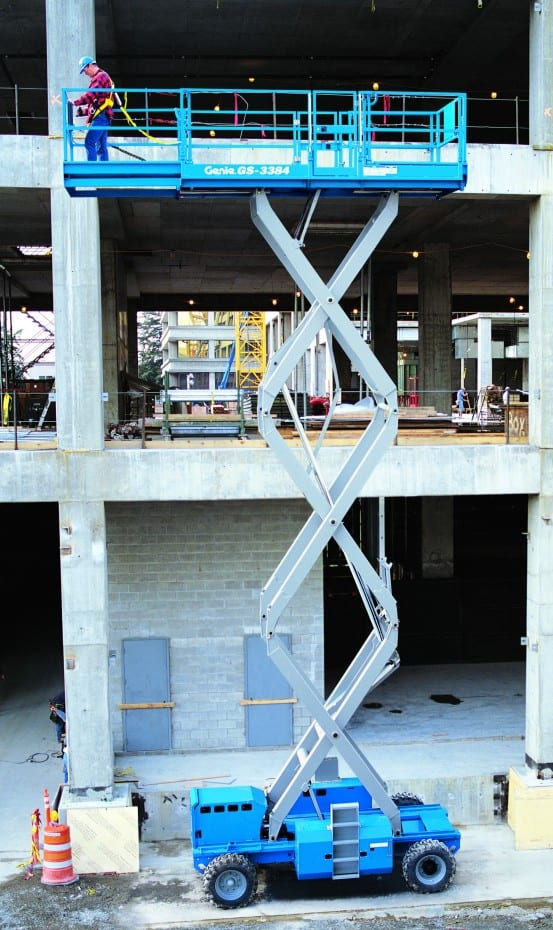
Falls, collisions, and electrocutions claim too many victims each year. Telehandler and man lift operators must remain vigilant. No cost savings or expediency is worth cutting corners and risking job delays or construction injuries caused by improper or unsafe use. Follow this construction safety guide to ensure safe and efficient operation when using these machines.

Before You Begin Getting Your Aerial Lifts

Construction safety with lift equipment begins before you even start using the equipment at the jobsite. When buying or renting a man lift or telehandler make sure to speak with an expert about which machine is best for your job.

Different applications such as whether you are working indoors or outdoors, or on rugged terrain, call for different machines and safety concerns, including size, lift height, maneuverability, etc. For example, the right size will eliminate the temptation to erect a ladder on the platform or use boards as “scaffolding” across the equipment’s guardrails to increase workers’ reach.

Step 1: Inspect Your Jobsite

When the equipment arrives at the jobsite, thoroughly inspect the work area to identify potential hazards:

  • Overhead obstructions (especially power lines!)
  • Loose gravel and ice
  • Obstacles
  • Confinements
  • Drop-offs

Also, take special note of high winds and thunderclouds. On a work platform 50 feet in the air is the last place you want your workers when lightning strikes or gale forces blow.

Lastly, don’t forget to inspect the equipment as well. Make sure there are no inflated tires, low fluids, etc.

Step 2: Operate Man Lifts and Telehandlers Safely

Safe operations means taking all possible precautions BEFORE initiating a lifting procedure:

  • Always use outriggers, brakes, and wheel chocks, even when working on level ground.
  • Obey the manufacturer’s load limit. And don’t forget to include the operator’s weight and any tools in the total.
  • Lift loads slowly, checking at regular intervals that the telehandler’s frame remains level.
  • Always know where the platform is headed in order to avoid pinch points.
  • Always lower the boom and the load before moving the equipment.
  • When moving the machinery to a new location, negotiate slopes at a 90-degree angle. That is, go up, over, and down slopes, rather than across their faces, which would cause the lift to lean.

Step 3: Keep Your Workers Safe

Keep your equipment operators and other workers safe by insisting they wear appropriate personal protective equipment, including:

  • A hardhat
  • A full body harness and lanyard anchored per manufacturer’s recommendations when operating boom platforms.
  • Always where your seatbelt if your equipment comes with it (i.e. Telehandlers)

Operators are also responsible for keeping others safe:

  • Ensure jobsite visitors and onlookers keep a safe distance for the work performed.
  • Never lift the boom over anyone’s head.
  • The operator is the only person allowed in the telehandler.
  • Keep feet firmly on the work platform’s floor.
  • Never climb on the boom or the guardrails.

Construction Safety Is Our #1 Priority

The Pro Group carries various aerial lifts and equipment for both purchase and rent within the New England area. When you’re ready to rent or purchase a man lift or telehandler, call us at 1-800-776-0007, and we’ll help you choose equipment meets the jobsite conditions, your reach and load requirements, and your budget.

Meet Boston Fire Department Regulations with Flame Retardant Construction Safety Equipment

For construction crews to work onsite and meet construction safety regulations, the Boston Fire Department (BFD) must approve construction materials, so it’s important that you understand what you need to do to in order to get permitted and what needs to be approved.

How To Get BFD Approval

In Boston Proper it’s up to you, the contractor, to have fire retardant products approved by the Boston Fire Department. You can do this by bringing a 3″x3″ sample, which you can obtain from Pro Tool and Supply, along with a completed application for materials to the BFD at the following location:

Boston Fire Department
Fire Prevention Division
1010 Massachusetts Avenue  4th Floor
Boston, MA 02118
Telephone 617-343-2175
Fax 617-343-3604

BFD requires that contractors submit 3 things before you’ll be approved for use on all local jobs:

  1. A material sample of at least 3”x3”
  2. A manufacturing spec sheet
  3. and the permit application.

Numerous product types were approved last year, so that will quicken the process, but each contractor must apply for 2016. One permit per item, scaffold tarp, or floor protection product covers all contractor sites for one year. If you applied in January or February 2015, you’re approved until January 1st, 2016.

We’ve Got You Covered

At Pro Tool and Supply, we’ve got you covered with several interior and exterior job site products that are BFD-approved. Most of these products perform two functions:

  1. Provide a protective barrier that keeps workers safe from flames.
  2. Protect surfaces and enclosures from fire damage.

The flame-retardant products we carry provide a guaranteed level of protection and are constructed to meet or exceed federal guidelines for construction safety. Consequently, they already meet many fire department standards including the Boston Fire Department codes. Our products are manufactured to pass BFD specification’s but each contractor must get permitted for their jobsites.

Here are just a few of the pre-approved items in our product lines.

Exterior Products:

  • Monarflex Scaffold Wrap – made of flame-retardant polypropylene with an open-weave design that reduces pressure on high structure scaffolds.
  • Eagle Enclosures Scaf-Lite – premium grade string reinforced poly sheeting that handles well in extreme low and high temperatures.
  • Eagle Enclosures FR Tarps – easy-to-install coated woven polyethylene with reinforced edges and grommets every three feet.
  • FR Poly Sheeting from Poly America and Eagle Enclosures – made of string reinforced or woven reinforced polyethylene film for maximum protection.

Interior Products:

  • FR Kraft Paper (Holland Manufacturing) – Blue Shield floor protection that provides durability and moisture protection.
  • Surface Shield FR Covershield – durable rolls that protect floors from spills, debris, and scratches while providing a flame-retardant layer.
  • Scofield Products DuraCover – a multi-ply, textured floor membrane made of a non-woven polypropylene geotextile that provides protection from traffic and resists oil and petroleum-based compounds and high p/H compounds.

If you have specific questions about our flame-retardant supplies or you need more information about Boston Fire Department construction safety regulations, ask one of our experts or give us a call at 1-888-776-0007 today.

Search For Products

Product has been added to your cart