The Right Ladder for the Right Application: A Guide to Podium and Leaning Ladders
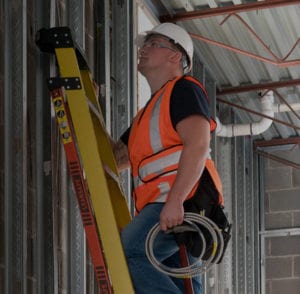
leaning ladder

Ladders are essential tools for worksite efficiency and safety. Since there are a large variety of ladder types, it’s crucial to select the most suitable model for your job and worksite.

Many pros build up a ladder collection overtime to meet OSHA requirements and have the best tools on hand for any given job.

Construction ladders should keep you and your workers safe while executing climbing tasks. Though they are a great way to increase access to higher-elevation locations, they can also leave workers vulnerable to falls, especially if the wrong type of ladder is used.

For example, some factors to consider include:

  • Height: For starters, ladders should be long enough to allow a 75.5 or smaller degree angle from the ground. If you’re using a basic step or extension ladder, you’ll need to account for this distance, and the maximum height someone can stand from the top of the ladder – a maximum safe reaching height is typically about four feet higher than the top of the ladder.
  • Strength: ladders typically come in five different ratings depending on the type of job they’re designed for. The “duty rating” is the maximum safe amount of weight the ladder can hold; remember that this number includes both the weight of the worker and any gear or equipment they’ll need to bring up the ladder or use while standing on it.
  • Material: Modern ladders are typically made from lightweight and durable materials like steel, fiberglass, and aluminum. If your worksite is outdoors, has the potential to be exposed to chemicals, or requires outside storage, then you’ll need to select a ladder suitable to handle those conditions. If you are working with electrical wires or might be exposed to electricity, it’s important to make sure the material is appropriate and the legs of the ladder are grounded or encased in non-conductive material.
  • Type: Specialty, extension, platform, and leaning ladders all have their time and place.

Werner offers a number of specialty and standard ladders for construction use, including podium and leaning ladders. Here’s a quick guide to how to choose between them:

When to Choose a Leaning Ladder

Leaning ladders are flexible options when you need to move to different locations quickly, need to access multiple heights, and don’t need to face multiple directions while working.

The Werner LEANSAFE models offer additional advantages such as built-in safety mechanisms which securely latch the ladder onto the vertical surface and reinforced rubber legs to prevent surface damage and provide a more stable platform.

It also offers a lower rear rail to front rail connection point allowing the user to get closer to the work when in stepladder mode.

The Werner LEANSAFE Ladder is available in lengths ranging from 4 through 12 feet in height and is rated up to 300 lbs. (1A Duty rating).

Unlike most leaning ladder styles, it’s also OSHA compliant – per regulations, traditional step ladders must be completely self-supporting. The LEANSAFE can be used as a stepladder, but due to its innovative supportive structure can also be safely leaned against a variety of surfaces.

When to Choose a Podium Ladder

If you need to work while standing on the ladder, or you want to face multiple directions, a platform-based ladder is the best choice.

Werner podium ladders have a standing platform at the highest safe standing level, allowing for more mobility and access in different directions. It also features an extra-wide standing area and secure guardrails with built-in locations for tools and supplies.

Podium ladders are best suited for working at fixed heights, especially in places where it would be difficult or impossible to maneuver a lift or install scaffolding. It comes in 3ft – 10ft models, all graded for heavy-duty construction use and rated to 300 pounds.

Leaning and Podium Ladders Improve Safety and Minimize Downtime

Smart ladder choice prevents worker falls and impact damage to equipment, while providing access to hard-to-reach places. While there are many choices out there, modern technology allows for a more secure and durable product to keep your worksite efficient and safe.

Pro Tool and Supply is ready on hand to help you find the right ladder option for any construction task: feel free to Contact Us for help or request more information about the ladders we offer.
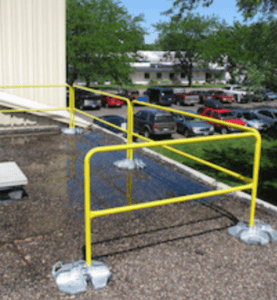
Guardrail Systems: 5 Factors to Consider for Your Jobsite

Before 2010, almost one construction worker per day fell to their death.

While the amount of fatal falls has decreased since then, according to the Bureau of Labor Statistics Census, falls are still one of the leading killers of workers.

Unguarded roof edges, stairwells, floor holes, and skylights are still significant workplace hazards, but these are all situations which can be made much safer by installing custom or pre-built temporary guardrail systems.

Guardrail fall protection is especially important for temporary hazards, such as when quickly pouring stairs. Even a simple railing system allows workers to go up and down more safely.

There are a few types of guardrails to choose from – the right guardrail set up varies based on the job site. Here are some things to consider when making your choice:

5 Factors to Consider When Choosing Guardrail Fall Protection

1. OSHA Compliance and Regulations

A few different regulations apply to worksite fall-protection. OSHA requires employers to provide guardrail systems which will protect workers from falling to lower levels.

All platforms that measure four feet or more above the adjacent floor or ground must be protected by a standard guardrail on all open sides. So, if you have a mezzanine, loading dock, roof, or other open space, you’ll need a way to reliably prevent falls of people and materials to lower levels.

When selecting a guardrail, it’s important to keep these guidelines in mind, or risk being non-compliant with safety regulations, which can carry a hefty fine.

In addition to size and location, you’ll also need to make sure the railings are secure and up to strength standards. For example, the StringerShield Stair Rail Clamping System is certified by third-party tests to exceed United States Federal OSHA temporary stair rail strength regulations.

2. Removable vs. Permanent Guardrails

Another factor to consider when choosing guardrail systems is how permanently you’ll need to use them.

Temporary guardrails don’t drill directly into structural elements – many, like StringerShield’s, clamp on.

Permanent guardrails can be more stable, secure, and durable. However, they’re also more expensive and take longer to install, and you’ll lose the ability to reuse the equipment without serious alterations.

So, if you’ll need the railing for less than a few months, a temporary solution is likely best. Even if the project is longer, if the finished product won’t require a guardrail set up, you are still likely better off with a temporary option.

3. Ease of Installation

Rail systems like StringerShield’s don’t require drilling into flooring or rooftop materials to install. This provides a considerable savings in time and installation costs. Instead, the clamp swivels into place to lock onto the edge of the structure.

Even if you want a more permanent solution, it can be helpful to have the flexibility of fall protection when and where you want it. Many guardrail systems are portable and can be dismantled and re-assembled as the need arises, providing greater mobility.

4. Flexibility & Versatility

A temporary guardrail system is also more versatile, and easier to configure to your jobsite’s specific dimensions and needs.

This also makes it easier to meet OSHA regulations – for example, in elevated situations where there is a danger of something rolling or being kicked and hitting someone below, OSHA requires a 2 × 4 sized toe board between the bases. StringerShield guardrails can be retrofitted with custom-sized boards to match this requirement.

5. Durability

Even the most short-term construction safety equipment needs to stand up to the wear-and-tear of heavy daily use and resist weather-related degradation.

It is also often worthwhile to look for slip-resistant/weatherproofing options that can fit base plates with non-slip pads which prevent slipping and help cushion the base if you need to install it on a relatively sensitive material like rubber roofing.

The StringerShield Stair Rail Clamping System uses pins with positive locks instead of setscrews which makes it easier to visually see the whole locking system and be confident that it is secure and ready to use.

StringerShield’s Stair Rail Clamping System helps quickly install guardrails on stringer stairs for construction sites.

Pro Tool and Supply carries an extensive line of fall protection equipment, including top-of-the-line guardrail systems like StringerShield’s Stair Rail Clamping System.

If you’re looking to find out whether you’ll need railing systems for your site, or want to know more about the options and solutions available, Pro Tool is happy to help: contact us here for more information or request a quote.

Choosing Heavy Duty Debris Netting for Your Jobsite

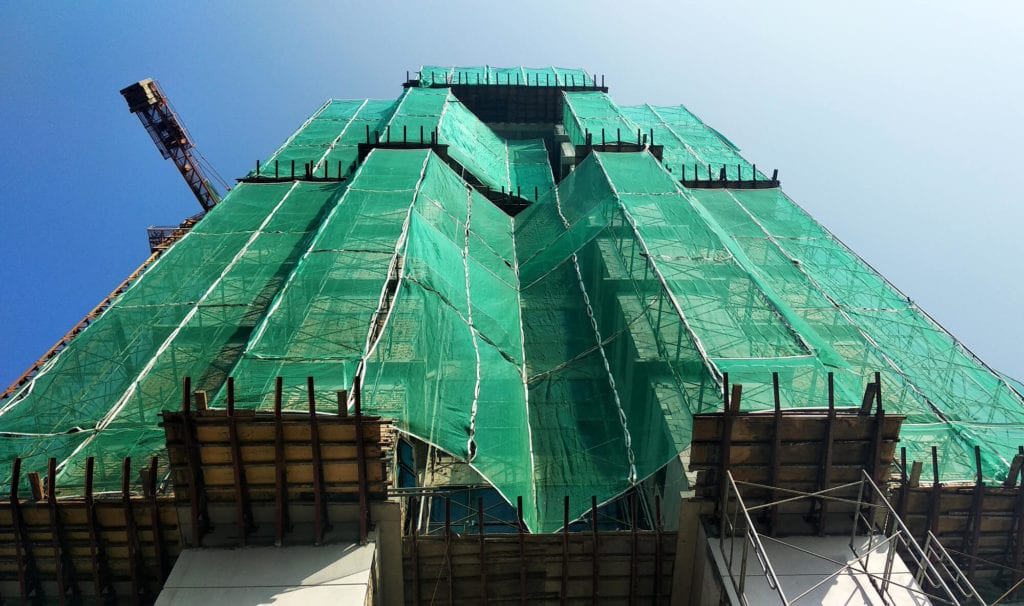
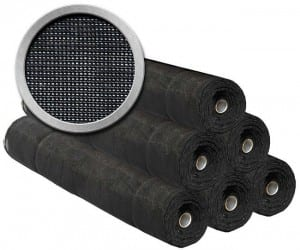
Heavy-duty debris netting is used to keep small and chunky debris from falling on workers, pedestrians, equipment, vehicles, or properties during construction.

Whether you’re constructing a high rise, demolishing a house, or working on a marine rig, falling objects of any size can cause serious damage to people on or near your site.

Even if there are no people in harm’s way, not having the right protection in place can still cause damage to tools and the nearby area which can lead to serious delays, damages, and expenses. Damage to buildings and tools can be easily avoided with netting, which is typically one of the most cost-effective and feasible methods to keep people and tools safe during construction.

There are plenty of fall protection options out there. Projects vary, so it can be helpful to consult with a safety netting expert before beginning a project. However, high-density debris netting like the Eagle Industries heavy duty debris netting is a particularly effective choice.

Here are a few specific factors to consider when choosing debris netting for construction:

Material type

Many heavy-duty netting systems can be reused if they are well maintained, installed properly, and inspected before each use, so choosing stronger materials can reduce costs in the long-term, even if they are initially more expensive.

UV-resistant, flame retardant, and abrasion-resistant materials can all extend the life of netting, as well as make it more effective for even the heaviest falling debris.

Eagle Industries heavy duty netting, for example, is constructed from heavy-duty, UV-resistant polypropylene, which has a very high strength per foot rating and is also flame and abrasion-resistant.

Containment and protection

The durability of the material is also affected by the netting’s construction type: netting can come in square or diagonal construction.

The best nets can contain small debris as well as protect workers from falls. Two-layer mesh is more effective for this, as net liners provide an additional layer of security and protection.

Installation hardware and edge protection is also an important factor to consider, since even getting the most durable mesh on the market won’t help you if you can’t attach it securely.

All debris containment debris nets should be attached to an approved cable system or used with an effective debris net outrigger system.

Testing Standards and Compliance

Safety is regulated by industry standards and jobsite protection regulations such as OSHA. Construction debris netting must meet or exceed these standards to offer an acceptable level of protection for workers and equipment.

The Best Heavy-Duty Debris Netting

The Pro Group offers a wide range of safety equipment and supplies, including a variety of jobsite safety netting.

For debris netting for construction, we carry a full line of Eagle Industries heavy-duty debris nets. Eagle Heavy Debris Containment Nets are made from high tenacity 2.5” knotless polypropylene and go through rigorous testing to ensure they meet construction industry standards.

Eagle Industries debris nets also include debris net liners for greater containment, available in 3/8″ polyester netting or 1/16” debris netting.

Eagle Industries nets offer a range of benefits, including:

  • Easy and secure installation
  • Fire/flame retardant
  • Long life expectancy due to abrasion resistant, heavy-duty 2-layer mesh
  • Tested and approved in compliance with relevant safety standards such as OSHA and ANSI A10.37
  • Leading edge protection and reinforced webbing and grommet edges for easier, safer, and more secure installation

Netting allows workers to safely and efficiently do their jobs

Many different types of fall protection can be used to give your workers the best protection possible.

The Eagle Industries Heavy Duty Debris Net can be the ideal choice to keep pedestrians and nearby properties safe for many construction sites. However, all sites are unique, and The Pro Group carries a wide range of products that can help you provide the greatest level of security for your site.

We have extensive experience with construction debris safety netting solutions and are happy to evaluate your project to let you know what type of protection will offer the best safety plan.

For more information about Eagle Industries or one of the other construction safety brands we carry, get in touch with one of our experts here.

5 Reasons Construction Safety Helmets are the New Hard Hats

Head protection gear has come a long way since the classic hard hat.

Traditional hard hats can do a great job of protecting workers from things falling on their heads, but if a worker falls, then the hard hats easily fly off which leaves the head vulnerable.

builder working with cutting grinder

In fact, construction workers are more likely to experience traumatic head injuries than any other employees in the U.S., according to NIOSH. A quarter of all construction fatalities are from head injuries, and more than half of these injuries are caused by falls.

Better safety helmets – that stay on during a fall – might have prevented many of these deaths.

Within the past decade, helmets inspired by those used in high-risk, high-impact sports have revolutionized the construction-site head-protection game. Today’s construction safety helmets are versatile, comfortable, and most importantly safer than the older alternatives.

Here are five reasons why safety helmets for construction are rapidly replacing hard hats across the country:

1. Versatility

Safety helmets are made to fit a variety of common job applications. They protect workers on almost any type of project, from construction to manufacturing, forestry, and oil/gas/wind utilities.

For example, Pro Tool & Supply carries the new 3M™ SecureFit™ Safety Helmet X5000, which covers all trades and can easily be customized with accessories to meet specific job requirements.

2. Cost

Safety helmet cost savings might sound counter-intuitive as construction safety helmets do typically cost more up-front than the traditional hard hat design.

However, safety helmets also often last longer than hard-hats. Their shelf-life can be up to twice as long.

Improving safety also has financial benefits that are hard to estimate. Injuries are expensive, both for workers and for the project. If an incident occurs, the insurance, worker’s comp, and timeline delays are much more expensive than the cost of upgrading safety gear.

3. Safety

Safety gear has a real impact on site safety.

While construction helmets are a relatively new invention, in similar cases, safety gear improvements have been shown to directly reduce injuries. For instance, enforcing glove safety can reduce hand injuries by up to 90%.

Even if falls are rare on your site, preventing even one serious or life-altering injury makes the upgrade to safer helmets worth it. On top of staying put if a worker falls, helmets can also provide better protection from side impacts.

Of course, all protective headgear used on-site has to meet ANSI compliance standards, including ANSI Z89.1, but not all safety helmets meet these guidelines.

However, models such as 3M Safety Helmets are held to rigorous safety standards and extensively impact- and penetration-tested.

4. Comfort

Modern construction safety helmets are inspired by models created for use in sports from skateboarding to rock climbing. They’re designed to stay put, stand up to wear-and-tear, and be comfortable enough not to get in the way of athletic activity.

Today’s helmets offer numerous customizable features for better ventilation, suspension, and pressure diffusion. Workers should be able to find an option that fits their heads and is comfortable to wear all day long.

5. Attachable Accessories

Because helmets are specifically designed for construction, they can be outfitted with additional features such as hearing protection, face shields, visors, reflective kits, and elastic band clips.

The 3M™ SecureFit™ Safety Helmet X5000 also includes additional features such as UV wear indicators and integrated clips for goggles and headlamps, and is compatible with many of the other personal protection equipment carried by Pro Tool & Supply.

Safety Helmets Save Lives

Hard hats just don’t cut it anymore when it comes to protecting construction workers.

The latest safety helmets for construction, like the 3M™ SecureFit™ Safety Helmet X5000, provide unmatched comfort, ventilation, and impact-protection to keep workers safe.

Pro Tool carries a full line of personal protection equipment to meet the needs of most sites.

If you’d like more information about what safety gear would work best for your project, our team will be happy to walk you through the latest and greatest options for on-site head and body protection. Contact our expert technicians for product information or request a quote here.

Save the Day with Construction Safety Netting

Falls account for nearly a third of all construction worker deaths.

Many heavy machinery and construction companies still don’t have adequate drop prevention programs for tools and equipment.

This may be one reason the number of falls hasn’t decreased in recent years. More than 42,000 people are hit by falling objects every year. That equals out to a falling-object injury every ten minutes, according to OSHA.

In other words, fall protection is a major issue, and should be one of the first priorities when it comes to protecting your site and workers.

Construction Debris Netting Saves Lives

Every time the elevation of a job increases, the risk increases, and not just for your workers, but to anyone on or near your jobsite. Even the smallest items can be fatal if they fall from high enough.

It’s the old “dropping-a-penny-off-of-the-empire-state-building” idea. A penny might not be big enough to do damage, but a two-pound tape measure falling from a few stories up can hit the ground with more than a thousand pounds of force per square inch.

That’s enough to do serious damage to whatever’s below, whether it’s valuable equipment or a person.

Safety Netting Protects Staff, Equipment, and Your Project

Workers themselves can be at risk for falls, leading to injuries or even death.

Falls also pose serious financial and legal risks. Construction companies can be held responsible for any injuries from falling debris or personnel injuries, regardless of how they happen – so even if you have safety mechanisms in place, if they fail, you might be liable.

Even if falls only affect your equipment, damages can still bring projects to a costly halt.

Debris and Personnel Safety Nets from Pro Tool Catch Fallen Objects of Any Weight and Size

Of course, the best protection from falling objects is to make sure they don’t fall in the first place. Training and safety gear also play an important role in keeping people safe.

However, it’s impossible to plan for every eventuality. Safety netting systems can be designed to catch personnel, debris of any size, or both, adding a crucial layer of protection for your workers, equipment, and the project itself.
At Pro Tool, we offer vertical and horizontal netting configurations in both standard off-the-shelf and customized configurations to meet your specific jobsite requirements.

Debris Netting:

We offer both honeycomb (1,000lb. rating) and heavy-duty (2,000, 5,000, and 10,000lb. rating) debris nets, with enforced border edges ideal for construction and demolition debris containment. Our debris nets are flame resistant and durable enough to stand up to the wear and tear of any site.

Personnel Safety Netting:

Our personnel safety nets help keep workers safe. Our base nets are 3.5” diamond nets and have a debris net liner of 1/16” mesh. Personnel safety nets are rated to 17,500lb. drop test load capacity, and meet all OSHA safety and fall protection netting system standards.

Save the Day with Construction Safety Netting

Dropped objects and falls in the construction industry are a major issue, but drop prevention programs using the right precautionary netting can prevent damage and save lives.

Pro Tool & Supply has custom made safety and debris netting specifically designed and fabricated for your construction job needs.

To get jobsite protection for your construction site, Request a Quote, or call us at 1-888-776-0007 to speak with a Pro Tool & Supply representative for more information on our stock of construction grade netting equipment.

Do’s and Don’ts of Using Diamond Blades

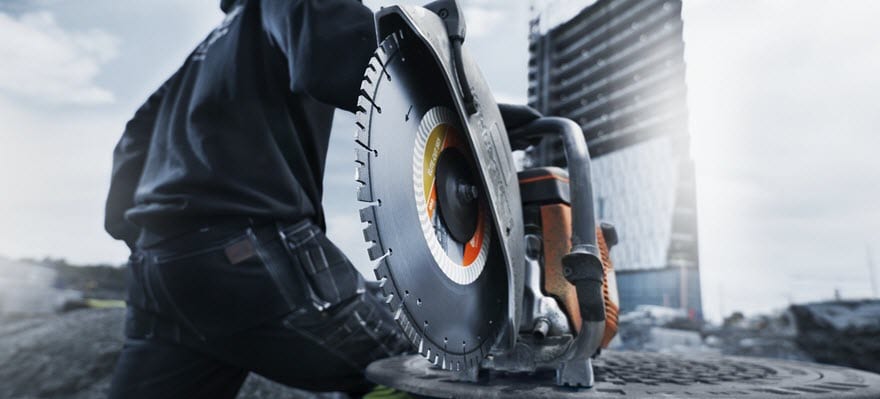
Diamond Cutting Blade

You want to make sure you do everything possible to extend the life of your diamond cutting blade. Diamond blades vary in size, style, and composition; however, the general best practices mentioned in this article are appropriate for all types of diamond blades.

DO: Use a hard bond to cut softer materials and a soft bond to cut harder materials

It sounds strange, but it has to do with the process of the diamonds being ground down while the blade spins through the material, sloughing off diamonds to reveal another diamond layer.

Hard bond → Soft material
A harder bond holds diamonds in place longer – meaning it’s more effective when grinding through softer material.

Soft bond → Hard material
When working with hard material, what’s important is to constantly wear away the diamonds to get to the next layer of diamonds beneath them. A soft bond allows this to occur.

DO: Use narrow gullets for hard materials and wide gullets for soft materials

On a segmented diamond cutting blade, the spaces between the segments help to remove the slurry of ground-down diamonds and matrix material. It’s important for the slurry to be removed efficiently, or the friction of the blade against the material can cause overheating.

Soft material → Wide gullets
When the softer material is being cut, the amount of slurry produced requires a wider gullet.

Hard material → Narrow gullets
Harder materials don’t produce as much slurry, so you can get away with using a blade with a narrower gullet.

DO: Consult a cutting tool expert before cutting material of unknown hardness or abrasiveness

Diamond blades are designed and manufactured to cut nearly any type of material, such as:

Asphalt over concreteGraniteRebar
BlockGreen ConcreteReinforced concrete
BrickLimestoneStone
CeramicsMarbleTile
Cured ConcretePavers (and other masonry)Travertine
GlassPorcelain

If you have a material that’s not mentioned here, it’s best to contact a cutting tool specialist to determine the best diamond cutting blade to use.

DO: Check the aggregate type before cutting concrete

“Aggregate” refers to the particles that are combined with the concrete to give it strength. Some aggregate types are harder than others. The most common materials used are crushed stone, gravel, recycled concrete, sand, slag, and geosynthetics (man-made). Once you know the aggregate composition, you can pick the best concrete cutting blade for the job.

DON’T: Allow the blade to overheat

An overheated diamond blade ages prematurely and can crack. If you are running a dry blade, make sure you pause occasionally to allow it to cool down. Otherwise, for a wet job, make sure you have enough coolant (such as clean, cold water). Even when running a wet blade, you may need to allow it to run freely every 10 seconds or so to allow air to cool it down.

Although you can use a dry cutting blade for a wet job, you cannot do the opposite. A wet diamond blade used for a dry job will overheat and possibly break apart, becoming a dangerous flying object.

DON’T: Use a blade designed for a low-horsepower saw on a high-horsepower saw

In this scenario, the diamond blade will wear out much more quickly than it would normally. On the other hand, it’s a bad idea to use a high-horsepower blade on a low-horsepower saw because the blade may damage the material or itself.

DON’T: Allow untrained saw operators to use diamond blades

An experienced saw operator knows how to use a diamond cutting blade so that it’s most effective. Besides properly matching the blade to the job (and the saw), a well-trained operator knows how and when to “dress the blade” (exposing new diamonds by cutting something abrasive).
It’s also important for the saw operator to observe the recommended operating speeds for both the saw and blade. The blade manufacturer will have a recommended speed for its diamond cutting blades as well as a maximum safe speed.

DON’T: Neglect saw maintenance

Besides the saw’s operation, its maintenance is also a factor in prolonging the life of a diamond blade. Although all parts are important, it’s particularly crucial to check the saw’s drive belts, bearings, spindle, water jet flow, and water pump. If you’re unsure which parts your saw is need of, our parts specialists can help.

Not sure which saw blades are right for your upcoming job?

Request a quote or call us at 1-888-776-0007 to speak with a Pro Tool & Supply representative. We also carry concrete and masonry saw and equipment for purchase or rent. After getting our expert assistance, we can supply you with a complete product solution of saw and blades for cutting concrete, masonry, or other difficult-to-cut products.

Reciprocating Saw Uses and Safety Tips

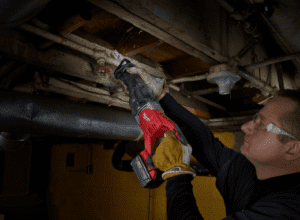
As the ultimate demolition tool, a reciprocating saw is a must-have in any workshop. This versatile piece of equipment uses up-and-down motions to cut through just about anything, from backyard shrubbery to metal. Add in detachable blades and easy handling and you’ll see why reciprocating saws are one of the best all-around tools for both the home and the construction site.

Reciprocating Saw Uses and Safety

Reciprocating Saw Uses

While reciprocating saws are demolition tools by nature, they are useful in a variety of applications. As a professional contractor, you’ll get many uses out of a reciprocating saw:

  • Opening walls. Reciprocating saws allow you to create even openings in walls and drywall. This will let you easily access wires or pipes during renovation projects.
  • Fitting windows. Similar to opening walls, a reciprocating saw can help to cut down and fit windows.
  • Cutting through nails. Should you encounter a pin or nail that is difficult to remove, a reciprocating saw can help. Simply cut the head rather than attempting to pull it out.
  • Plumbing and PVC work. When it comes to piping, a reciprocating saw is the most effective tool. A reciprocating saw will cut through PVC easily including pipes found in awkward positions.
  • Slicing through difficult materials. Reciprocating saws are versatile and allow you to cut through some of the most difficult materials. These include wood, hard plastic, and even metal.
  • Cutting branches. When removing branches or small trees, a reciprocating saw is the tool for the job. Coarse blades make this saw excellent at cutting wood with minimal effort.

Additionally, the lightweight and easy-to-use nature of the reciprocating saw makes it ideal for overhead work both indoors and outdoors.

Reciprocating Saw Blade Types

For your reciprocating saw to run at optimal efficiency, it is critical to use the right blade. Different blades are available based on the application, so it is important to match the blade to the right job:

  • High Carbon Steel (HCS). These blades are perfect for “soft” materials, such as plastics, wood, and laminated particleboard.
  • High Speed Steel (HSS). Offering fully-hardened steel blades, the HSS is ideal for cutting metals, aluminum, and other non-ferrous metals.
  • Bi-Metal (BiM). The BiM is a combination of HCS and HSS. It is highly flexible and is good for the most demanding of applications. This would include wood with nails and other scenarios where there is a risk of breakage.

In addition to material type, you should also consider the blade’s teeth per inch (TPI) when making your selection. The number of saw teeth per inch on a blade changes how fast the saw cuts. For example, blades with a lot of small teeth will cut more slowly than a blade with fewer, larger teeth. The TPI of a blade will range from 3-18. Blades falling in the lower end of this range will be fine for cutting wood and “softer” materials, however a TPI of 14-18 is needed for cutting metal.

Reciprocating Saw Uses and Safety

Reciprocating Saw Safety

Reciprocating saws are powerful tools, and during use, it is important to take proper safety precautions. The following tips will allow you to operate your reciprocating saw safely:

  • Maintain your balance. Always use two hands when operating your reciprocating saw. Keep the grips clean and free of dirt and dust. Inspect the blades prior to using the saw to make sure they are sharp enough for the required job.
  • Maintain electrical safety. Never use an electric reciprocating saw during wet conditions. Use the saw with Ground Fault Circuit Interrupter (GFCI) protected outlets or extension cords. Check the tool cord for damage prior to use, and if a problem is detected, do not use it.
  • Wear personal protective equipment. Always wear the proper gloves, dust mask, ear covers, and safety goggles when using a reciprocating saw. Slip-resistant footwear is also recommended.
  • Ensure proper blade settings. Never set a blade to go further than 0.32-0.64 cm deeper than the material that you cut.
  • Turn the saw off to perform maintenance. When changing or cleaning reciprocating saw blades, turn off and unplug the tool. Never put the saw down until the motor has completely stopped.

At Pro Tool & Supply, we are proud to offer an extensive supply of reciprocating saws for sale and rent. Our experts are available to help you select the right saw and blade, and we’ll ensure that you feel comfortable with operation. Contact us today to learn more.

How to Achieve Safe, Efficient Floor Grinding

Walk-behind floor grinders are critical for concrete construction and maintenance. They can repair existing slabs, clean and prepare floors for carpet or linoleum, and polish and beautify uncovered surfaces. But like any power equipment, conscientious preparation, proper operation, and the right equipment will make concrete floor grinders as safe and efficient as possible.

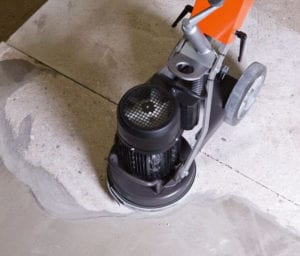
Concrete Grinding - Husqvarna PG 280

Operation

Proper floor grinder operation includes taking care to control the machine and prevent its harming the user. Operators should always wear respirators to deter any stray dust from reaching their mouths and noses, slip-resistant, closed-toe shoes, and eye and ear protection. Avoid loose clothing that can potentially get caught in the grinder’s disks.

For a smooth, clean, level floor, begin by cleaning up any oil, grease, solvent or other liquid debris, then sweep the floor.

Operators should assume a balanced stance and firmly grip – not clutch – the handles. Glide the grinder side to side in short sweeps. Do not allow the machine to get too far away from your center of gravity or at an angle that requires you to strain to pull it back. A smooth motion with the grinder will not only produce better results, by preventing a “swirled” appearance, but also prevent stress injuries to the user. Grinding blocks come in various grits. Applications often require several passes over the floor using finer and finer grits to remove adhesives, level the floor, smooth it, and polish it.

Stay alert during operation:

  • Ensure the vacuum is operating efficiently and the hose is not kinked.
  • Watch that the filter’s self-cleaning cycle is functioning or turn the machine off frequently to clear the filter.
  • Change the vacuum bags often.

Power Trip

The Pro Group offers electric EDCO and Husqvarna floor grinders that can be used anywhere, without worrying about harmful fumes emitted by gasoline and propane. The power cord is the only real drawback to electric machines, but with some common-sense precautions, operators can avoid potential problems:

  • Always inspect electrical equipment and power tools before use. Disqualify any with frayed cords.
  • Always use grounded outlets.
  • Keep the cord away from the grinding plates.
  • If outlets are unavailable and a generator must be used, ensure there is sufficient ventilation and insist operators wear carbon monoxide monitors.
EDCO Concrete Grinding

Silica

The top priority when cutting or grinding concrete must be preventing and containing silica dust. If allowed to become airborne, the silica particles in concrete dust easily make their way into the respiratory system. Once in the lungs, these tiny particles tear microscopic lesions in the lung tissue. Exposure can cause cancer, silicosis, and other respiratory diseases.

The Occupational Safety and Health Administration approves of two methods for keeping silica dust out of workers’ lungs:

  • Wet Method – Water delivered to the grinding surface captures dust particles before they can be inhaled. Water flow must be continuous, and the delivery system must be integrated into the grinding equipment. Before operating a floor grinder, ensure all water hoses are in good shape and securely fastened, nozzles are properly fitted and directed to the grinding wheel, and the water supply is sufficient. Use a wet vacuum fitted with a HEPA filter to clean up the hazardous slurry of water and dust.
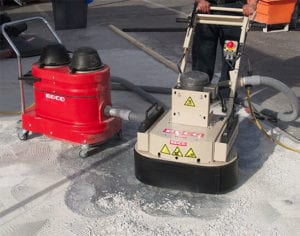
  • Dry Method – Floor grinders can be fitted with attachments that confine and vacuum concrete dust as it is created, before it can escape into the air. Vacuum dust collection systems include a shroud that fits securely to the bottom of the grinder to corral the dust, a vacuum powerful enough to suck up the dust, and a filter that meets OSHA standards (99 percent or greater efficiency and a cleaning cycle).

Pro Tool & Supply stocks a full line of walk-behind floor grinders in a variety of sizes for sale or rent, as well as vacuums, scarifiers, angle grinders, and all the accessories you need to make your project a success. Contact our experts today to learn more.

Preventing Construction Site Fires: Everyone’s Duty

Fire on a construction site is a real and frightening possibility. Spark-producing tools and machinery are in frequent use. Flammable material abounds. Accelerants on jobs can aid fire’s rapid spread. And in many cases, sprinklers, firewalls, and other systems in the built environment that can delay fire’s impact, have not yet been installed.

Construction site fire is a major threat to life, property, and construction schedules and the consequences can be devastating.  The likelihood of fire, however, can be reduced. Comprehensive planning, diligent work performance, and fastidious housekeeping can keep construction sites productive and safe.

Planning and Training

The first step to keeping workers and property safe is to establish a system of policies, processes, responsibilities, and training so that all personnel on the site understand management’s commitment to a fire-free project:

  • Appointing a competent person to wield ultimate authority and responsibility for fire prevention, extinguishing, and escape protocols.
  • Implementation of a fire-safety inspection schedule for the duration of the project. The plan must be adjusted as construction progresses, new trades arrive on site, and new tasks are performed.
  • Procurement, distribution, and worker instruction on use of fire extinguishers. Ensure the number of extinguishers is sufficient and that they are located in highly visible, easy-to-access locations.
  • Consideration of site-specific challenges that make fire more likely or its escalation easier – location, terrain, weather, and type (road, high rise, underground, etc.)

Construction Activities

By its nature, construction involves activities and materials that can start or contribute to a fire. It is each tradesperson’s responsibility to ensure they perform their tasks with care:

Hot Work

  • Check hot work areas for fire at least every 30 minutes from the time welding, cutting, or grinding operations begin to an hour after they have concluded.
  • Whenever possible, perform this work in a shop, segregated from other trades.
  • If hot work must be done directly on the building site, cover floor and wall openings with fire-resistant blankets to guard against sparks.

Electricity

  • Keep newly installed wiring and electric appliances from shorting and igniting a fire by protecting them from wet weather and shielding them from contamination by windblown debris, sawdust, and other ready fuel sources.
  • Continue to inspect wiring even after it has been installed. Dry weather and vibration from nearby construction activity can crack and damage insulation, leading to the potential for short circuiting and fire.
  • Temporary lights and the generators that power them also can cause electrical fires. Check broken bulbs, bent or displaced panels, and cracked cords caused by accidental impacts from tools or machinery.
  • Tools with frayed power cords must be removed from service.

Flammable Materials

  • Keep only daily supplies of gasoline, diesel fuel, acetylene, sealants, solvents, and other liquids that can act as flame accelerants on the construction site. Store larger supplies offsite, covered with noncombustible sheets, and well away from sources of heat.
  • Install dust-collecting equipment on power tools and in shops where cutting, sanding, and other woodworking activities will be conducted.
  • Operate and stage mobile equipment on paved slabs or hard-packed dirt free of vegetation or debris that could be ignited by hot engines or exhaust fumes.

Disposal and Housekeeping

Keep flammable construction material away from heat, flame, electricity, and other ignition and fuel sources.

  • Insist workers discard oily rags only in self-closing metallic containers.
  • Promptly remove scrap wood and other debris from the construction site.
  • Strictly limit the areas in which employees may smoke.
  • Sweep work area floors at the end of each day to remove sawdust, paper scraps, and other combustibles.

Fire needs three ingredients in order to start and spread: spark, fuel, and oxygen. Preventing and containing construction site fires involves the elimination and segregation of these ingredients from each other. Contact the Pro Group to learn about our extensive inventory of fire-retardant products, fire extinguishers, and more to protect workers, property, and productivity.

Behind the Scenes: The Pro Group and Clean Emissions

In July 2017, The Pro Group began offering Clean Emissions Products Inc. to better meet customers’ environmental and regulation limitations. Rick Poirier, Operations Manager, is the liaison between The Pro Group and Clean Emissions. Read the following interview to learn more about Clean Emissions products and how you can utilize them in your equipment.

Q: What are the new catalytic converters mentioned on the web site?
A: A catalytic converter is an emissions control device that converts toxic gases & pollutants in exhaust gases to less toxic pollutants. These Clean Emission converters reduce carbon monoxide by up to 99%, Hydro carbons by up to 90% , Diesel particulate matter by up to 95% & nitrogen oxide by up to 99%.

Q: How are catalysts installed?
A: Catalysts units are available in an “in-line” or muffler type configuration. An in line unit can be mounted at any location available within the engine exhaust system either before or after the existing muffler.

Another option is the muffler configuration. Clean emissions can take an existing muffler, cut it open and install the proper components. They then weld it back together. The catalytic muffler can now be installed back into the equipment. We also offer Honda catalytic mufflers which are a direct replacement to Honda OEM mufflers.

Q: How did you get involved with Clean Emissions & scrubbers?
A: We partnered with Clean Emissions after years of building a solid relationship monitoring OSHA & EPA tier 3 & 4 emissions requirements. We also react to the requests presented to us by our customers who find the need to operate equipment indoors safely.

Q: What type of equipment would benefit from a converter?
A: All types of gas, diesel and liquid propane engines would benefit from a catalytic muffler. Clean emissions catalytic line up has the capabilities of covering our entire product line from compactors to backhoes & everything in between.

Q: Why did you choose Clean Emissions as your Catalytic supplier?
A: Clean Emissions is a Canadian based company that fully understood and presented to us the solution to a problem heading our way before anyone else. We were prepared when our customers called requesting equipment to meet Tier 3 or Tier 4 emission standards. We also had a solution to offer our customers a catalytic converter on our rental equipment when they needed to run gas engines inside a building. This helped put us ahead of our completion offering a solution to a problem which enabled our customers to be more productive.

Also, the quality of their in-line stainless steel units & the small profile makes installation very easy. The in-line units only need to be clamped into place with exhaust clamps. The workmanship on the catalytic mufflers is also impressive. We have never had a manufacturer premature unit failure. The replacement Honda catalytic mufflers are just a bolt off and bolt on set up.

Clean emissions also understood the benefit of working with the Pro Group giving us such a large new England territory. They understood that our 4 locations, outside sales team, inside sales team and our parts & service department understand the product line & need making us a true resource to our customers because after all our success depends on our customers success.

Learn More About Clean Emissions

Visit our Clean Emissions brand page, or contact The Pro Group with your questions, 1-844-851-1755. Rick and his team will be happy to help.

Search For Products

Product has been added to your cart