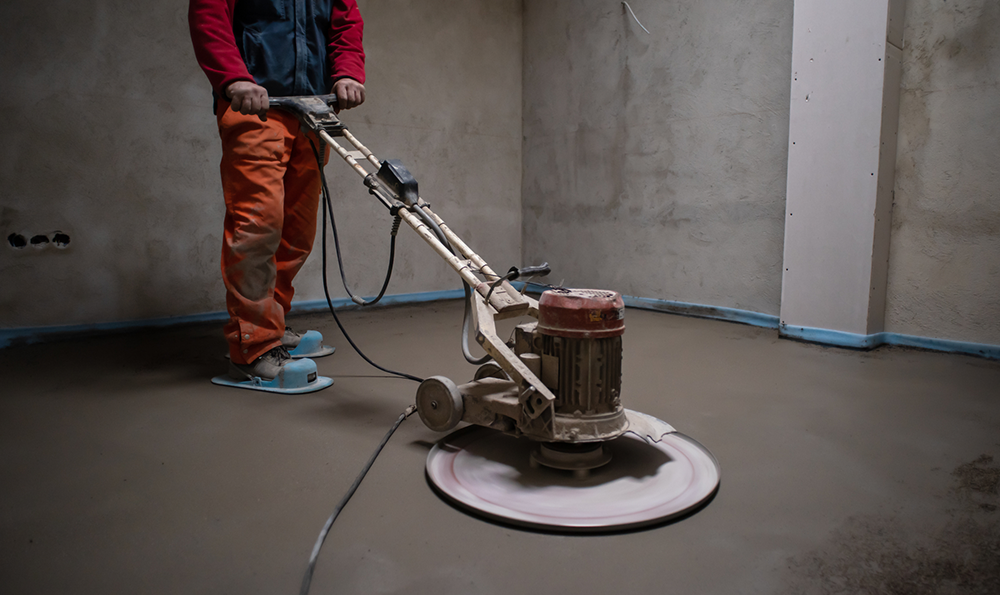
concrete-grinder

3 Things to Consider When Renting Concrete Floor Grinders

Whether they will be left bare or used as a substratum for tile, carpet, or linoleum, concrete floors must be properly prepared to ensure long life and optimal performance. A concrete floor grinder rental offers an efficient, economical way to level new floors, repair existing slabs, remove old coverings, and more.

Use this guide to select the proper concrete floor grinder rental in order to ensure success with your next project.


1. Head Count

Floor grinders get the job done by scraping the concrete surface with rotating discs mounted onto the bottom of the equipment. The number of disks determines not only the area that can be ground with each pass of the machine, but also the best application for the machine.
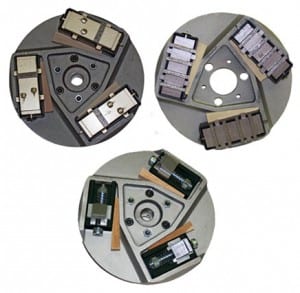
  • concrete grinder rentalOne Head: With a small footprint, these grinders work best in corners, against walls, and in other tight spaces. However, their gear-driven rotary disc rotation gives them aggressive grinding action that can leave irregular scratch patterns, making them inapt for floor polishing.
  • Two Heads: The extra head gives more floor coverage, saving time. With the rotary machines’ weight concentrated on just two heads, there is plenty of pressure to effectively grind the surface and obliterate thick paint and adhesives.
  • Three Heads: Perhaps the best option for all-around performance, the three-head configuration distributes the machine’s weight providing greater balance, while still creating sufficient mass to ensure strong grinding. The additional head means large surfaces can be covered quickly. Three heads and the use of planetary action also makes these machines a better option for polishing concrete floors.
  • Four Heads: While still a strong option for grinding large surfaces in a short time, four-headed grinders exert even less pressure on each spinning head, adding to the machines’ effectiveness at polishing. Two heads spinning clockwise and two counterclockwise, negating excessive torque and the effort necessary for the operator to keep the grinder in line, cutting down on fatigue.


2. Power and Size

The wider a floor grinder’s working dimension – the amount of floor it can cover with each pass – the less time it should take to finish the job.
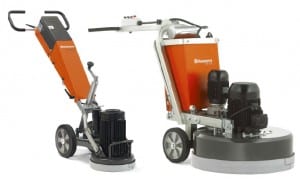
husqvarna concrete grinder rentalsThe machine’s size to some extent is dictated by the number of heads. In turn, the size and grinding intensity determines how much power is required to run it. Grinding intensity takes into account the machine’s gross weight, the amount of contact between the grinding tools and the concrete, and the grit rating of the tools. Coarser grits and more surface contact increases resistance and requires more power to achieve results.


3. Safety and Health

Operating all equipment safely is the first order of business on any project. While concrete floor grinder rentals are not particularly dangerous, they can present health concerns if not operated properly:

  • Ventilation: Gas usually offers the most consistent and available power source for concrete floor grinders, but electricity or propane should be used in all indoor and poorly ventilated areas.
  • Dust Control: Users have two options for keeping irritating dust out of the air during grinding operations. Many rental grinders come with built-in vacuum capabilities, while others are capable of accepting separate vacuum units. Other grinders include a water tank. Wet grinding tamps down much of the dust as it is created. The wet dust is then vacuumed into the grinder, where it can be disposed of properly.
  • Personal Protection: Users should always wear respirators, sturdy shoes, and eye and ear protection when operating a floor grinder. Avoid loose clothing that can potentially get caught in the grinder disks.


Browse our Concrete Floor Grinder Rentals

Browse our selection of concrete floor grinder rentals which include models from Husqvarna and Edco. Still not sure which concrete floor grinder rental is right for you? Call The Pro Group at 1-888-776-0007 to speak with a representative who can help you select the concrete floor grinder rental that’s right for you. Rentals are available from one day to long-term.
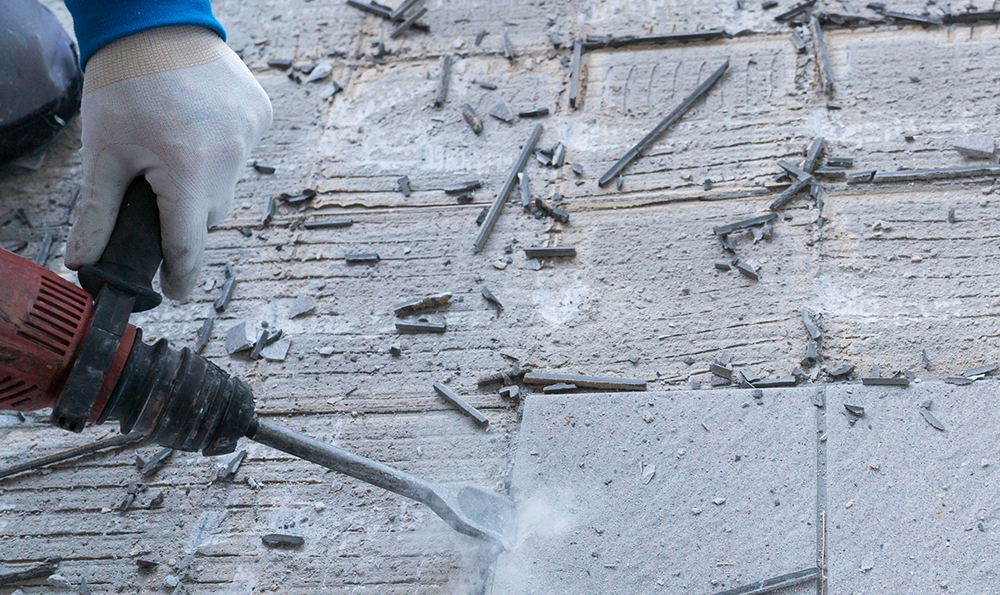
concrete-chipping

Mastering the Art of Concrete Chipping with Pro Tool and Supply

For those working in construction or demolition, it’s crucial to have appropriate tools, like chipping hammers, for efficient breakdown of concrete, brick, and stone surfaces. However, with numerous chipping hammer models available, selecting a suitable one can be challenging. Fortunately, The Pro Group offers an extensive line of quality air tools from renowned brand Chicago Pneumatic – perfect for all your concrete chipping needs!

What is A Chipping Hammer?

A chipping hammer is a tool commonly used in construction, demolition, and renovation industries for tasks like removing or altering concrete, stone, or metal. Its main feature is the ability to deliver successive blows to a chisel or similar tool, allowing it to chip away at materials effectively.

Key Components

The Handle

The handle is usually ergonomically designed to provide a comfortable grip for the user, reducing fatigue and enhancing productivity. This design consideration is especially crucial given the manual intensity of tasks where chipping hammers are typically employed.

The Head

The head of the chipping hammer is the part where a chisel or other shaping tool is attached. It’s built to endure forceful impacts and is typically crafted from sturdy materials like hardened steel. The tool attached to the head can vary based on the task, with different shapes and sizes available. A pointed chisel, for instance, is useful for breaking apart concrete, whereas a flat chisel can be used to shape or refine a surface.

The Air-Operated Piston

The chipping hammer is powered by an air-operated piston that rapidly moves back and forth. This piston is driven by compressed air, providing consistent and powerful blows to the tool at the hammer’s head. The rate and power of the blows can be adjusted to match specific tasks, making the chipping hammer effective and versatile. 

The tool’s effectiveness and versatility are due to the pneumatically operated piston mechanism. To operate the chipping hammer properly, you need to control the airflow to the piston. Usually, this is done through a separate valve or mechanism. 

By controlling the mechanism, you can adjust the power and frequency of the hammer’s blows, which makes it more versatile for different tasks.

How Are Chipping Hammers Used?

They are typically used for the following applications:

  1. Demolition: Chipping hammers are often employed to break down structures or surfaces made of concrete, brick, or other sturdy materials. For example, they may be used to remove a concrete patio, a brick wall, or a stone walkway.
  2. Construction: During construction projects, chipping hammers can be used to make adjustments to concrete structures or surfaces. If a concrete slab isn’t quite fitting correctly or a concrete wall needs an opening for a window, a chipping hammer can be used to make the necessary alterations.
  3. Renovation: In renovation projects, chipping hammers are invaluable for removing old flooring, such as tile or concrete, or for taking out old concrete countertops.
  4. Scraping and Cleaning: Chipping hammers can also be used to clean surfaces, particularly to remove rust, scale, or old paint from metal surfaces, as well as for the removal of slag after arc welding.

Choosing the Right Chipping Hammer

When choosing the right chipping hammer, several factors need to be taken into consideration. The power source is one of the first things to consider. Chipping hammers can be powered by electricity, pneumatic pressure, or even manually, each having its own advantages and disadvantages.

Power Sources of Chipping Hammers

Electric hammers offer constant power but require access to an electricity source, while pneumatic hammers provide greater power but require a compatible air compressor. Manual hammers give the most control but can be physically demanding.

Ease of Handling

The weight of the chipping hammer is also important. Lighter hammers are easier to handle and maneuver, especially for tasks requiring precision or extended use, but heavier hammers offer more power for hard materials.

Finding a Comfortable Grip

Ergonomics should never be overlooked. A well-designed hammer reduces user fatigue and increases safety and productivity. Look for features like shock-absorbing handles, comfortable grip, and a well-balanced design.

How Will the Hammer Be Used?

Lastly, consider the intended use of the hammer. For example, lighter chipping hammers might be sufficient for tasks like removing tiles or light masonry work, but for heavier jobs like breaking up concrete or brickwork, a heavier, more powerful hammer is required. Matching a chipping hammer to a specific task or material is vital to ensure efficient and effective work. 

For example, for precision tasks or softer materials, a lighter, easy-to-control hammer is ideal. In contrast, for breaking up harder materials like concrete, a heavier, more powerful hammer would be a better choice. Always consider the tool’s specifications and performance capabilities outlined by the manufacturer before making your decision.

Introducing Chicago Pneumatic: The Market Leader in Chipping Hammers

Chicago Pneumatic, a world-renowned brand known for its robust and durable air tools, offers a wide variety of chipping hammers. The brand stands for performance, durability, and reliability, qualities perfectly reflected in its chipping hammer models.

CP 4123 CR 3R Chipping Hammer

This chipping hammer from Chicago Pneumatic is built for heavy-duty applications. The CP 4123 CR 3R model stands out for its robust design and unrivaled durability. Equipped with a specially designed ergonomic handle, it ensures comfortable handling and less vibration for users, thereby reducing fatigue during long work sessions.

CP 4131 3R Chipping Hammer

The CP 4131 3R model is designed for maximum efficiency and ease of use. Its lightweight structure does not compromise on power, making it ideal for concrete, stone, and masonry removal. The ergonomic design guarantees user comfort and safety, while its robust nature ensures a long-lasting performance.

CP 4131 Chipping Hammer

The CP 4131 model stands true to the Chicago Pneumatic’s promise of durability and performance. Its compact design and easy maneuverability make it perfect for tackling intricate chipping tasks. With less vibration and high impact power, this model ensures a faster and more effortless chipping process.

Safety First

Safety is paramount when using a chipping hammer. Operators should always use appropriate safety gear, including safety glasses, gloves, and steel-toe boots, and should be trained in the proper use of the tool to prevent accidents and injuries. It’s also important to regularly inspect and maintain the tool to ensure it’s in good working condition.

The Pro Group: Your Go-To Destination for Top-of-the-Line Construction Tools

When it comes to construction tools, you deserve nothing but the best. That’s why The Pro Group offers an extensive range of quality tools from industry-leading brands like Chicago Pneumatic and RNP Industries. Don’t compromise on safety, productivity, or efficiency. Reach out to The Pro Group today for more information on their complete product line. Request a quote or call 1-888-776-0007 to speak to a representative and discover how their tools can revolutionize your construction process.

concrete-coring-rig

Choosing the Right Concrete Coring Rig and Bits for Your Project

Whether you are drilling wet or dry, working with reinforced concrete or pre-stressed slabs, it’s important to choose the right rigs and bits for the job. The Diamond Great White Core Bore Bit and drilling rigs from Diamond Products are designed specifically for this purpose – providing maximum performance and safety when drilling through concrete. In this article, we will discuss why these rigs and bits are ideal for any concrete coring project, as well as how to select them correctly so that you get the best results every time.

What is a Concrete Coring Rig?

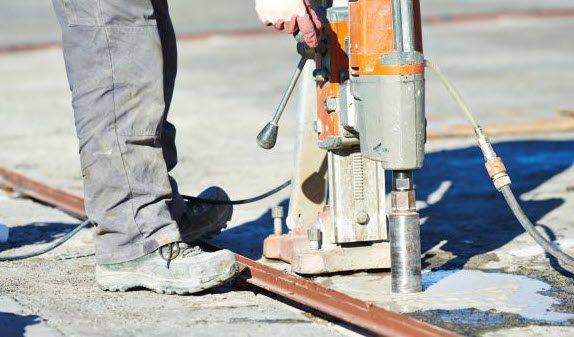
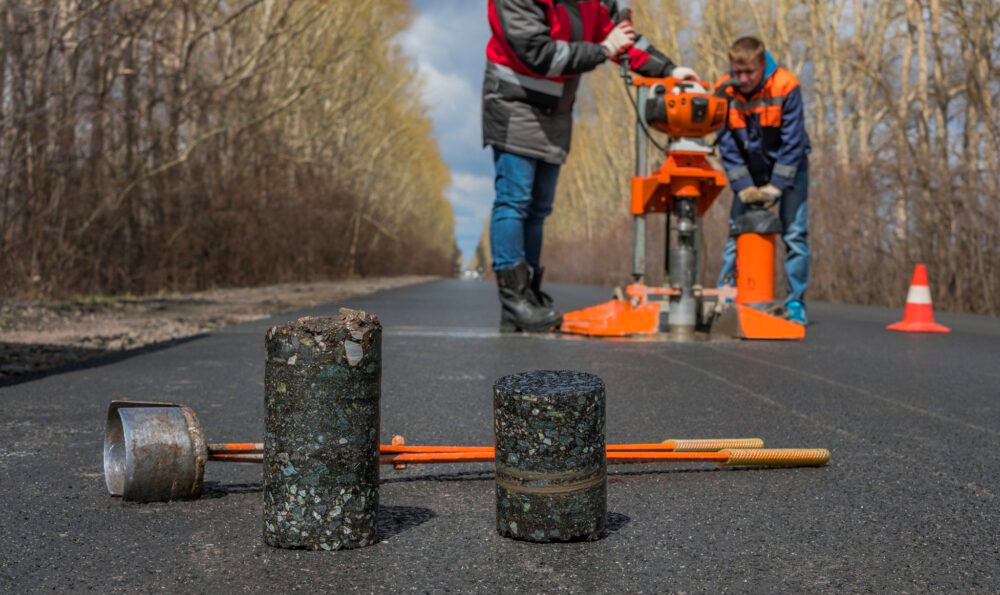
A core drill is a heavy-duty power tool used to drill precise holes into concrete and other hard materials, such as masonry, brick, and natural stone. Concrete coring rigs typically consist of a motor, a drill column or boom, and a chuck that holds the drill bit. Some rigs are designed to be handheld, while others are mounted on a cart or a stand for greater stability during use.

Core drills are used for a variety of applications, including creating holes for pipes, ducts, and electrical wiring, making room for structural reinforcements and preparing surfaces for demolition or renovation. Concrete coring rigs are typically heavy-duty and more specialized than standard drill tools, as they are designed to handle the high torque and pressure required to cut through hard materials.

Wet and Dry Rigs

The primary difference between the two types of rigs is the way they handle the dust and debris generated during the drilling process.

  • A wet core rig uses a continuous flow of water to cool the drill bit and wash away the dust and debris generated during the drilling process. This helps to prolong the life of the drill bit and reduce the amount of dust and debris in the work area, making it a more suitable choice for larger and more complex coring tasks or for drilling into brittle materials.
  • A dry core rig operates without the use of water and generates a significant amount of dust and debris during the drilling process. This type of rig is typically used for smaller, simpler coring tasks or for drilling into materials that are not particularly brittle.

Diamond Products’ Drilling Rigs for Concrete Coring

The Pro Group can provide you with a quote on any of Diamond Products Core Drilling Rigs and accessories.

M-1 Complete Combination Core Drilling Rig

This is the number one selling rig in America and is great for the General Contractor.

The 2-1/2” square column is black oxidized for a modern look and features 6″ wheels to increase mobility. A dual switch/outlet control panel with an amp meter (excluding the CB700 models, which have an LED amp meter) allows you to customize settings while a vacuum pump ensures fast mounting without any anchor holes. 

Four leveling screws are included on the base plus up to 14 inches of bit capacity when using one spacer block! There’s even a slide handle for easy drilling in tight areas – choose from various motor sizes too!

M-4 Multi-Purpose Core Rigs

An ideal tool for the contractor, plumber, or electrician; this reversible slide handle drill allows you to use it with either your right or left hand. Constructed of hard anodized 1-5/8” x 2” aluminum column and equipped with a top carrying handle and quick-release motor mount, this lightweight, portable unit is designed for easy transportation.

It has four adjustable slide bearings providing superior carriage rigidity along with 4 leveling screws on the base. Setup is fast & effortless at any angle up to 45o – allowing you greater flexibility when drilling.

Different Types of Concrete Core Drill Bits

Two major types of core drill bits are commonly used in concrete: Diamond Core Drill Bits and Tungsten Carbide Core Drill Bits.

  1. Diamond Core Bits: A diamond core bit is made from industrial-grade diamonds and is the most commonly used type of bit for concrete coring. They are very effective at cutting through hard materials like concrete and provide a fast and efficient drilling process.
  2. Tungsten Carbide Core Drill Bits: Tungsten carbide core drill bits are made from a mixture of tungsten carbide and steel and are typically used for drilling through softer materials or for making small, shallow holes in concrete. They are less expensive than diamond core drill bits and are often used for simpler, less demanding applications.

Benefits of Using A Diamond Core Bit

This is a specialty turbo wet core bit for use in wet drilling applications. The Diamond Great White Core Bore Bit is a diamond-tipped drilling tool used for materials such as reinforced concrete, brick, and masonry. In a GWOL configuration, the bits are for fast coring in general-purpose concrete with medium aggregate and reinforcement. In the GWSL configuration, the application is fast coring in critically hard reinforced concrete with medium aggregate.

The Great White gets its name from the “shark Tooth” segments that are built-in. This unique diamond core bit design allows the dust and debris accumulated while drilling to escape, putting less stress on the bit. This gives the tool a long life and provides savings for you in the long run. It can be used on mounted core rigs (all sizes) and hand-held motors (3” and under).

Stock up on Core-Bore from Pro Tool & Supply

Not sure which Core-Bore rig or bit is right for your upcoming job? Request a Quote or call us at 1-888-776-0007  to speak with a Pro Tool & Supply representative for more information on our stock.

cracked-concrete

Unlock the Speed and Efficiency of Early Entry Concrete Saws

Are you looking for ways to speed up your construction projects? Early entry concrete saws can be the answer. These saws are special tools designed for cutting control joints into concrete, before the material has fully cured. This can help save time on projects that need to be completed quickly, as the time saved from not having to wait for full curing can be significant. In this blog post, we’ll explore the advantages of early-entry saws and the benefits of using the Diamond Products Early Entry Saw (CC150XL EE) and their blades.

Introduce Early Entry Concrete Saws

Early entry saws are designed to deliver powerful performance and maximum efficiency when cutting control joints into concrete, before the material has fully cured. These saws make it quick and easy to cut control joints with pristine edges in a fraction of the time – usually only one or two hours after concrete finishing. This is an ideal solution for preventing random cracking, which could be expensive for any contractor working in concrete.

What are Early Entry Control/Relief Joints?

Control joints are strategically placed lines of separation in concrete, which permit movements due to changes in temperature and also from drying shrinkage. In simpler terms, if your concrete does crack, you can influence where it will break apart. These cracks should be straight, instead of erratic or irregularly shaped.

Advantages of Cutting Control Joints

Saw-cutting joints are now commonplace for both residential and commercial floors, and the advantages are simple to see:

  • Making this cut controls where the cracks appear. When made correctly, any cracks will develop beneath the control cut.
  • Saw cuts are subtle on a finished floor, providing a stylish surface; transitions between paneled slabs become smoother without any trip hazards;
  • Forklifts travel more smoothly than with other control joint systems;
  • Plus, they require less frequent maintenance due to thinner lines that don’t need as much filling.

Diamond Products Early Entry Saw (CC150XL EE)

Built to cut quickly and efficiently, Diamond Products Early Entry saws are designed with a lightweight yet powerful spring box technology. This technology features a skid plate, which guards against chipping or spalling, which may otherwise compromise the finished product’s quality.

Additionally, this innovative design reduces dust levels associated with cutting operations. When paired with an appropriate dust collection system, these saws can almost entirely eliminate airborne particles! Used correctly, these remarkable tools will create beautiful end products that stand the test of time.

Outstanding Features and Benefits

This feature-rich saw ensures your cutting job is done quickly and efficiently:

  • Maximum cutting depth of 1-3/16”.
  • Honda GX160 motor.
  • Heavy-duty welded steel frame.
  • Telescopic handle to allow operator comfort.
  • Five wheel stabilizer system allows for smoothest operation possible on smooth or stamped concrete.
  • An added skid plate system makes it ideal for green concrete.
  • Cyclone air filter provides increased air flow.
  • Up cut design keeps debris away out of the joint.
  • A blade raise/lower mechanism featuring spring loaded release and single ribbed drive belt automatically sets the blade depth to 1 3/16″.
  • One-inch arbor will take various Diamond product blades.

Tips for Most Efficient Use of Early Entry Saws

  • When saw cutting control joints, it is essential to be aware of the slab thickness. For slabs that are 9″ or less in depth, you can typically cut up to 1” deep with an early entry saw – this not only saves time, but also reduces the need for joint filler! However, standard saws should always be used when the depth of a slab exceeds nine inches and must reach at least a quarter of its total thickness.
  • Typically, contractors wait 2-3 hours before sawing the concrete slab. For an easier method of assessing when to begin cutting, many opt for the “heel test.” This involves pressing their boot onto the surface, and then beginning sawing once they no longer see an impression left by their heel.
  • Before placing the saw on top of the slab, always verify that blade alignment is intact. A misaligned blade can be disastrous, as it can cut into the skid plate and potentially cause damage to your machine, while affecting a joint perpendicularity with respect to the slab’s surface. Avoid any catastrophes by double-checking your blades before using them!
  • Ensure that used blades are in proper condition: Examine all the diamond segments to ensure none of them have become overheated and glazed.
  • To get the most out of your new saw blades, initially cut at half speed for a length of 100 feet. This break-in period will extend blade life and ultimately provide you with faster cuts in the long run.
  • To keep your saw joints safe, avoid walking over them while cutting, and forbid access to the slab until the final set is complete. Moreover, when cleaning up cuttings, you should always move in line with the joint’s direction; sweeping across it could cause irreparable harm to its collar. Lastly, use joint protectors at both saw joint intersections and saw drive wheel sites for further security.

Using the Right Blade Makes the Project Go Smoothly

This dry-cut saw uses diamond blades to cut and grind through concrete slabs after they are poured or set, leaving smooth edges and a precise finish. The diamonds on the blade allow it to easily slice through reinforced concrete, while significantly reducing noise and dust associated with other conventional cutting methods.

When it comes to concrete cutting equipment, you can count on The Pro Group to provide you with best-in-class customer service as you make your decision. Get more information and prices on any product or service by requesting a quote. One of our experts will get back to you shortly.

Insulated Tarps vs Heated Concrete Blankets

When working in cold weather conditions, it is important to take measures to prevent heat loss. Insulated tarps and heated concrete blankets are both effective means of doing so, but have different advantages and disadvantages. Heated concrete blankets provide direct heat to materials, curing them much faster than insulated tarps. Additionally, blankets are (Electrical Testing Laboratories (ETL) certified to high electrical standards, making them safer for use in cold weather concreting.

concrete

Why Does Concrete Need Heat?

Concrete needs to cure within the temperature range of 65°- 85° F; otherwise, ice crystals will form and weaken the concrete. If this happens, construction project progress will come to a halt, as repairs or re-pours need to be carried out.

At first, it may seem appealing and budget-friendly to only insulate concrete during the curing process. However, this can lead to costly time delays and reworks. Insulated tarps placed at the point of pouring will protect against heat loss and help maintain warmth after the pour is finished.

What is an Insulated Tarp?

Insulated tarps are used to prevent heat loss in cold weather conditions. They are made from durable materials that can withstand the elements, but they cannot provide direct heat to materials like heated concrete blankets.

Insulating tarps help regulate temperature during construction projects, which is essential to maintaining the curing process and final strength of concrete. Tarps are often one of the first solutions considered when facing cold weather conditions.

How Do Insulated Tarps Work?

By trapping an air layer, insulated tarps work to slow down the rate of heat loss. This is beneficial, because it means concrete will cure faster if exposed to higher temperatures, compared to concrete curing in cold temperatures.

While this does not stop all heat loss, it provides some protection for materials in cold weather. Insulated tarps are used on concrete walls and slabs, concrete forms, bridge beams, scaffolding, construction projects, pre-casting, and also as ground heaters.

Types of Insulated Tarps

Many tarps on the market are made with cheaper materials to cut down on manufacturing costs. However, a high-quality tarp will be made of more durable material that can withstand all types of weather conditions. There are two types of insulated tarps: polyester and closed-cell foam. Polyester is less expensive to produce, but breaks down faster when exposed to sunlight. Closed-cell foam, on the other hand, is the best insulation because it has trapped foam bubbles that prevent heat or moisture from passing through.

In summary, insulated tarps are made for quick fixes and are not a long-term solution for material warming and cold weather mitigation. Tarps aren’t meant to last more than a few uses, and cannot provide additional heat when needed. 

The advantages of insulated tarps are as follows:

  • Significantly decreased heat loss compared to not using a tarp.
  • An initial barrier against rain and snow, though the tarp will likely degrade after prolonged exposure to bad weather conditions.
  • Easy installation and removal.

Drawbacks of Insulated Tarps:

  • Plastic tarps are especially vulnerable to sunlight damage. The ultraviolet light in sunlight will degrade the tarp and reduce its protective abilities.
  • Wind and dust can also damage insulated tarps, wearing away at the surface and edges until it tears. Most tarps are only water-resistant, so any tears will allow water to leak onto sensitive materials or equipment.
  • Insulated tarps don’t provide heat retention capabilities.

Electric Concrete Blankets Offer Better Protection Than Tarps

What is an Electric Concrete Blanket?

Electric concrete curing blankets are a better solution for curing concrete in cold weather conditions. An electric concrete blanket is a device that applies heat directly to curing concrete, accelerating the process and ensuring a high level of quality. Unlike insulated tarps, electric concrete blankets provide a consistent heat source that does not dissipate over time. They are more durable than insulated tarps, and can be used multiple times without degradation.

Proper Cure Time is Vital for Optimum Concrete Strength

Several elements determine how long concrete will take to set and become strong, including the mix used, the ambient temperature, and the size and shape of the slab. Of all these variables, weather is the most difficult to predetermine. In general, colder temperatures lengthen concrete’s setting time.

A regular non-electric insulated blanket will make concrete take longer to set during colder weather, resulting in weaker concrete. For example, if concrete is kept at 70°F, it will usually set within 6 hours. However, if it’s kept at 40°F, the setting process will take approximately 14 hours. Additionally, concrete maintained at 70° F enables a compression strength of 2,700 psi in only 3 days. Similarly, maintaining concrete at 40° F typically yields a much lower strength of 1,200 psi in just three days.

The strength of the concrete mixture is integral to proceeding with your construction project. If it takes too long to set and cure, you will experience costly delays. Some manufacturers have a difficult time operating during the winter months, which can further complicate things.

Other Uses for Concrete Blankets

Concrete blankets can be used for more than curing concrete.

  • Heat the ground:
  • Makes digging and trenching easier.
  • Prevents slipping, skidding, and falling.
  • Great to use before laying pavers or other stonework.
  • Maintain material above freezing temperature:
  • Prevents liquid material from separating or congealing.
  • Keeps shingles, gravel, and sand from freezing and sticking together.

Winter Weather Doesn’t Have to Stop Concrete Work

Some contracts require you to work through the cold as long as possible. Heated concfrete blankets and insulated tarps can help you get through those tough times. We carry a great selection of both. Our representatives are ready to help you heat all your winter jobs. Request a quote or call us at 1-844-671-2956 to learn more about our complete selection of construction heaters.

Concrete Core Drilling: Why Diamonds Are a Drill’s Best Friend

drilling concrete

No doubt you have your favorite tools and accessories for drilling concrete. But have you ever wondered about diamond core bits vs carbide core bits? Which is the best bit for concrete?

In this article, we’ll explain some key differences between these two bit types. But first let’s look at what to consider when drilling into concrete.

Special Considerations for Drilling Concrete

Before choosing between diamond core bits and carbide ones, it’s important to consider a few key factors associated with your drilling job.

Type of Concrete

There’s a difference between working with concrete blocks versus poured concrete. The concrete’s psi and aggregate mixture is also a factor that could have a significant impact on the life of your bits.

Cure State

Concrete that is still “wet” (i.e., not fully cured) is easier to drill into than fully cured concrete and will give you a smoother end result.

Hole Diameter Required

A hammer drill can drill up to 12 mm, while a rotary hammer can drill up to 100 mm diameter. Larger holes will require a non-impact core drill.

Wet or Dry Drilling

Wet drilling keeps the drill bit cooler and your job moving faster, but you’ll need to be sure there aren’t any power lines nearby.

Vertical versus Horizontal Drilling

Some larger drills may be difficult or impossible to use against a vertical surface.

Now let’s consider the question of diamond core bits vs carbide core bits. It turns out that one of them really is the best bit for concrete.

Carbide Core Bits for Concrete Drilling

Typically, carbide core bits are solid tungsten carbide, though some are metal with tips covered in a tungsten carbide cement. These bits are stronger than hardened steel, but not quite as durable as diamond bits. For example, carbide can’t drill through rebar or steel, so it may very well slow down your job if you find yourself needing to change bits.

Another factor to consider is that carbide core bits require coolant to prevent overheating. The powdered concrete dust will mix with the coolant and create a sludgy mess. If you’re working near a power source, this is risky.

Drilling Concrete with Diamond Core Bits

When it comes to drilling concrete with diamond core bits vs carbide core bits, it turns out that diamond is the best bit for the job. Although diamond core bits are more expensive than carbide, they tend to last much longer.

These bits have a thin layer of diamond dust that is extremely abrasive. Diamond dust grinds away at the concrete, resulting in a much smoother cut than you’ll get using carbide. And unlike carbide, they’ll cut through rebar and steel with ease.

Another benefit of diamond is that it’s better at getting rid of the heat that’s caused by the motion of the drill bit. This means you can work faster than you could with a carbide core bit.

Getting the Most Out of Your Diamond Core Bit

Clearly diamond is a highly durable material, but there are a few steps you can take to extend the already longer life of your bits:

  • After use, let the bit cool down, then wipe it clean.
  • Carry the bits in a case that holds them securely, minimizing any friction that could wear at the diamonds.
  • Store bits in a dry location.

There’s Nothing Like Diamond!

Diamond Products is a manufacturer with a strong reputation for making specialty concrete tools. Not only do they make core drills and bits, they also manufacture concrete cutting tools for cutting and sawing.

Our 35-year partnership ensures you have the best selection and prices for Diamond Products. Contact us for a quote.

New Product Line From Blastrac

Blastrac equipment is an ideal solution for those whose daily work requires surface preparation of concrete and steel. This month, Pro Tool is highlighting two pieces of construction equipment from Blastrac: the 1-8DM shot blaster and the BDC-22 dust collector.

Depending on your industry, these two pieces of jobsite equipment can assist you with:

  • Bridges, highways, and airport runways
  • Concrete repair and restoration
  • Demolition and renovation
  • Flooring
  • General construction
  • Marine/shipyard work
  • Painting and coating
  • Remediation
  • Storage tank maintenance

Removing the top layer of hard surfaces like concrete and steel is tedious. It’s also potentially dangerous considering the amount of dust and other particles thrown into the air.

High-quality jobsite equipment gets the project done much more quickly and reliably. Compare this to what happens when you rely on cheap, poorly made products.

Blastrac Equipment Has a Long History

Blastrac began as the American Foundry Corporation in 1906. It now has branches and manufacturing facilities in North America, Europe, and beyond.

Here at Pro Tool, we’re pleased to have the Blastrac equipment in our line-up because of the company’s reputation and stability. The company has the largest range of surface preparation machines available on the market.

Where to Use Shot Blasters

Shot blasting equipment like the 1-8DM propels abrasive material (like steel shot) at a surface (like concrete or steel) using mechanical or centrifugal force. This process removes the top layer from a hard surface without damaging it.

The process may seem just like sand blasting. However, shot blasting (also known as “grit blasting”) uses a completely different pressurizing system. Additionally, shot blasting works better when you need deep abrasive penetration on dense materials.

Here are just a few of the ways you can use a shot blaster:

  • Clean and strip rust from metal
  • Prep floors for additional treatment
  • Remove greases and oil stains
  • Strip paint layers

Blastrac Equipment: 1-8DM Description and Details

Now that you know what a shot blaster does, let’s look at the specifics of the Blastrac 1-8DM:

  • Wheeled, manual push operation
  • 50-foot power cord
  • 2 horsepower (110V) or 3 horsepower (230V) motor

With the 110V motor, the 1-8DM can treat up to 350 square feet per hour. Using the 230V motor ups that capability to 450 square feet.

The 1-8DM blast width is 8.75”. By switching the wheel mounts and handles to the interior of the frame, you can marginally increase the blast width. This feature is especially helpful when working next to walls and edges.

Inhaling pollutants is always a concern in surface stripping. The 1-8DM can connect to a dust collector (like the BDC-22) with its own hose connection.

Dust Collectors on the Job Site

A portable dust collector (also known as a “dust extractor”), when hooked up to jobsite equipment like a shot blaster, keeps particulate and pollutants from being spewed into the air. This makes for a cleaner and safer worksite.

When compared to a vacuum, dust collectors have a higher horsepower and more powerful motorized system. These factors lead to a longer life, giving you more value for your money.

Tip: When researching portable dust collectors, look for:·        Wheels for easy maneuverability·        Dust bags for quick change-out and limited downtime·        Ability to use with other construction equipment, such as grinding, polishing, and scarifying machines

Blastrac Equipment: BDC-22 Dust Collector

The Blastrac BDC-22 dust collector has many features that ensure its dependability and longevity:

  • 2 independent motors – 110V (14.5 amp) 1Ø
  • 4 wheels with brake system
  • Air flow – 244 CFM
  • Longopac bagging system
  • HEPA filter – M-class star

The easy-to-replace HEPA filter and Longopac bagging system are especially important to note because they reduce workers’ exposure to particulates and pollutants to almost nil. This dust collector’s all-steel construction withstands the dings and dents of a busy jobsite. Also, its sealed internal components protect it from dust and debris that can shorten its working life.

Protect Your Workers and Your Reputation

With good, reliable workers getting harder to find, you need to protect the ones you have. They’ll appreciate that you have their safety in mind, and they’ll appreciate using machines that run reliably day after day.

Not only does high quality construction equipment help protect your workers from excessive noise and damaging air particles, but it can also keep your work schedule on track. In the long run, high quality equipment can protect your reputation as a contractor who always gets the job done on time.

For more information on either of these two pieces of Blastrac equipment or the other reliable brands we carry, contact us or give us a call at 1-844-671-2956.

3 Considerations When Choosing a Concrete Saw

A worker is only as good as his or her tools. It’s a cliché, but only because it’s true. The adage might have been coined with concrete cutting in mind. Choosing the proper concrete saw based on your application is critical. Concrete’s physical characteristics can turn an expensive concrete saw blade into sawdust if it is used in an operation for which it is unsuited.

Concrete Cutting Tips

Whether you use a cutoff saw, walk-behind, block saw, or other variety, there are a number of best practices to observe to achieve the best results and make operation as safe as possible:

  • Cut on Time – In almost every case, after concrete fully cures, it’s too late to cut effectively. It is prone to fracture. On the other hand, concrete that is not fully dry presents its own set of problems. Like Goldilocks, you need to cut concrete when the timing is just right: After it has cured, but before it has hardened. The cut will be smoother and create less dust.
  • Keep it Clean – Speaking of dust, make sure you don’t inhale it. Wear an approved respirator attach a dust shroud, and seal off areas in which concrete saws will be in use.
  • Stay on the Straight and Narrow – For straight cuts, mark the cut path with a chalk line of, if water from wet cutting washes away the chalk, a wax pencil. Clamp a straightedge to the outside of the line as a guide for the saw. Keep a firm grip on the saw at all times to ensure safety and control.
  • Don’t Lose Your Cool – Patience is a virtue when using concrete saws. Allowing the blade to do the work alleviates muscle fatigue and prevents handheld saws from bucking. Don’t force the saw through the concrete; simply guide it along the cut path. Cutting thick concrete with a series of shallow cuts will improve accuracy and keep the saw from overheating. Make several passes, cutting a half-inch to an inch deeper each time through.

Saw Choice

Concrete saws come in a variety of styles, each with its own strengths and weaknesses. Picking the right saw is a function of three considerations.

  1. The Application

As discussed, each type of concrete saw is built for specific cutting jobs:

  • Walk-Behind Saws – These large, cart-mounted saws work on horizontal slabs such as parking lots, home foundations and patios, and airport runways. Use them when long, straight cuts are needed; their heft helps keep the blades in line.
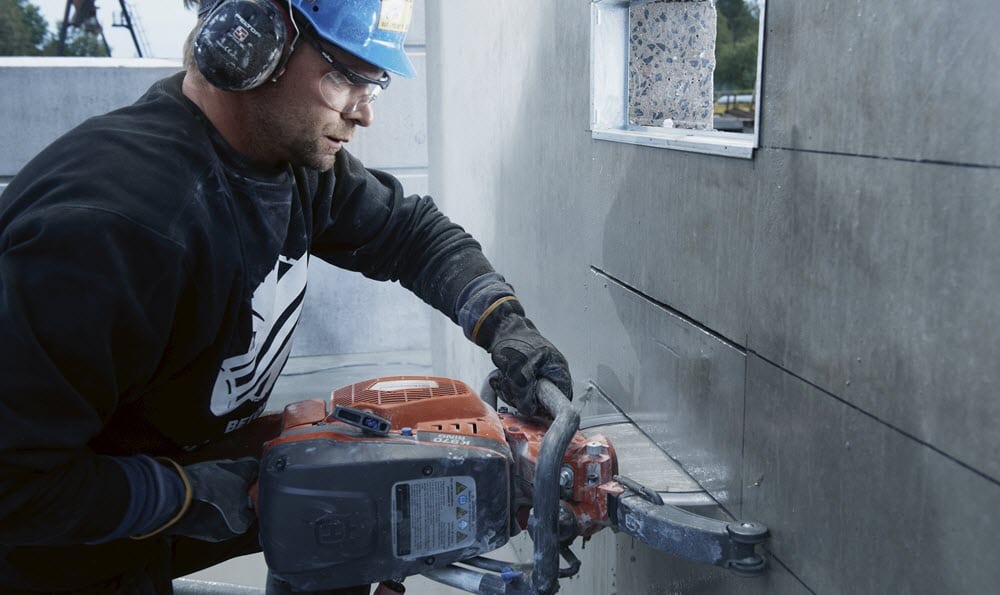
  • Cutoff Saws – Gas-powered hand-held cutoff saws can cut through brick and metal, as well as concrete. Cutoff saws’ portability and maneuverability make them the tool of choice for cutting windows and other openings in precast concrete up to five inches thick.
  • Chainsaws – Resembling chainsaws made for cutting wood, concrete chainsaws are the go-to tool for cuts deeper than the 5 inches a cutoff saw can deliver. They work best when cutting deep, narrow openings. Their strengths also including cutting sharp angles and square corners not possible with circular blades.
  • Early-Entry Saws – Primarily used to cut crack-control joints in uncured concrete, early-entry saws feature plates that exert downward pressure on the cutting surface while blades slice the concrete in an up-cutting orientation to relieve stress on green-zone concrete before it can crack during curing and hardening.
  1. The Blade

Concrete is hard, so concrete saws need hard-edged blades to cut it. And since nothing is harder than diamonds, diamond blades are the preferred method, no matter what type of saw you’re using. With that issue decided, there still are several decisions to be made to determine your best blade option:

  • Compatibility – Choose blades whose diameter and cutting depth are compatible with the saw’s specifications and that conform to the saw’s horsepower and RPMs. Operating a blade with a too-powerful saw risks injury and malfunction, while using a blade at a slower-than-recommended speed will compromise performance and reduce its lifespan.
  • Specialty – Blades designed for cutting green concrete are almost always made for use with early-entry saws. Likewise, while some dry-cutting blades can be use in wet-sawing applications, the reverse is never true. Wet-cutting blades should never be used in dry-cutting operations.
  • Material – Diamond blades work by embedding diamond chips and dust in a matrix that adheres them to the blade. As cutting friction wears away the matrix, new, sharp diamonds are exposed. The softer the matrix, the faster this erosion and diamond replenishment occurs. So, harder matrices use each diamond layer for longer periods, making them the right choice for softer concrete. Softer matrices are the best option for harder concretes (those made of quartz aggregate, for example), because it dulls the diamonds more quickly, so they should be replaced more often.
  1. The Niche

Some concrete saws are manufactured to solve specific issues or meet the needs of particular industry niches. For instance, Husqvarna makes two saws that address issues general concrete cutters often encounter:

  • Husqvarna K 760 Cut-n-Break – This saw trims hours of the time required to cut through thick concrete walls. Its twin blades cut a core into the concrete about three inches deep. A companion tool is used to break off the core, clearing the path for another three-inch cut. Repeat the process until you’ve cut through the slab.
  • Husqvarna K 6500 Ring – This electric saw combines deeper cutting action with less vibration to allow longer operation for extended projects. Capable of cutting up to 10 inches deep in a single pass—double the depth of most competitors—this powerful electric saw incorporates great balance and light weight for excellent user comfort.

Pro Group carries a complete line of concrete saws for every application. Contact our experienced team for help selecting the saw and blade that will work best for your project.

How to Pick the Right Concrete Cutting Tool for the Job

Every concrete cutting tool is uniquely suited for specific purposes; having the right tool makes a huge difference in what you can cut and how quickly.

Factors like what you’re cutting, how much, and where it’s located all determine the type of cutter that will best suit your needs. Tool life and effectiveness are also affected by variations in the solid material you need to cut such as:

  • Sand type
  • Aggregate size
  • Rock type
  • Presence of rebar or reinforced steel

Finding the right concrete cutting tool is key to making sure your project stays on track and under budget.  

Here’s a quick guide to finding the right tool for your needs:


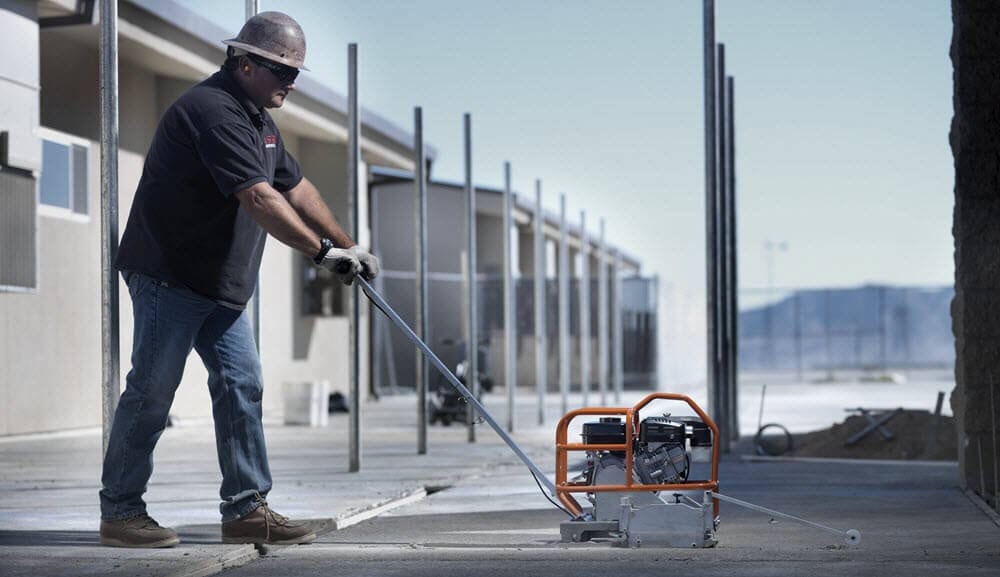
Walk-Behind Saws

Make Powerful Horizontal Cuts

walk behind saw

Walk-behind saws are operated while standing, which puts more force into their cuts without sacrificing maneuverability.

Their heavier weight and high horse power keep blades on track, creating precise, reliable cuts without impacting the concrete’s structural integrity.

Walk-behind saws excel in industrial, commercial, and residential projects from runway repair through patio installation – anything that requires extensive horizontal cuts.


Cut-Off Saws

Slice Through Stone, Concrete, and Asphalt

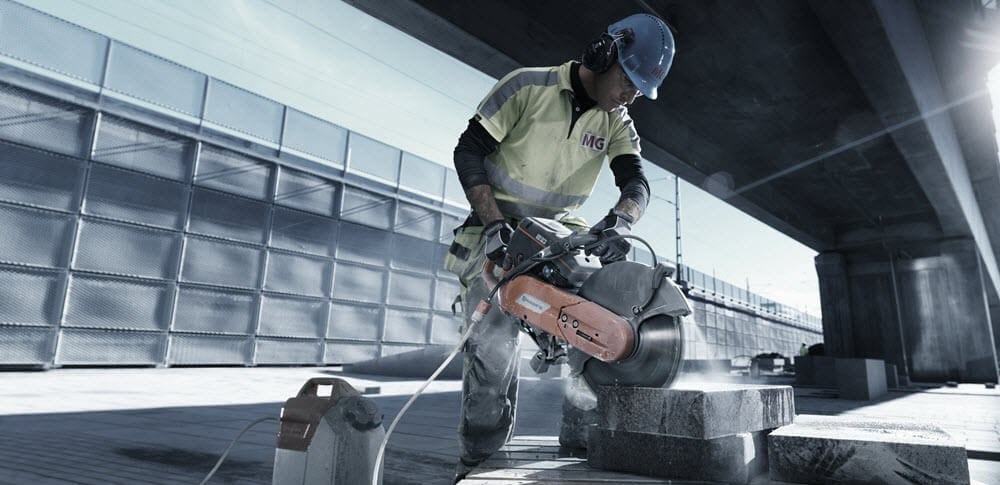
cut off saw

Cut-off saws are hand-held saws ideal for landscaping and construction projects. They can easily slice through stone, concrete, asphalt, or other solid materials and are easy-to-control.

They are smaller than some other cutters – they can only cut up to 5” deep – but they can be serviced easily and often come with a built-in wet function or air filter to minimize dust.

Depending on what you’ll be cutting, they can be fitted with diamond or abrasive blades for durability and affordability.


Early Entry Saws

Cut Green Zone Concrete

early entry saw

Soft-cut saws cut concrete before it starts to naturally form cracks while it’s still in the “green zone” 1-2 hours before it’s finished.

Early entry blades combine up-cutting with downward pressure to maintain pressure, facilitating shallow cuts without cracking pavement. Blades can be customized to different widths to accommodate varying joint widths and control cracking.

This is ideal for making decorative cuts in finished installation as well as for most commercial and residential paving projects.


Power Cutters

Make Precise Asphalt and Pavement Cuts

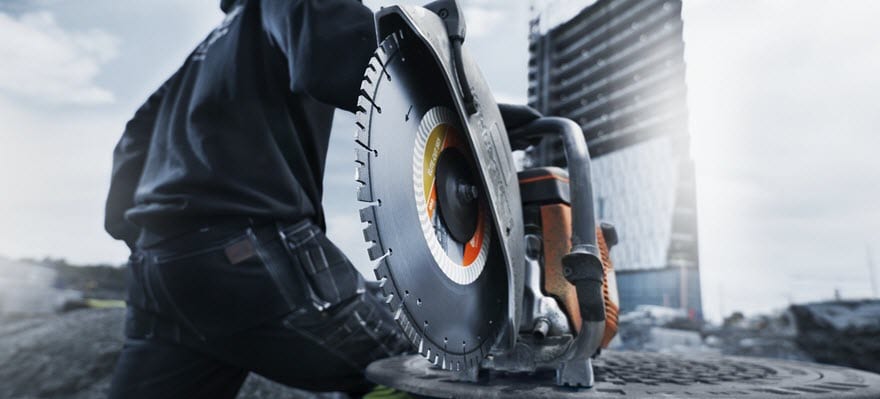
husqvarna power cutter

Power cutters provide more leverage than other saws and have a good weight to power ratio, so they take less brute strength to operate than other hand-held concrete cutting tools.

They can also cut at multiple angles up to 16” deep, making them an ideal choice for cutting deep precise shapes without overcutting corners.

They can also easily slice through asphalt or concrete, making them a great choice for indoor and outdoor projects.


Block Saws

Excel at Cutting Brick and Cinder Blocks

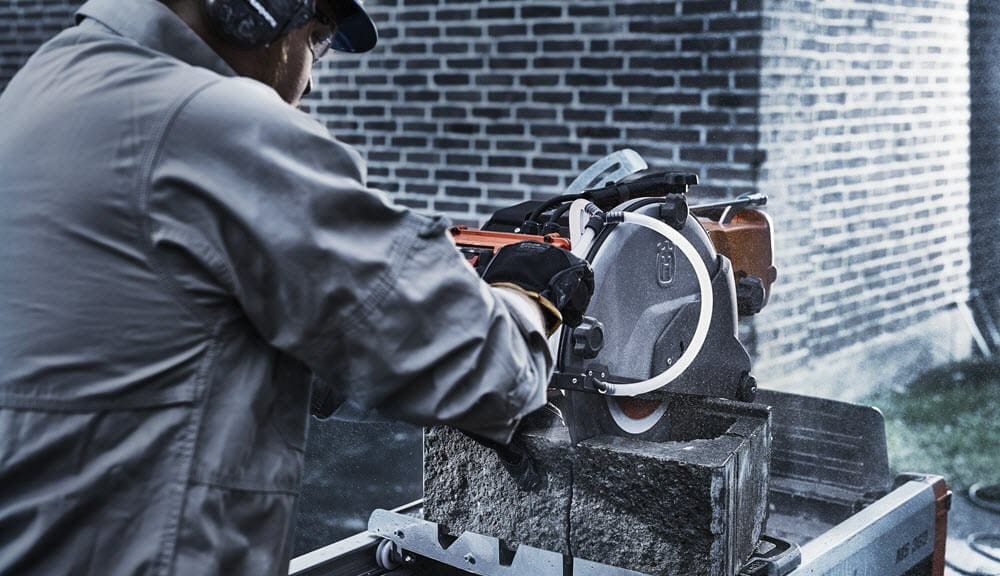
block saw

Block saws are stationary electric or gas-powered saws designed to cut and shape things like:

  • Cinderblocks
  • Bricks
  • Pavers

Block saws are one of the most precise options for cutting smaller pieces of brick or paving materials. This makes them an ideal choice for residential and commercial projects.


Get the Right Concrete Cutting Tools for Your Next Job

The Pro Group carries many of the most popular and effective concrete cutting tools for any size job.

Whether you’re looking to buy or rent, our experts can walk you through the selection process. Contact us for help with selecting the perfect equipment for your job.

Do’s and Don’ts of Using Diamond Blades

Diamond Cutting Blade

You want to make sure you do everything possible to extend the life of your diamond cutting blade. Diamond blades vary in size, style, and composition; however, the general best practices mentioned in this article are appropriate for all types of diamond blades.

DO: Use a hard bond to cut softer materials and a soft bond to cut harder materials

It sounds strange, but it has to do with the process of the diamonds being ground down while the blade spins through the material, sloughing off diamonds to reveal another diamond layer.

Hard bond → Soft material
A harder bond holds diamonds in place longer – meaning it’s more effective when grinding through softer material.

Soft bond → Hard material
When working with hard material, what’s important is to constantly wear away the diamonds to get to the next layer of diamonds beneath them. A soft bond allows this to occur.

DO: Use narrow gullets for hard materials and wide gullets for soft materials

On a segmented diamond cutting blade, the spaces between the segments help to remove the slurry of ground-down diamonds and matrix material. It’s important for the slurry to be removed efficiently, or the friction of the blade against the material can cause overheating.

Soft material → Wide gullets
When the softer material is being cut, the amount of slurry produced requires a wider gullet.

Hard material → Narrow gullets
Harder materials don’t produce as much slurry, so you can get away with using a blade with a narrower gullet.

DO: Consult a cutting tool expert before cutting material of unknown hardness or abrasiveness

Diamond blades are designed and manufactured to cut nearly any type of material, such as:

Asphalt over concreteGraniteRebar
BlockGreen ConcreteReinforced concrete
BrickLimestoneStone
CeramicsMarbleTile
Cured ConcretePavers (and other masonry)Travertine
GlassPorcelain

If you have a material that’s not mentioned here, it’s best to contact a cutting tool specialist to determine the best diamond cutting blade to use.

DO: Check the aggregate type before cutting concrete

“Aggregate” refers to the particles that are combined with the concrete to give it strength. Some aggregate types are harder than others. The most common materials used are crushed stone, gravel, recycled concrete, sand, slag, and geosynthetics (man-made). Once you know the aggregate composition, you can pick the best concrete cutting blade for the job.

DON’T: Allow the blade to overheat

An overheated diamond blade ages prematurely and can crack. If you are running a dry blade, make sure you pause occasionally to allow it to cool down. Otherwise, for a wet job, make sure you have enough coolant (such as clean, cold water). Even when running a wet blade, you may need to allow it to run freely every 10 seconds or so to allow air to cool it down.

Although you can use a dry cutting blade for a wet job, you cannot do the opposite. A wet diamond blade used for a dry job will overheat and possibly break apart, becoming a dangerous flying object.

DON’T: Use a blade designed for a low-horsepower saw on a high-horsepower saw

In this scenario, the diamond blade will wear out much more quickly than it would normally. On the other hand, it’s a bad idea to use a high-horsepower blade on a low-horsepower saw because the blade may damage the material or itself.

DON’T: Allow untrained saw operators to use diamond blades

An experienced saw operator knows how to use a diamond cutting blade so that it’s most effective. Besides properly matching the blade to the job (and the saw), a well-trained operator knows how and when to “dress the blade” (exposing new diamonds by cutting something abrasive).
It’s also important for the saw operator to observe the recommended operating speeds for both the saw and blade. The blade manufacturer will have a recommended speed for its diamond cutting blades as well as a maximum safe speed.

DON’T: Neglect saw maintenance

Besides the saw’s operation, its maintenance is also a factor in prolonging the life of a diamond blade. Although all parts are important, it’s particularly crucial to check the saw’s drive belts, bearings, spindle, water jet flow, and water pump. If you’re unsure which parts your saw is need of, our parts specialists can help.

Not sure which saw blades are right for your upcoming job?

Request a quote or call us at 1-888-776-0007 to speak with a Pro Tool & Supply representative. We also carry concrete and masonry saw and equipment for purchase or rent. After getting our expert assistance, we can supply you with a complete product solution of saw and blades for cutting concrete, masonry, or other difficult-to-cut products.

Search For Products

Product has been added to your cart