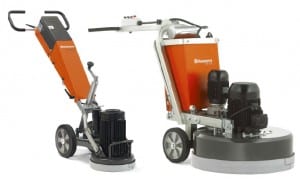
Gas Cut-off Machines Cut Concrete and Much More

Portable, powerful, and versatile, gas-powered cut-off saws give operators the convenience and ease-of-operation they need for a full productive day on the construction site. With the proper blade, these gas-powered dynamos slice through not only horizontal and vertical concrete, but also brick, asphalt and steel. This month, Pro Tool & Supply features handheld gas cut-off saws from Husqvarna, one of the most respected brands in the industry.

Gas Cut-off Saws Advantages and Applications
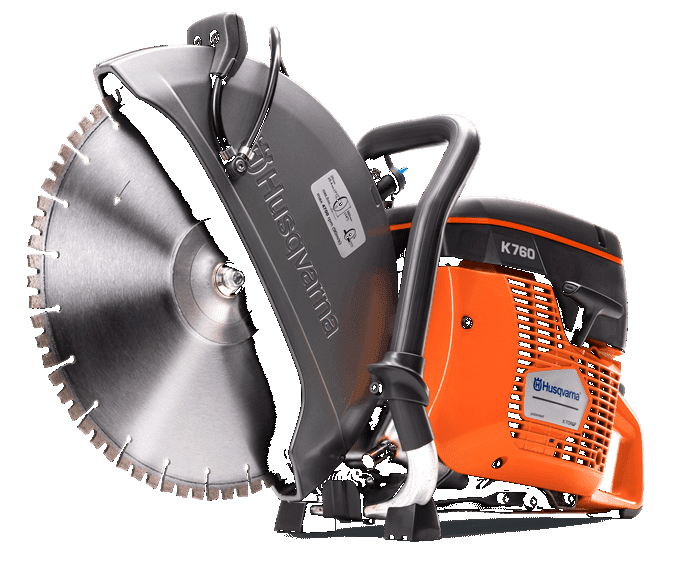
Husqvarna K760

Contractors favor gas-powered cutters for a variety of applications. Advances over the past couple decades have made these saws lighter and more maneuverable than ever, a distinct advantage over hydraulic cutters. Despite the lighter load, gas saws are the most powerful on the market; they cut circles around electric units. Their two-stroke engines are more convenient than pneumatic equipment that requires both generators and the diesel fuel to run them.

The clincher for gas cut-off saws is the ease and speed with which cut-off saws can trim many different materials:

  • Concrete – Cut-off saws earn their ability to slice through concrete to create grooves, windows, and other openings in precast wall panels. While concrete should be wet-cut when practical, in order to keep cut-off saws cool and operators protected from silica dust, cut-off saws perform admirably dry, when water is not available.
  • Brick – Deep-cutting blades make quick work of brick and block. Four-inch cuts become routine, with both 12- and 14-inch cut-off saws. The saws’ portability shines in these applications, allowing them to go to the brick – even up scaffolding – rather than bringing the bricks to a stationary table saw.
  • Asphalt – Asphalt requires specially constructed blades that can carve through this soft, yet extremely abrasive material. Mounting these blades on gas-powered cut-off saws creates the perfect tool for patching and resurfacing roads and driveways.
  • Metal – Cut-off saws are powerful and enough to cut a variety of metals in the workshop and the jobsite. They can shear through rebar, cutting it to size, or burrow through reinforced concrete to ease in demolition. Contour-cutting sheet metal, and cutting wire mesh to size are other common applications.

Cut-off Saws Blade Selection

As noted, selecting blades specially constructed to efficiently grind through each work material is the first consideration for proper cutting. Diamond cutting wheels cut using diamonds embedded in a matrix of other materials. As the matrix wears away, it releases worn diamonds and exposes new ones, in effect renewing the grinding surface. Because of this, harder materials like concrete should be cut with diamond wheels incorporating soft matrices, which will wear away quickly, always keeping new diamonds on the cutting surface. Conversely, softer materials are best cut with wheels using hard matrices. The diamonds wear more slowly and do not need to be replaced as often.

Safe and Efficient Operation for Cut-off Saws

Like any power tools, cut-off saws can be ineffective, hazardous, and even deadly if not used correctly. Always follow manufacturers’ operating instructions and wear all recommended personal protective equipment.

Maintenance and proper operation will ensure your gas cut-off saw delivers excellent results and lasts for years:

  • Bring the saw to full speed before initiating contact with the work material. Changing speeds once the workpiece is engaged can cause it to catch, fishtail, and veer off course, while forcing the wheel to work harder to get through the cut.
  • Avoid bumping the blade, which can cause dents and bends and result in sub-optimal performance.
  • Change the filter regularly. Keeping concrete and brick dust out of the motor will allow the saw to run longer and increase productivity.

This month, Pro Tool & Supply is offering unbeatable prices on Husqvarna gas-powered concrete cut-off saws. These machines feature ergonomic design, easy-start motors, efficient filtration, and dozens more features to help keep your project on schedule.

Our expert associates are standing by to assist you in selecting the best cut-off machines and blades for your application. Click here to learn how we can help.
3 Things to Consider When Renting Concrete Floor Grinders

Whether they will be left bare or used as a substratum for tile, carpet, or linoleum, concrete floors must be properly prepared to ensure long life and optimal performance. A concrete floor grinder rental offers an efficient, economical way to level new floors, repair existing slabs, remove old coverings, and more.

Use this guide to select the proper concrete floor grinder rental in order to ensure success with your next project.

1. Head Count

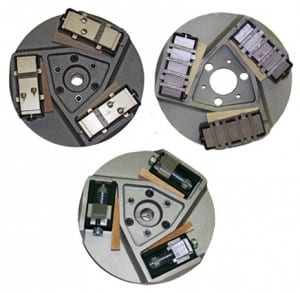
Floor grinders get the job done by scraping the concrete surface with rotating discs mounted onto the bottom of the equipment. The number of disks determines not only the area that can be ground with each pass of the machine, but also the best application for the machine.

  • One Head: With a small footprint, these grinders work best in corners, against walls, and in other tight spaces. However, their gear-driven rotary disc rotation gives them aggressive grinding action that can leave irregular scratch patterns, making them inapt for floor polishing.
  • Two Heads: The extra head gives more floor coverage, saving time. With the rotary machines’ weight concentrated on just two heads, there is plenty of pressure to effectively grind the surface and obliterate thick paint and adhesives.
  • Three Heads: Perhaps the best option for all-around performance, the three-head configuration distributes the machine’s weight providing greater balance, while still creating sufficient mass to ensure strong grinding. The additional head means large surfaces can be covered quickly. Three heads and the use of planetary action also makes these machines a better option for polishing concrete floors.
  • Four Heads: While still a strong option for grinding large surfaces in a short time, four-headed grinders exert even less pressure on each spinning head, adding to the machines’ effectiveness at polishing. Two heads spinning clockwise and two counterclockwise, negating excessive torque and the effort necessary for the operator to keep the grinder in line, cutting down on fatigue.

2. Power and Size

The wider a floor grinder’s working dimension – the amount of floor it can cover with each pass – the less time it should take to finish the job.

husqvarna concrete grinder rentals

The machine’s size to some extent is dictated by the number of heads. In turn, the size and grinding intensity determines how much power is required to run it. Grinding intensity takes into account the machine’s gross weight, the amount of contact between the grinding tools and the concrete, and the grit rating of the tools. Coarser grits and more surface contact increases resistance and requires more power to achieve results.

3. Safety and Health

Operating all equipment safely is the first order of business on any project. While concrete floor grinder rentals are not particularly dangerous, they can present health concerns if not operated properly:

  • Ventilation: Gas usually offers the most consistent and available power source for concrete floor grinders, but electricity or propane should be used in all indoor and poorly ventilated areas.
  • Dust Control: Users have two options for keeping irritating dust out of the air during grinding operations. Many rental grinders come with built-in vacuum capabilities, while others are capable of accepting separate vacuum units. Other grinders include a water tank. Wet grinding tamps down much of the dust as it is created. The wet dust is then vacuumed into the grinder, where it can be disposed of properly.
  • Personal Protection: Users should always wear respirators, sturdy shoes, and eye and ear protection when operating a floor grinder. Avoid loose clothing that can potentially get caught in the grinder disks.

Browse our Concrete Floor Grinder Rentals

Browse our selection of concrete floor grinder rentals which include models from Husqvarna and Edco. Still not sure which concrete floor grinder rental is right for you? Call The Pro Group at 1-888-776-0007 to speak with a representative who can help you select the concrete floor grinder rental that’s right for you. Rentals are available from one day to long-term.

Our Staff Gets Construction Tool Training In The Latest Concrete Applications

At The Pro Group, we’re committed to providing our customers with the best construction tools and supplies available. But we don’t stop there. We also make sure our team has the right training in order to respond effectively to questions and customer needs.

Recently, part of our team spent time at the Evergreen General Contractor Concrete School of Product Knowledge learning about the latest concrete applications. They received significant hands-on training and interactions with industry leaders including:

  • Wacker Neuson
  • Husqvarna
  • Simpson Strong-Tie
  • Trimble Navigation
  • Kraft Tools

Training topics included cement manufacturing, concrete technology, troubleshooting, masonry, concrete repair, and decorative concrete techniques. Our team learned the best pre-pour techniques using equipment like our portable concrete mixers as well as concrete polishinggrinding, and sawing demonstrations for increased efficiency and cleaner end result without re-work.

Put Our Training To The Test

We encourage you to consult with our trained staff and concrete experts regarding any concrete applications at your job site. We offer demos for all of the products we supply and rent. We are here to make sure you are successful and safe on your job site.

Request a consultation of your jobsite or give us a call at 1-888-776-0007 to speak with one of our representatives.

Search For Products

Product has been added to your cart