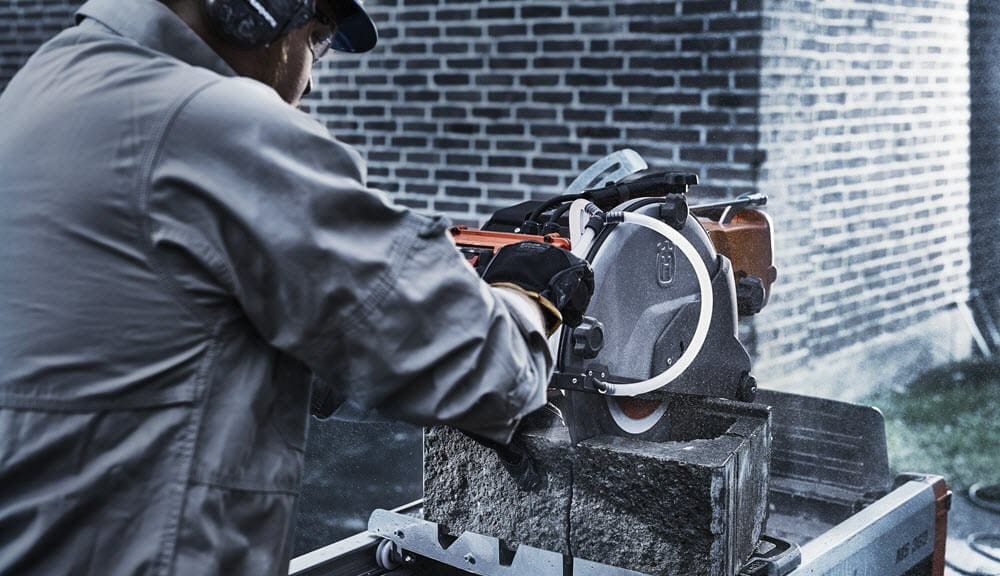
SAIT Flap Discs: The Perfect Grinding Solution for Steel

Selecting the proper angle grinder attachment for your steel work is critical for obtaining the desired results. When it comes to selecting the best metalworking tool, flap discs are the first choice of most fabricators. A flap disc is a coated abrasive attachment for an angle grinder used to smooth and form metals. This equipment is extensively used in welding, machining, heavy-duty machinery, industrial maintenance, agriculture, and food manufacturing enterprises.

What are SAIT Flap Discs?

A United Abrasives SAIT flap disc is an attachment for an angle grinder, which consists of overlapping abrasive pads known as “flaps,” which are applied to a fiberglass or metal, or plastic plates to function as angle grinder attachments.

A flap disc is less expensive and works as a grinding wheel in various applications. Flap discs are more popular because of their quick stock removal, as well as the ability to grind, mix, and finish in one use.

They are versatile, lightweight, easy to use, and convenient surface-finishing tools. Standard flap discs last up to 25 times longer than aluminum oxide resin fiber discs when used to smooth welds after grinding wheel.

Unique Characteristics

SAIT Flap Discs are constructed of a long-lasting aluminum oxide grit ideal for steel grinding. The 4-1/2″ discs have a speed of 12,400 RPM, while the 5″ disc has a maximum speed of 13,300 RPM.

  • Combines coated and non-woven abrasives, which allows you to grind and finish with one product, reducing time and labor.
  • High-performance ceramic is available in 40 and 60 grits, which have an outstanding life expectancy.

How are SAIT Flap Discs Used?

Flap discs are used in various ways, including: 

  • Cut off and finish weld spatter.
  • Remove paint.
  • Rust removal is another popular application for flap discs.
  • Flap discs are also useful for removing flash from molds and castings

Flap Discs vs Grinding Wheels

In terms of function, a flap disc and a grinding wheel are similar in that both are used to shape metal. Apart from this resemblance, the major distinctions between a flap disc and a grinding wheel are why and when you should use each one.

Flap discs are useful for cutting metal at right angles. They have a flexible nature and are an excellent abrasive tool for shaping metals with fine cuts.

A grinding wheel is used for general material sharpening tasks, like sharpening shovels, axes, shears, lawn mower blades, and other hand cutting tools. You can also use a grinding wheel to clean and remove undesirable surface debris, but they are not the best option for finishing jobs.

Why Flap Discs are the Best Metalworking Tool

Flap discs, designed specifically for industrial applications, can cut considerably more material (with less workpiece gouging) than a grinding wheel. Flap discs are employed for various reasons, because they are small, lightweight, easy to handle and store, low downtime for product changes, low vibration, and make little noise.

Using a Flap Disc for Stainless Steel

Flap discs made of stainless steel should be labeled as such. They are generally more expensive than flap discs designed for mild steel, although there is a reason for it. One factor is that they have a low iron content. Also look for the statement “the flap discs are contaminant-free” or “made from 0.1% iron, sulfur, and chlorine.”

The grit employed on the flap disc will be powerful enough to process your stainless steel nicely, while not gouging the surface. An excellent blade for cutting stainless steel using an angle grinder is United Abrasives SAIT ENCORE 4-1/2 X 7/8.

For help finding the right grinders and SAIT flap disc solutions for your team, our skilled technicians are always on hand. Request a Quote or call us at 1-866-405-2985 to speak with a Pro Tool & Supply representative for more information on our stock of construction dehumidifiers, ventilators, portable construction air conditioners, and fans.
3 Essential Tools for Ground Thawing And Freeze Prevention on Construction Sites

Whether the predictable turning of the seasons or a freak snowstorm, winter weather presents additional challenges for construction workers, superintendents, and project managers. Thankfully, a little forethought and preparation can keep these disruptions to a minimum and allow work to progress more or less normally.

Priorities

Of course, your first concern is keeping your workers and passersby safe from the hazards presented by cold, wind, moisture, darkness, and snow. Clear icy surfaces, set up warming stations, install auxiliary lighting, issue insulated, highly visible personal protective equipment. You also will want to make arrangements to store equipment and materials where they will stay dry.

Finally, you will want to take action to ensure the weather cannot unduly delay your crews’ work or cause processes to fail. Hard, frozen ground is one winter condition that can wreak havoc with logistics and scheduling if you are not prepared.

Frozen Ground – The Cold, Hard Facts

Assuming giving your workers the winter off and vacationing in Miami for four months is not an option, New England construction sites must deal with ground freeze. The ground must be thawed and prepared to avoid a variety of problems:

  • Costly Delays – Rock-hard earth can bring excavation equipment to a standstill, pushing projects back by weeks. Equipment downtime also pushes back other aspects of the projects, adding labor costs to machine rental and operator overtime charges.
  • Equipment Damage – If you do move ahead with excavation of frozen ground, you risk damaging your expensive machinery. Attempting to piledrive, gouge, or cut into hard ground can break or crack booms, extension arms, and attachments
  • Concrete Cracks – Pouring concrete on frozen ground is asking for trouble. When the ground thaws it will settle, shifting and tilting the concrete on top, inviting cracks. Cold ground harbors additional challenges to concrete curing and sealing. Don’t do it.

Thawing and Freeze Prevention

Pro Group offers several construction heater solutions for thawing frozen ground and keeping it at a temperature you can work with. Depending on your application needs, ground thaw heater blankets or pads may be your best choice. In other circumstances, a hydronic surface heater is the best choice. Here’s how to decide:

Ground Thaw Heater Blankets

These ground thaw heater blankets are most commonly used to prepare the ground for pouring concrete. As mentioned above, winter concrete pours offer challenges because concrete must remain at 50 degrees Fahrenheit for several hours to properly settle and cure. The blankets ensure the water in concrete does not freeze before it can be absorbed. The proper temperature also speeds the curing process.

Ground Thaw Heater Pads

Ground thaw heater pads can be used to prevent soon-to-be-landscaped areas from freezing before crews can dig in. They are used to melt frost and snow. And when draped over and around materials and equipment, they keep materials ready to use, engines ready to start, and liquids ready to flow.

Pro Group supplies Thermatech pads in sizes ranging from 4½ feet by 15 feet to 9×15. These 110-volt pads feature reinforced waterproofing, microform insulation, and 6-foot power cords.

Hydronic Surface Heaters

Heavy-duty, towable hydronic surface heaters heat water in boilers to heat fluid and pump it through serpentine hoses or tubing that acts as a heat exchanger. As the hot water flows through the tubes, the ground absorbs much of the heat and the water takes on the cold from the ground. The water flows back to the boiler, where propane or oil fires reheat it for another heat-exchanging circuit.

Hydronic surface heaters can thaw the ground before a concrete pour, working in conjunction with construction heater pads and blankets used after the pour to aid in curing.

As an added benefit, hydronic surface heaters’ boilers throw off excess heat, keeping the ambient air in the vicinity warm. Crews can warm themselves by huddling nearby and can keep materials ready to use by staging it in the area.

Snake the tubing around the surface area to be thawed. Fill the water boiler. Set the desired temperature. And let the machine run. A full boiler can operate overnight, making the ground manageable when crews arrive in the morning.

The Pro Group Has All Your Winter Needs Covered

Now is the time to prepare for the coming winter to ensure the cold and snow does not delay your project. Check out Pro Group’s full line of winter site-preparation equipment. Contact our knowledgeable and helpful sales team to determine which ground thawing and heating equipment is right for your job site.

3 Considerations When Choosing a Concrete Saw

A worker is only as good as his or her tools. It’s a cliché, but only because it’s true. The adage might have been coined with concrete cutting in mind. Choosing the proper concrete saw based on your application is critical. Concrete’s physical characteristics can turn an expensive concrete saw blade into sawdust if it is used in an operation for which it is unsuited.

Concrete Cutting Tips

Whether you use a cutoff saw, walk-behind, block saw, or other variety, there are a number of best practices to observe to achieve the best results and make operation as safe as possible:

  • Cut on Time – In almost every case, after concrete fully cures, it’s too late to cut effectively. It is prone to fracture. On the other hand, concrete that is not fully dry presents its own set of problems. Like Goldilocks, you need to cut concrete when the timing is just right: After it has cured, but before it has hardened. The cut will be smoother and create less dust.
  • Keep it Clean – Speaking of dust, make sure you don’t inhale it. Wear an approved respirator attach a dust shroud, and seal off areas in which concrete saws will be in use.
  • Stay on the Straight and Narrow – For straight cuts, mark the cut path with a chalk line of, if water from wet cutting washes away the chalk, a wax pencil. Clamp a straightedge to the outside of the line as a guide for the saw. Keep a firm grip on the saw at all times to ensure safety and control.
  • Don’t Lose Your Cool – Patience is a virtue when using concrete saws. Allowing the blade to do the work alleviates muscle fatigue and prevents handheld saws from bucking. Don’t force the saw through the concrete; simply guide it along the cut path. Cutting thick concrete with a series of shallow cuts will improve accuracy and keep the saw from overheating. Make several passes, cutting a half-inch to an inch deeper each time through.

Saw Choice

Concrete saws come in a variety of styles, each with its own strengths and weaknesses. Picking the right saw is a function of three considerations.

  1. The Application

As discussed, each type of concrete saw is built for specific cutting jobs:

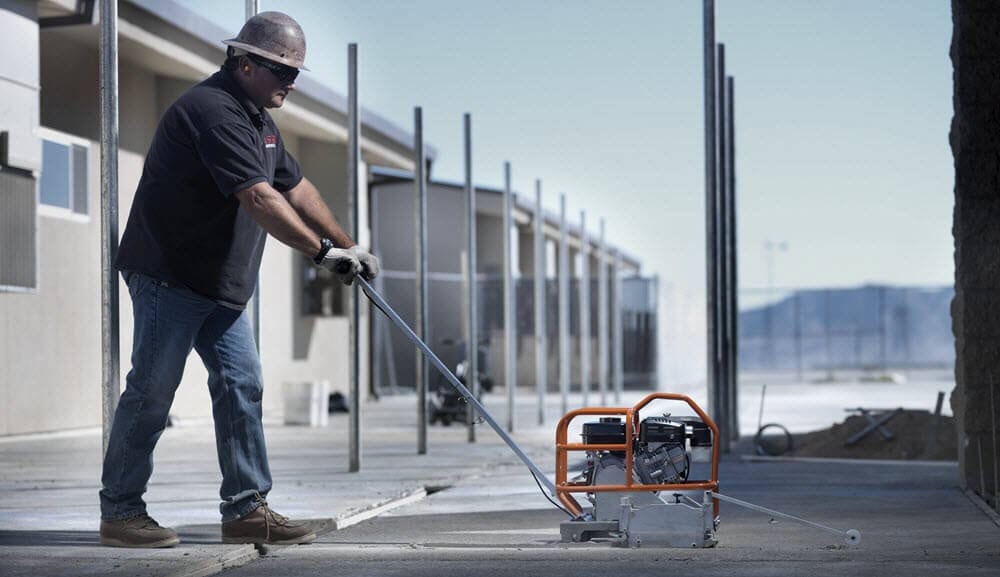
  • Walk-Behind Saws – These large, cart-mounted saws work on horizontal slabs such as parking lots, home foundations and patios, and airport runways. Use them when long, straight cuts are needed; their heft helps keep the blades in line.
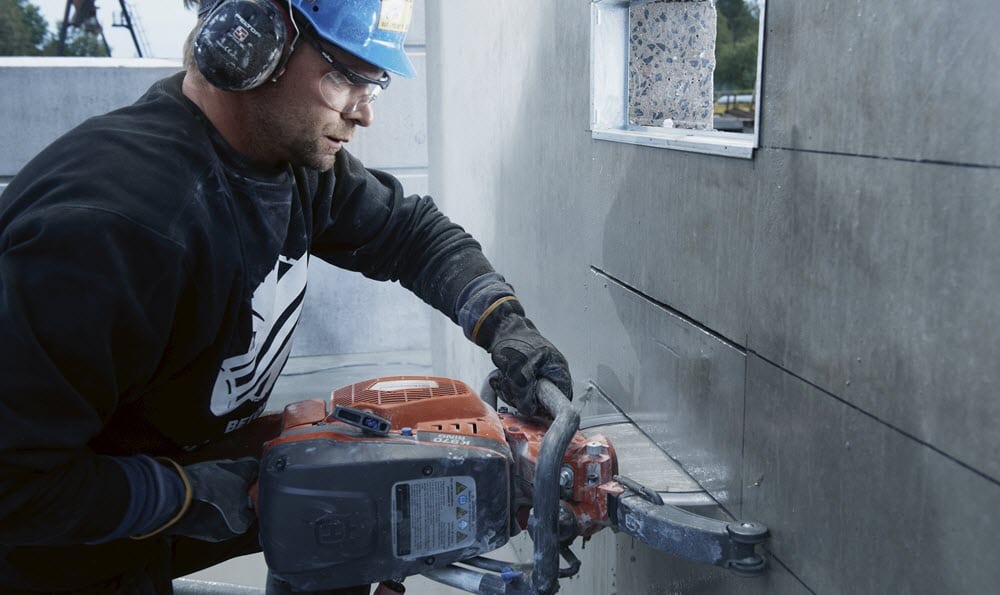
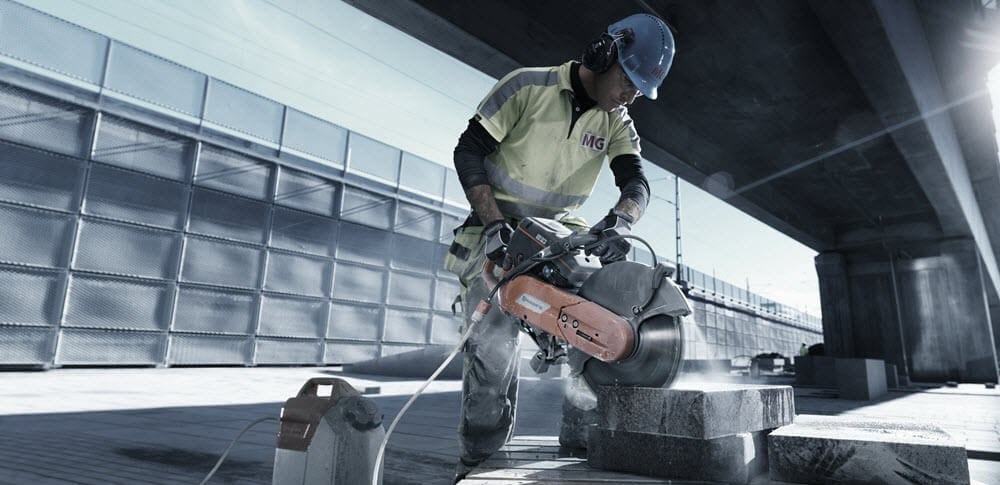
  • Cutoff Saws – Gas-powered hand-held cutoff saws can cut through brick and metal, as well as concrete. Cutoff saws’ portability and maneuverability make them the tool of choice for cutting windows and other openings in precast concrete up to five inches thick.
  • Chainsaws – Resembling chainsaws made for cutting wood, concrete chainsaws are the go-to tool for cuts deeper than the 5 inches a cutoff saw can deliver. They work best when cutting deep, narrow openings. Their strengths also including cutting sharp angles and square corners not possible with circular blades.
  • Early-Entry Saws – Primarily used to cut crack-control joints in uncured concrete, early-entry saws feature plates that exert downward pressure on the cutting surface while blades slice the concrete in an up-cutting orientation to relieve stress on green-zone concrete before it can crack during curing and hardening.
  1. The Blade

Concrete is hard, so concrete saws need hard-edged blades to cut it. And since nothing is harder than diamonds, diamond blades are the preferred method, no matter what type of saw you’re using. With that issue decided, there still are several decisions to be made to determine your best blade option:

  • Compatibility – Choose blades whose diameter and cutting depth are compatible with the saw’s specifications and that conform to the saw’s horsepower and RPMs. Operating a blade with a too-powerful saw risks injury and malfunction, while using a blade at a slower-than-recommended speed will compromise performance and reduce its lifespan.
  • Specialty – Blades designed for cutting green concrete are almost always made for use with early-entry saws. Likewise, while some dry-cutting blades can be use in wet-sawing applications, the reverse is never true. Wet-cutting blades should never be used in dry-cutting operations.
  • Material – Diamond blades work by embedding diamond chips and dust in a matrix that adheres them to the blade. As cutting friction wears away the matrix, new, sharp diamonds are exposed. The softer the matrix, the faster this erosion and diamond replenishment occurs. So, harder matrices use each diamond layer for longer periods, making them the right choice for softer concrete. Softer matrices are the best option for harder concretes (those made of quartz aggregate, for example), because it dulls the diamonds more quickly, so they should be replaced more often.
  1. The Niche

Some concrete saws are manufactured to solve specific issues or meet the needs of particular industry niches. For instance, Husqvarna makes two saws that address issues general concrete cutters often encounter:

  • Husqvarna K 760 Cut-n-Break – This saw trims hours of the time required to cut through thick concrete walls. Its twin blades cut a core into the concrete about three inches deep. A companion tool is used to break off the core, clearing the path for another three-inch cut. Repeat the process until you’ve cut through the slab.
  • Husqvarna K 6500 Ring – This electric saw combines deeper cutting action with less vibration to allow longer operation for extended projects. Capable of cutting up to 10 inches deep in a single pass—double the depth of most competitors—this powerful electric saw incorporates great balance and light weight for excellent user comfort.

Pro Group carries a complete line of concrete saws for every application. Contact our experienced team for help selecting the saw and blade that will work best for your project.

Keep Your Tools and PPE Safe with a Knaack Box

A well-organized workspace is one the most straightforward ways to improve productivity. In the best of times, keeping a neat space is key to driving efficiency. Having a place for everything also helps minimize the risk of misplacement and mistreatment of tools and equipment.

Given current CDC recommendations, worksites will also need to be prepared with adequate protective and cleaning gear to keep construction teams safe. OSHA requirements now also require that “To the extent tools or equipment must be shared” workers must be provided with  “alcohol-based wipes to clean tools before and after use.”

Tools will have to be regularly sanitized, with other protective equipment (PPE) such as masks, sprays, gloves, and wipes easily accessible so that construction teams can constantly sanitize their tools and protect themselves against the virus at all times.

Knaack boxes provide both easy-to-access cleaning supplies and a portable and secure way to store and organize equipment and PPE. Pro Tool carries many Knaack storage units to fit every construction crew’s needs.

Some of the tool chests we carry for improved gear accessibility and secure storage include:

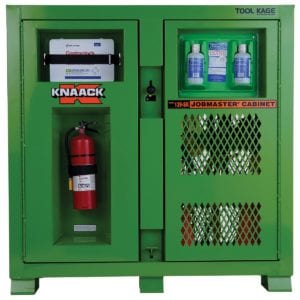
Safety Kage

The Safety Kage offers a ventilated, secure storage area for harnesses, first aid supplies, and other essentials on caster-ready skids. Its three-point latching and recessed handles allow for secure storage and allows workers to grip the container even (even with gloves on), while a foot latch allows for hands-free opening in all protective gear situations (this may be particularly important if sanitation is an issue, since minimizing touching surfaces helps prevent the spread of virus).

The durable steel mesh is weather resistant and allows for airflow, preventing the growth of mold and mildew, while the 18 hooks and 47.5 cubic foot capacity provide ample storage to protect harnesses and other gear from tears, weather damage, and loss.

There is also an easy-access first aid tool compartment for first-aid emergencies, and the interior shelves keep gear of a variety of sizes and shapes easily organized.

Model 44 Jobmaster

The Model 44 Jobmaster offers a rolling storage area with a solid top, for an easily-sanitized, durable, and

mobile workspace. At 40.6 inches wide, and with an 800 lb capacity, it can hold even heavy-duty equipment, with the inner drawers each rated to 50 lbs.

The left half of the box is open, allowing for storage of taller items, while the build-in rollers make it easy-to-access and mobile.

It also includes a powder-coat water and weather-resistant surface capable of lasting for decades, and the lid has a two-point recessed locking system to prevent break-ins.

For items that do not require ventilation, this is a durable, easily accessible and mobile workspace with built-in organization.

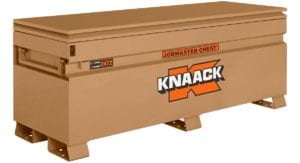
Model 2472 Jobmaster

knaack box

The 2472 Jobmaster chest is a versatile, secure organization solution, offering 24.5 cubic feet of storage and featuring a full-length piano hinge stacked and welded.

The lid offers quick and ergonomic access to gear, and the dampening spring can be easily opened from three sides. The Power Pass® Electrical Pass-Thru grommet enables quick, weatherproof power cord access.

Additionally, heavy-duty recessed side handles allow for enhanced mobility and protect the tool chest against damage during transport, while the WATCHMAN® IV Lock System provides unbeatable theft prevention. If you need more mobility, the tool chest can be easily and quickly equipped with rolling casters.

Organize your worksite PPE with a Knaack box

Safety equipment has quickly become an essential tool to keep workers safe and job sites open and efficient. Given the ongoing shortages and need to secure equipment safely, a Knaack box can be a great option to help many sites keep tools and equipment easily accessible and safe from the elements and from loss, damage, or theft.

Pro-Tool’s inventory of Knaack boxes includes many options to fit your specific sites’ needs to keep expensive tools, supplies, and equipment safe and easily accessible, and given the sturdy steel construction, they should last for years to come. Contact us for more information about our many Knack box offerings.

The Right Ladder for the Right Application: A Guide to Podium and Leaning Ladders

leaning ladder

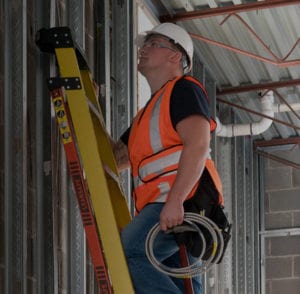
Ladders are essential tools for worksite efficiency and safety. Since there are a large variety of ladder types, it’s crucial to select the most suitable model for your job and worksite.

Many pros build up a ladder collection overtime to meet OSHA requirements and have the best tools on hand for any given job.

Construction ladders should keep you and your workers safe while executing climbing tasks. Though they are a great way to increase access to higher-elevation locations, they can also leave workers vulnerable to falls, especially if the wrong type of ladder is used.

For example, some factors to consider include:

  • Height: For starters, ladders should be long enough to allow a 75.5 or smaller degree angle from the ground. If you’re using a basic step or extension ladder, you’ll need to account for this distance, and the maximum height someone can stand from the top of the ladder – a maximum safe reaching height is typically about four feet higher than the top of the ladder.
  • Strength: ladders typically come in five different ratings depending on the type of job they’re designed for. The “duty rating” is the maximum safe amount of weight the ladder can hold; remember that this number includes both the weight of the worker and any gear or equipment they’ll need to bring up the ladder or use while standing on it.
  • Material: Modern ladders are typically made from lightweight and durable materials like steel, fiberglass, and aluminum. If your worksite is outdoors, has the potential to be exposed to chemicals, or requires outside storage, then you’ll need to select a ladder suitable to handle those conditions. If you are working with electrical wires or might be exposed to electricity, it’s important to make sure the material is appropriate and the legs of the ladder are grounded or encased in non-conductive material.
  • Type: Specialty, extension, platform, and leaning ladders all have their time and place.

Werner offers a number of specialty and standard ladders for construction use, including podium and leaning ladders. Here’s a quick guide to how to choose between them:

When to Choose a Leaning Ladder

Leaning ladders are flexible options when you need to move to different locations quickly, need to access multiple heights, and don’t need to face multiple directions while working.

The Werner LEANSAFE models offer additional advantages such as built-in safety mechanisms which securely latch the ladder onto the vertical surface and reinforced rubber legs to prevent surface damage and provide a more stable platform.

It also offers a lower rear rail to front rail connection point allowing the user to get closer to the work when in stepladder mode.

The Werner LEANSAFE Ladder is available in lengths ranging from 4 through 12 feet in height and is rated up to 300 lbs. (1A Duty rating).

Unlike most leaning ladder styles, it’s also OSHA compliant – per regulations, traditional step ladders must be completely self-supporting. The LEANSAFE can be used as a stepladder, but due to its innovative supportive structure can also be safely leaned against a variety of surfaces.

When to Choose a Podium Ladder

If you need to work while standing on the ladder, or you want to face multiple directions, a platform-based ladder is the best choice.

Werner podium ladders have a standing platform at the highest safe standing level, allowing for more mobility and access in different directions. It also features an extra-wide standing area and secure guardrails with built-in locations for tools and supplies.

Podium ladders are best suited for working at fixed heights, especially in places where it would be difficult or impossible to maneuver a lift or install scaffolding. It comes in 3ft – 10ft models, all graded for heavy-duty construction use and rated to 300 pounds.

Leaning and Podium Ladders Improve Safety and Minimize Downtime

Smart ladder choice prevents worker falls and impact damage to equipment, while providing access to hard-to-reach places. While there are many choices out there, modern technology allows for a more secure and durable product to keep your worksite efficient and safe.

Pro Tool and Supply is ready on hand to help you find the right ladder option for any construction task: feel free to Contact Us for help or request more information about the ladders we offer.

How to Pick the Right Concrete Cutting Tool for the Job

Every concrete cutting tool is uniquely suited for specific purposes; having the right tool makes a huge difference in what you can cut and how quickly.

Factors like what you’re cutting, how much, and where it’s located all determine the type of cutter that will best suit your needs. Tool life and effectiveness are also affected by variations in the solid material you need to cut such as:

  • Sand type
  • Aggregate size
  • Rock type
  • Presence of rebar or reinforced steel

Finding the right concrete cutting tool is key to making sure your project stays on track and under budget.  

Here’s a quick guide to finding the right tool for your needs:


Walk-Behind Saws

Make Powerful Horizontal Cuts

walk behind saw

Walk-behind saws are operated while standing, which puts more force into their cuts without sacrificing maneuverability.

Their heavier weight and high horse power keep blades on track, creating precise, reliable cuts without impacting the concrete’s structural integrity.

Walk-behind saws excel in industrial, commercial, and residential projects from runway repair through patio installation – anything that requires extensive horizontal cuts.


Cut-Off Saws

Slice Through Stone, Concrete, and Asphalt

cut off saw

Cut-off saws are hand-held saws ideal for landscaping and construction projects. They can easily slice through stone, concrete, asphalt, or other solid materials and are easy-to-control.

They are smaller than some other cutters – they can only cut up to 5” deep – but they can be serviced easily and often come with a built-in wet function or air filter to minimize dust.

Depending on what you’ll be cutting, they can be fitted with diamond or abrasive blades for durability and affordability.


Early Entry Saws

Cut Green Zone Concrete

early entry saw

Soft-cut saws cut concrete before it starts to naturally form cracks while it’s still in the “green zone” 1-2 hours before it’s finished.

Early entry blades combine up-cutting with downward pressure to maintain pressure, facilitating shallow cuts without cracking pavement. Blades can be customized to different widths to accommodate varying joint widths and control cracking.

This is ideal for making decorative cuts in finished installation as well as for most commercial and residential paving projects.


Power Cutters

Make Precise Asphalt and Pavement Cuts

husqvarna power cutter

Power cutters provide more leverage than other saws and have a good weight to power ratio, so they take less brute strength to operate than other hand-held concrete cutting tools.

They can also cut at multiple angles up to 16” deep, making them an ideal choice for cutting deep precise shapes without overcutting corners.

They can also easily slice through asphalt or concrete, making them a great choice for indoor and outdoor projects.


Block Saws

Excel at Cutting Brick and Cinder Blocks

block saw

Block saws are stationary electric or gas-powered saws designed to cut and shape things like:

  • Cinderblocks
  • Bricks
  • Pavers

Block saws are one of the most precise options for cutting smaller pieces of brick or paving materials. This makes them an ideal choice for residential and commercial projects.


Get the Right Concrete Cutting Tools for Your Next Job

The Pro Group carries many of the most popular and effective concrete cutting tools for any size job.

Whether you’re looking to buy or rent, our experts can walk you through the selection process. Contact us for help with selecting the perfect equipment for your job.

Milwaukee Lunch and Learn on the Latest Cordless Construction Tools

We want you to have the product knowledge you need to be successful on the job, so about once a month, we host lunch and learn sessions at one of our four locations with some of today’s most popular construction tool manufacturers. This gives you a chance to see demonstrations and talk directly with tool makers.

We recently held a session with Milwaukee Tool, where contractors got a hands-on look at the company’s latest cordless products and were able to test out the construction tools themselves. During the session, contractors were introduced to products including:

  1. M18 Force Logic High Voltage Crimper and Cutter, which enables you to make accurate cuts and crimps to any wire.
  2. M18 Fuel impact wrench, which provides multiple torque settings for various fastener applications.

Our customers also had a chance to learn about and test several products in Milwaukee’s M12 and M28 lines, and check out the latest outdoor construction site work wear.

If you want to know more about our lunch and learn series, call us at 1-888-776-0007 or visit our services section.

Search For Products

Product has been added to your cart