Choosing Heavy Duty Debris Netting for Your Jobsite

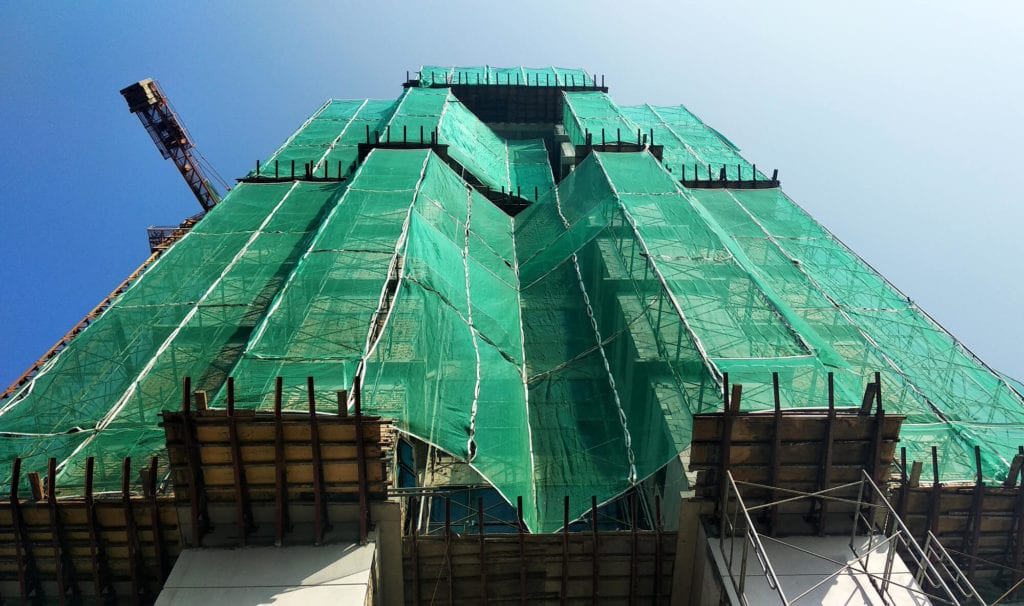
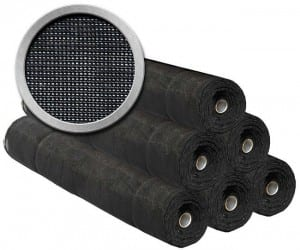
Heavy-duty debris netting is used to keep small and chunky debris from falling on workers, pedestrians, equipment, vehicles, or properties during construction.

Whether you’re constructing a high rise, demolishing a house, or working on a marine rig, falling objects of any size can cause serious damage to people on or near your site.

Even if there are no people in harm’s way, not having the right protection in place can still cause damage to tools and the nearby area which can lead to serious delays, damages, and expenses. Damage to buildings and tools can be easily avoided with netting, which is typically one of the most cost-effective and feasible methods to keep people and tools safe during construction.

There are plenty of fall protection options out there. Projects vary, so it can be helpful to consult with a safety netting expert before beginning a project. However, high-density debris netting like the Eagle Industries heavy duty debris netting is a particularly effective choice.

Here are a few specific factors to consider when choosing debris netting for construction:

Material type

Many heavy-duty netting systems can be reused if they are well maintained, installed properly, and inspected before each use, so choosing stronger materials can reduce costs in the long-term, even if they are initially more expensive.

UV-resistant, flame retardant, and abrasion-resistant materials can all extend the life of netting, as well as make it more effective for even the heaviest falling debris.

Eagle Industries heavy duty netting, for example, is constructed from heavy-duty, UV-resistant polypropylene, which has a very high strength per foot rating and is also flame and abrasion-resistant.

Containment and protection

The durability of the material is also affected by the netting’s construction type: netting can come in square or diagonal construction.

The best nets can contain small debris as well as protect workers from falls. Two-layer mesh is more effective for this, as net liners provide an additional layer of security and protection.

Installation hardware and edge protection is also an important factor to consider, since even getting the most durable mesh on the market won’t help you if you can’t attach it securely.

All debris containment debris nets should be attached to an approved cable system or used with an effective debris net outrigger system.

Testing Standards and Compliance

Safety is regulated by industry standards and jobsite protection regulations such as OSHA. Construction debris netting must meet or exceed these standards to offer an acceptable level of protection for workers and equipment.

The Best Heavy-Duty Debris Netting

The Pro Group offers a wide range of safety equipment and supplies, including a variety of jobsite safety netting.

For debris netting for construction, we carry a full line of Eagle Industries heavy-duty debris nets. Eagle Heavy Debris Containment Nets are made from high tenacity 2.5” knotless polypropylene and go through rigorous testing to ensure they meet construction industry standards.

Eagle Industries debris nets also include debris net liners for greater containment, available in 3/8″ polyester netting or 1/16” debris netting.

Eagle Industries nets offer a range of benefits, including:

  • Easy and secure installation
  • Fire/flame retardant
  • Long life expectancy due to abrasion resistant, heavy-duty 2-layer mesh
  • Tested and approved in compliance with relevant safety standards such as OSHA and ANSI A10.37
  • Leading edge protection and reinforced webbing and grommet edges for easier, safer, and more secure installation

Netting allows workers to safely and efficiently do their jobs

Many different types of fall protection can be used to give your workers the best protection possible.

The Eagle Industries Heavy Duty Debris Net can be the ideal choice to keep pedestrians and nearby properties safe for many construction sites. However, all sites are unique, and The Pro Group carries a wide range of products that can help you provide the greatest level of security for your site.

We have extensive experience with construction debris safety netting solutions and are happy to evaluate your project to let you know what type of protection will offer the best safety plan.

For more information about Eagle Industries or one of the other construction safety brands we carry, get in touch with one of our experts here.
5 Reasons Construction Safety Helmets are the New Hard Hats

Head protection gear has come a long way since the classic hard hat.

Traditional hard hats can do a great job of protecting workers from things falling on their heads, but if a worker falls, then the hard hats easily fly off which leaves the head vulnerable.

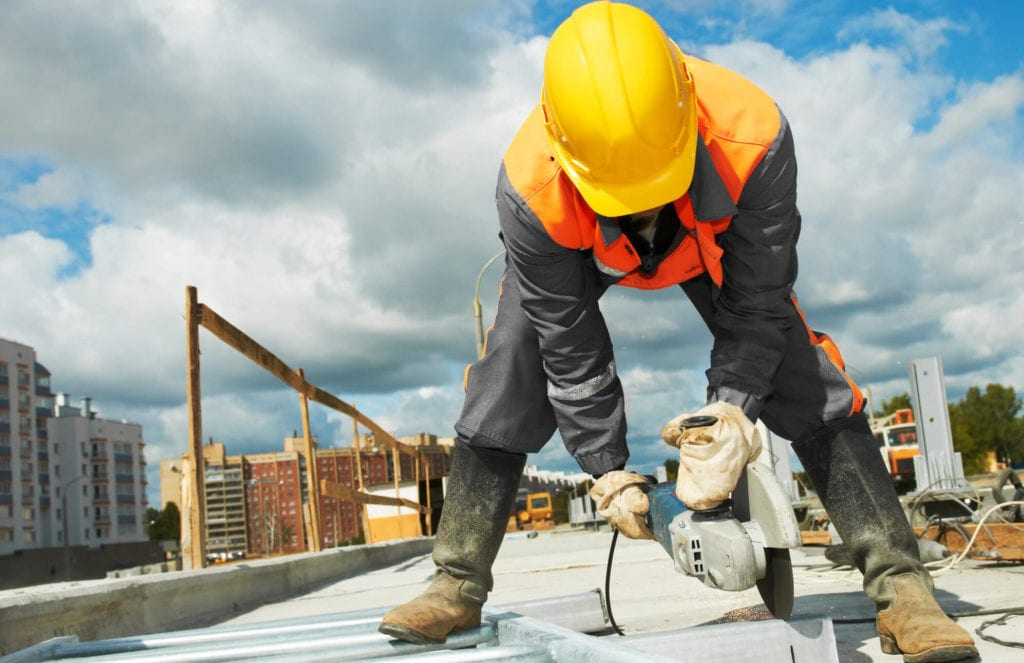
builder working with cutting grinder

In fact, construction workers are more likely to experience traumatic head injuries than any other employees in the U.S., according to NIOSH. A quarter of all construction fatalities are from head injuries, and more than half of these injuries are caused by falls.

Better safety helmets – that stay on during a fall – might have prevented many of these deaths.

Within the past decade, helmets inspired by those used in high-risk, high-impact sports have revolutionized the construction-site head-protection game. Today’s construction safety helmets are versatile, comfortable, and most importantly safer than the older alternatives.

Here are five reasons why safety helmets for construction are rapidly replacing hard hats across the country:

1. Versatility

Safety helmets are made to fit a variety of common job applications. They protect workers on almost any type of project, from construction to manufacturing, forestry, and oil/gas/wind utilities.

For example, Pro Tool & Supply carries the new 3M™ SecureFit™ Safety Helmet X5000, which covers all trades and can easily be customized with accessories to meet specific job requirements.

2. Cost

Safety helmet cost savings might sound counter-intuitive as construction safety helmets do typically cost more up-front than the traditional hard hat design.

However, safety helmets also often last longer than hard-hats. Their shelf-life can be up to twice as long.

Improving safety also has financial benefits that are hard to estimate. Injuries are expensive, both for workers and for the project. If an incident occurs, the insurance, worker’s comp, and timeline delays are much more expensive than the cost of upgrading safety gear.

3. Safety

Safety gear has a real impact on site safety.

While construction helmets are a relatively new invention, in similar cases, safety gear improvements have been shown to directly reduce injuries. For instance, enforcing glove safety can reduce hand injuries by up to 90%.

Even if falls are rare on your site, preventing even one serious or life-altering injury makes the upgrade to safer helmets worth it. On top of staying put if a worker falls, helmets can also provide better protection from side impacts.

Of course, all protective headgear used on-site has to meet ANSI compliance standards, including ANSI Z89.1, but not all safety helmets meet these guidelines.

However, models such as 3M Safety Helmets are held to rigorous safety standards and extensively impact- and penetration-tested.

4. Comfort

Modern construction safety helmets are inspired by models created for use in sports from skateboarding to rock climbing. They’re designed to stay put, stand up to wear-and-tear, and be comfortable enough not to get in the way of athletic activity.

Today’s helmets offer numerous customizable features for better ventilation, suspension, and pressure diffusion. Workers should be able to find an option that fits their heads and is comfortable to wear all day long.

5. Attachable Accessories

Because helmets are specifically designed for construction, they can be outfitted with additional features such as hearing protection, face shields, visors, reflective kits, and elastic band clips.

The 3M™ SecureFit™ Safety Helmet X5000 also includes additional features such as UV wear indicators and integrated clips for goggles and headlamps, and is compatible with many of the other personal protection equipment carried by Pro Tool & Supply.

Safety Helmets Save Lives

Hard hats just don’t cut it anymore when it comes to protecting construction workers.

The latest safety helmets for construction, like the 3M™ SecureFit™ Safety Helmet X5000, provide unmatched comfort, ventilation, and impact-protection to keep workers safe.

Pro Tool carries a full line of personal protection equipment to meet the needs of most sites.

If you’d like more information about what safety gear would work best for your project, our team will be happy to walk you through the latest and greatest options for on-site head and body protection. Contact our expert technicians for product information or request a quote here.

Dewatering Pumps: 5 Things You Should Consider

If you need to lower the water table below an excavation, keep water out of foundations, pits, or tunnels, or just need to dry solid materials at your site, you’ll need a dewatering solution.

There are a lot of choices out there, from submersible dewatering pumps to towable diaphragm pumps, electric trash pumps and more.

The type you’ll need varies depending on how much liquid you need to move, and how fast, as well as factors like what the liquid is and how far you’ll need to lift it. Sludge and debris require different pumps than you’d need to move lighter materials like rainwater and wood debris.

So, how do you know you’re choosing the right one for your job?

Here are five things you need to consider when choosing a dewatering pump:

1. What’s in the Water You Need to Move?

Water almost never comes alone – almost always, your dewatering system will also need to move gravel, sand, mud, or even trash. The amount of sediment and other debris in the water you need to move determines the kind of pump you’ll need.

If you need to move heavy materials like gravel and mud…

You’ll need a pump that can handle solids. Trash pumps are usually centrifugal pumps that have a large

discharge opening to avoid clogs. Heavier solids may require a shredder.

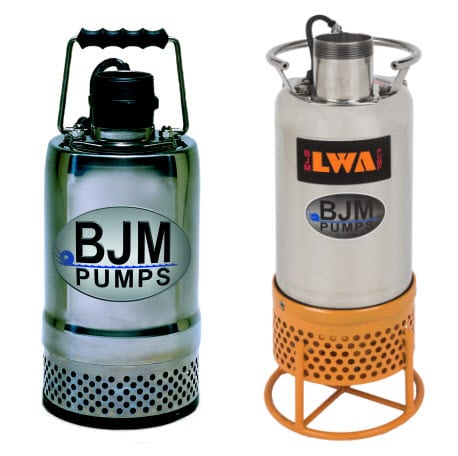
BJM Pumps

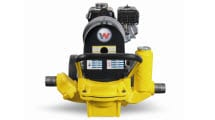
Diaphragm trash pumps like the Wacker Neuson Diaphragm Trash Pump PDT2 come in gas and diesel-powered models and are often ideal for these situations.

If your site only has light materials like sand, rainwater, and wood…

A simpler electric dewatering pump can do the job of moving clear water and water with light sediment and natural debris. For example, BJM R Series submersible dewatering pumps work well to lift light debris.

2. How Much Water Do You Need to Move, and How Fast?

The size of your pump is also an important consideration for keeping your site and workers safe.

Undersized pumps run the risk of flooding your job site when they can’t keep up with demands.

As a general rule, the bigger the piping and the larger the motor, the more water you’ll be able to move, and the faster it will work, but more isn’t always better – if you oversize your pump, you can pump the site dry and burn out the motor.

Pumps running significantly outside their ideal flow levels also can cavitate, which wears seals and bearings.

Calculating the ideal flow rate, in gallons per minute, will help you find the right pump – for help with this, contact our expert technicians.

How far does the water need to go?

You’ll also need to keep in mind where the water is going. The vertical distance you have to move liquid affects which type of hosing or piping you’ll need.

If you’re pumping into a tank or up high, you’ll need to consider friction loss, which reduces the effectiveness of a pump. As the static head (or distance you need to lift liquid upwards) increases, so does the amount of pressure that you’ll need to keep up with the inflow.

3. Choose the Right Type of Pump: Centrifugal vs. Displacement Pumps

Most dewatering pumps use centrifugal force or displacement to move water.

Centrifugal Pumps

Centrifugal water pumps use rotation to move water into the pump and pressurize the discharge flow. On most construction sites, centrifugal water pumps are a tool of choice.

Standard, trash, and submersible models are all typically centrifugal pumps.

These pumps are highly versatile and work well to move all thin liquids quickly. They also need to be filled with the liquid before use to work well. Low flow can damage the impeller, as can solids.

Positive Displacement/Rotary Pumps

Positive displacement water pumps typically use a diaphragm which contracts to pull liquids into the pump. They typically are used for very dense, viscous liquids with a lot of solids.

Though they can produce high pressure and aren’t as vulnerable to low flow, they tend to be more expensive and slower than centrifugal pumps.

4. Gas vs. Electric Pumps

Dewatering typically occurs early on during a project; there likely won’t be a built-in power supply on site.

Dewatering pumps come in both gas/diesel fuel powered and electric options.

If you’ll need to dewater your site for an extended period of time, an electric pump you can hook up to a permanent power source is probably your best bet. Electric engines also need less maintenance and can be less expensive to run depending on current fuel prices.

If the power source will be temporary, a diesel-driven pump is probably a better choice.

5. Submersible vs. Self-Priming Pumps

The best pump choice for construction is usually a submersible pump. Submersible “incapsulated” pumps can be completely submerged in liquid and work to effectively remove both liquids and solids suspended in the liquid from your site.

“Self-priming” pumps are smaller and can be more portable and easier to use, but they also tend to leave dewatered solids in the pit and stall frequently. Especially as the distance, your suction hose has to travel increases, self-priming pumps quickly become more expensive and time-consuming than they’re worth.

How to Find the Right Submersible Water Pump

There are several important factors to consider when choosing a water pump:

  • Type of liquid and how fast you need to move it
  • Your power source – gas or diesel? How big is your generator?
  • How far your liquid needs to be moved
  • What type of pump will best suit your site’s needs

A dewatering expert can be helpful in assessing the proper approach to match job site conditions. Pro Tool & Supply has all these dewatering situations covered – we carry a variety of pumps and accessories from top brands like BJM, Tsurumi, and Wacker Neuson.

Want more information, or need help figuring out which dewatering tool is best for you? Our team is happy to walk you through the selection process. Contact our expert technicians for product information or request a quote here.

How to Get Maximum Impact from Your Trench Roller

Trench rollers are particularly well suited for compacting cohesive soils under excavations, roads, and parking lots.

Compaction works by removing air pockets from the soil, and when you need to compact soil in tight spaces, trench rollers are the best tool for the job.

Trench rollers essentially punch the dirt and vibrate it, making it denser by shaking the particles into closer alignment. This process helps eliminate settling, cracking, and heaving when building driveways, sidewalks, floors, foundations, and walls.

Once soil is properly compressed, it holds a lot more weight. This is critical to prevent surprise “voids” in the soil which cause defects after a project concludes.

Here’s a quick guide to make sure you’re maximizing your investment, choosing the safest and most effective option, and getting the best trench roller for your project.

Things to Consider When Looking for a Vibratory Compactor

Trench Width

The key advantage of a trench compactor is its maneuverability in tight spots.

Depending on your project, you can choose between several widths to minimize the number of passes you need, while choosing a model small enough to maneuver easily, even through the narrow trenches you need to compact. Some models also have built-in sensors to let you know when you’ve achieved the density required for your project.

Safety

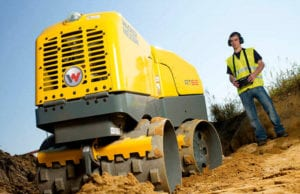
Trenches made in loose soil are often prone to collapse. In the past, when compactors had to be pushed manually through a site, this posed significant additional risk. Today, many options for trench rollers are remote-controlled from a distance effectively increasing site safety.

Most also offer built-in safety features such as an automatic shutoff when the trench roller senses that the operator is too close, or when another object collides with the roller.

For example, The Pro Group offers a built-in safety feature in its trench rollers which includes a prominently placed infrared receiving eye on top. This ensures that the remote-control contact is maintained permanently, even in trench shoring.

Compared to previous models, modern rollers also have enhanced stability over uneven terrain, improving their reliability.

Soil Type

Most rollers are either “sheepsfoot” rollers or smooth rollers. Deciding which is better for you depends on your project and the soil type.

If you are working in clay-heavy soil, or another cohesive substate, a sheepsfoot trench roller effectively mixes these layers together to achieve better compaction.

On the other hand, smooth rollers run over the layers without mixing them. They work best on granular materials like sand or gravel.

Pro Tool offers a wide range of compaction rollers suited to every task. You can check out our fleet of cutting-edge walk-behind rollers, trench rollers, and other vibratory rollers in various sizes and weights here.

Whether you are looking to rent or buy, our experts can walk you through the selection process by helping you find the right compaction equipment fit for your job.

Request a quote here or call us today at 1-844-671-2953 to speak with a representative.

Save the Day with Construction Safety Netting

Falls account for nearly a third of all construction worker deaths.

Many heavy machinery and construction companies still don’t have adequate drop prevention programs for tools and equipment.

This may be one reason the number of falls hasn’t decreased in recent years. More than 42,000 people are hit by falling objects every year. That equals out to a falling-object injury every ten minutes, according to OSHA.

In other words, fall protection is a major issue, and should be one of the first priorities when it comes to protecting your site and workers.

Construction Debris Netting Saves Lives

Every time the elevation of a job increases, the risk increases, and not just for your workers, but to anyone on or near your jobsite. Even the smallest items can be fatal if they fall from high enough.

It’s the old “dropping-a-penny-off-of-the-empire-state-building” idea. A penny might not be big enough to do damage, but a two-pound tape measure falling from a few stories up can hit the ground with more than a thousand pounds of force per square inch.

That’s enough to do serious damage to whatever’s below, whether it’s valuable equipment or a person.

Safety Netting Protects Staff, Equipment, and Your Project

Workers themselves can be at risk for falls, leading to injuries or even death.

Falls also pose serious financial and legal risks. Construction companies can be held responsible for any injuries from falling debris or personnel injuries, regardless of how they happen – so even if you have safety mechanisms in place, if they fail, you might be liable.

Even if falls only affect your equipment, damages can still bring projects to a costly halt.

Debris and Personnel Safety Nets from Pro Tool Catch Fallen Objects of Any Weight and Size

Of course, the best protection from falling objects is to make sure they don’t fall in the first place. Training and safety gear also play an important role in keeping people safe.

However, it’s impossible to plan for every eventuality. Safety netting systems can be designed to catch personnel, debris of any size, or both, adding a crucial layer of protection for your workers, equipment, and the project itself.
At Pro Tool, we offer vertical and horizontal netting configurations in both standard off-the-shelf and customized configurations to meet your specific jobsite requirements.

Debris Netting:

We offer both honeycomb (1,000lb. rating) and heavy-duty (2,000, 5,000, and 10,000lb. rating) debris nets, with enforced border edges ideal for construction and demolition debris containment. Our debris nets are flame resistant and durable enough to stand up to the wear and tear of any site.

Personnel Safety Netting:

Our personnel safety nets help keep workers safe. Our base nets are 3.5” diamond nets and have a debris net liner of 1/16” mesh. Personnel safety nets are rated to 17,500lb. drop test load capacity, and meet all OSHA safety and fall protection netting system standards.

Save the Day with Construction Safety Netting

Dropped objects and falls in the construction industry are a major issue, but drop prevention programs using the right precautionary netting can prevent damage and save lives.

Pro Tool & Supply has custom made safety and debris netting specifically designed and fabricated for your construction job needs.

To get jobsite protection for your construction site, Request a Quote, or call us at 1-888-776-0007 to speak with a Pro Tool & Supply representative for more information on our stock of construction grade netting equipment.

Things To Look For in a Construction Equipment Rental Company

Renting construction equipment gives you the best tools available to get your job done – without the cost of buying, maintaining, and storing them.

There are a lot of rental companies out there and finding the right one can mean the difference between smooth sailing and a stalled project.

With that in mind, here’s our quick guide to what to look for in a construction rental company, so you:

  • Get the most value for your money
  • End up with the right tools
  • Get your project finished on schedule

On-Site Delivery

Even the best tools are useless if they aren’t there right when you need them. Construction timelines are often tight, making orchestrating the timing of equipment arrival and pickups a complex puzzle.

Before agreeing to a rental contract, make sure you ask:

  1. Whether availability is guaranteed, and
  2. How pickups are scheduled.

At The Pro Group, we take care of on-site delivery and pickup for you – just tell us when, and we’ll be there ready with the equipment when you need it. We can often deliver equipment within one day, stock allowing.

Tool and Supply Bundles

Avoid the hassle of multiple vendors to reserve all your equipment, tools, and supplies by choosing a company that can serve as a one-stop shop for everything you’ll need.

Pro Tool and Supply offers a wide range of construction tools and supplies. We also bundle tools and supplies with our equipment rentals for maximum convenience and deliver them free of charge.

Product Expertise and On-Site Demos

Renting equipment lets you stay on the cutting edge of technology, without making a huge investment every time a new model comes out.

The Pro Group aims to stay at the forefront of the best equipment. Often, our models are the latest on the market – and this means that a lot of our customers aren’t yet familiar with how to operate them.

Luckily, we have an extensively trained staff at The Pro Group on hand to provide high-quality safety and product information. You can check out some of our certifications and associations here.

Any one of our products can be sent out with a sales representative to be demoed before purchase or rent. We offer demos of:

  • Husqvarna Surface Preparation Machines
  • Fomo Products– Spray foam for windows, doors, voids and cavities
  • Powder Actuated Tools– for fastening into concrete
  • Diamond Chain Saws and Ring Saws
  • Safety Equipment– Fall Protection Systems
  • Core Rigs – including product comparisons such as Husqvarna vs. Diamond Products
  • … and more.

Repair and Service Agreements

Equipment malfunction can stall any project; make sure your rental company can provide troubleshooting and repair quickly enough to keep you on track.

Ideally, look for companies with the capacity to do repairs on-site to cut down turnaround times.

At The Pro Group, our manufacturer-certified equipment repair techs on staff can do almost all repair and maintenance. We also have factory-trained mechanics available for on-site troubleshooting.

Convenient Renewals

If you rent equipment, you’ll want to make sure you have guaranteed access to it until the end of your project.

Convenient monthly renewal calls help ensure you have equipment available for projects of any length, renewing monthly until you’re finished.


Construction Equipment Rental from Pro Equipment Rentals

Pro Equipment Rental is your rental source for a variety of construction tools and equipment in New England and beyond.

Whatever your project demands, we offer the tools, supplies, equipment and expertise you need to get it done.

We have a broad inventory of construction equipment, and a deep commitment to customer service.

View our catalogs or contact us to explore our inventory or learn more.

How to Pick the Right Concrete Cutting Tool for the Job

Every concrete cutting tool is uniquely suited for specific purposes; having the right tool makes a huge difference in what you can cut and how quickly.

Factors like what you’re cutting, how much, and where it’s located all determine the type of cutter that will best suit your needs. Tool life and effectiveness are also affected by variations in the solid material you need to cut such as:

  • Sand type
  • Aggregate size
  • Rock type
  • Presence of rebar or reinforced steel

Finding the right concrete cutting tool is key to making sure your project stays on track and under budget.  

Here’s a quick guide to finding the right tool for your needs:


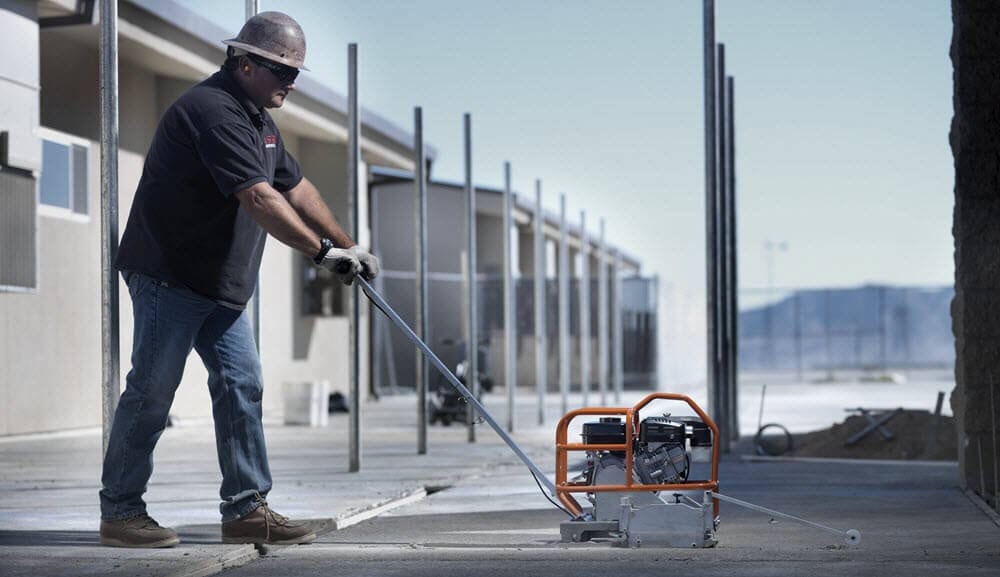
Walk-Behind Saws

Make Powerful Horizontal Cuts

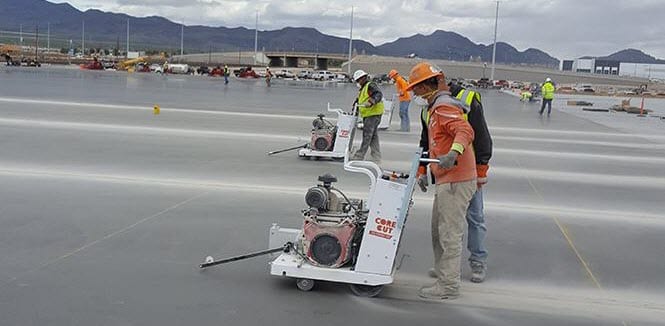
walk behind saw

Walk-behind saws are operated while standing, which puts more force into their cuts without sacrificing maneuverability.

Their heavier weight and high horse power keep blades on track, creating precise, reliable cuts without impacting the concrete’s structural integrity.

Walk-behind saws excel in industrial, commercial, and residential projects from runway repair through patio installation – anything that requires extensive horizontal cuts.


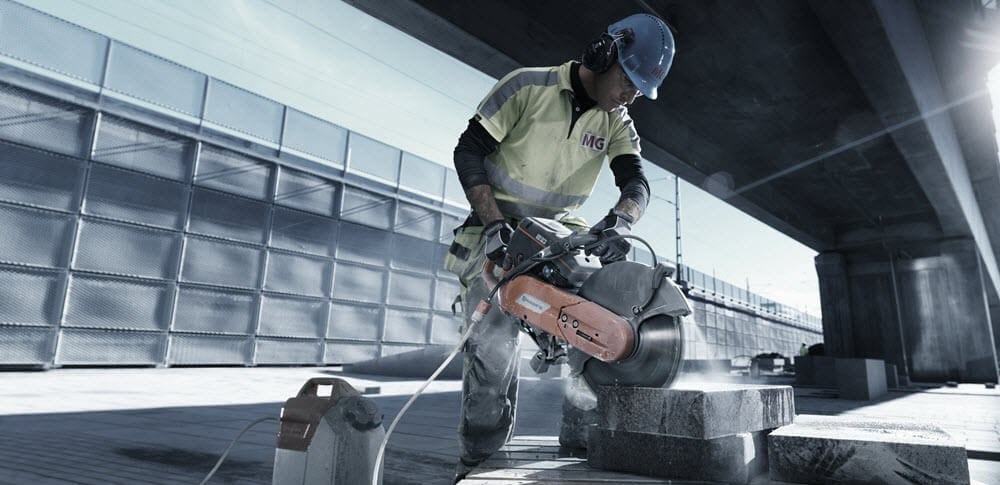
Cut-Off Saws

Slice Through Stone, Concrete, and Asphalt

cut off saw

Cut-off saws are hand-held saws ideal for landscaping and construction projects. They can easily slice through stone, concrete, asphalt, or other solid materials and are easy-to-control.

They are smaller than some other cutters – they can only cut up to 5” deep – but they can be serviced easily and often come with a built-in wet function or air filter to minimize dust.

Depending on what you’ll be cutting, they can be fitted with diamond or abrasive blades for durability and affordability.


Early Entry Saws

Cut Green Zone Concrete

early entry saw

Soft-cut saws cut concrete before it starts to naturally form cracks while it’s still in the “green zone” 1-2 hours before it’s finished.

Early entry blades combine up-cutting with downward pressure to maintain pressure, facilitating shallow cuts without cracking pavement. Blades can be customized to different widths to accommodate varying joint widths and control cracking.

This is ideal for making decorative cuts in finished installation as well as for most commercial and residential paving projects.


Power Cutters

Make Precise Asphalt and Pavement Cuts

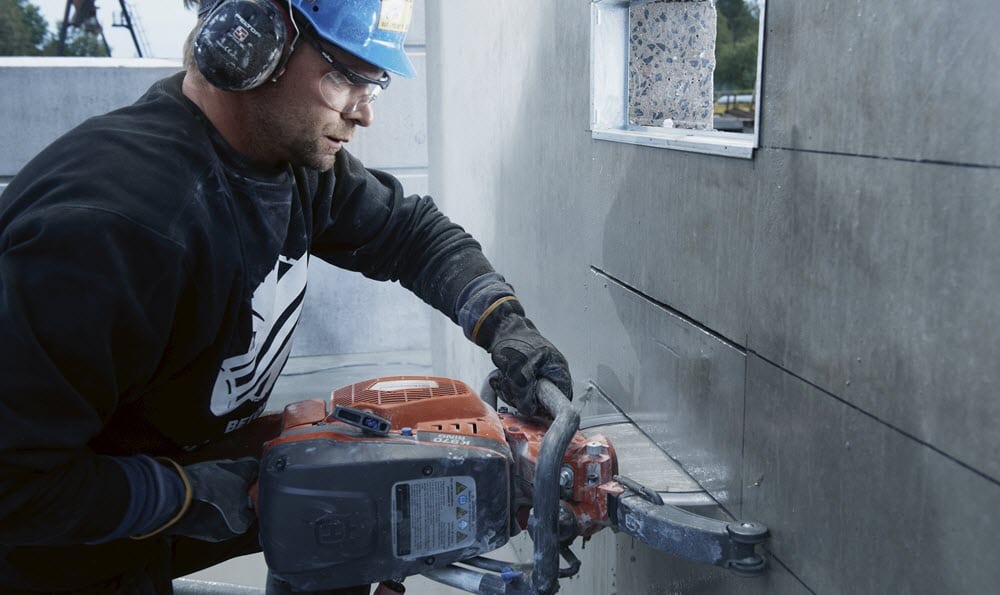
husqvarna power cutter

Power cutters provide more leverage than other saws and have a good weight to power ratio, so they take less brute strength to operate than other hand-held concrete cutting tools.

They can also cut at multiple angles up to 16” deep, making them an ideal choice for cutting deep precise shapes without overcutting corners.

They can also easily slice through asphalt or concrete, making them a great choice for indoor and outdoor projects.


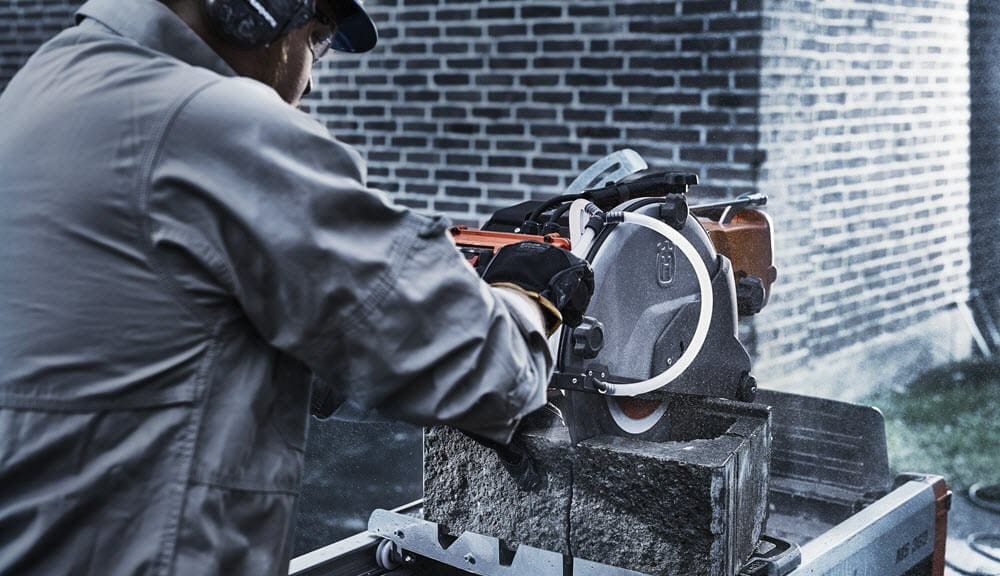
Block Saws

Excel at Cutting Brick and Cinder Blocks

block saw

Block saws are stationary electric or gas-powered saws designed to cut and shape things like:

  • Cinderblocks
  • Bricks
  • Pavers

Block saws are one of the most precise options for cutting smaller pieces of brick or paving materials. This makes them an ideal choice for residential and commercial projects.


Get the Right Concrete Cutting Tools for Your Next Job

The Pro Group carries many of the most popular and effective concrete cutting tools for any size job.

Whether you’re looking to buy or rent, our experts can walk you through the selection process. Contact us for help with selecting the perfect equipment for your job.

How to Work Safely Around Construction Propane Heaters

Though they are common at job sites, you can’t take propane heaters for granted. Letting down your guard increases the risk of gas leaks, fires, burns, and worst of all – an explosion. Review these safety tips to protect you and your team.

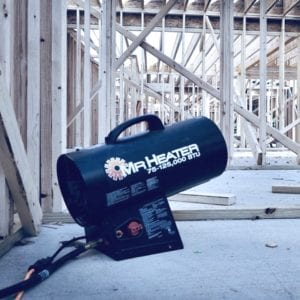
construction propane heater

Uses for Direct-Fired Heaters

Not only does this type of propane heater keep a work zone comfortable, it also keeps the surrounding area warm enough for tools and equipment, which might not operate well in colder temperatures. A construction propane heater can also help to cure drywall and concrete, making it suitable in building and remodeling. Other places where construction propane heaters work well are warehouses, agricultural buildings, and workshops.

General Safety Tips for Using Construction Propane Heaters

To use a propane heater safely, you must be aware of these dangers:

  • Burns
  • Explosions
  • Fire
  • Gas build-up
  • Leaks
forced air heater

Avoiding Burns

  • Always be conscious of the propane heater’s location. To prevent burns when working around one, long pants and long sleeves are recommended. When using a propane torch, you also need:
  • When working outside with a propane torch, work behind a wind-break. Wind can cause the flame to jump about, potentially burning someone or something.
  • After turning off a propane heater, allow it to cool down before touching it.

Avoiding Fire and Explosions

  • Understand where you can and can’t use the propane heater. Some heaters can only be used inside, while other types must only be used outdoors.
  • Only use a direct-fired propane heater when it’s on a level surface.
  • Don’t use a propane heater close to a propane tank or other flammable/explosive material.
  • Keep a general clearance area around the heater, and don’t allow others to place items near it.
  • Don’t use the heater in an enclosed area.
  • This may seem obvious, but don’t allow anyone to smoke around a propane heater.
  • After turning off the propane heater:
    • Allow it to cool down before moving it into storage.
    • Make sure the gas valve on the propane tank is completely closed.
    • Store the gas tank separately from the propane heater.

Avoiding Gas Build-Up

Ventilation is imperative when using a propane heater to avoid buildup of carbon monoxide or leaked propane gas. Consult a Pro Tool & Supply expert or the heater’s manual to tell you how much ventilation is required for the size of your propane heater.

Avoiding Gas Leaks

A propane gas leak can fill up a work area and push out the oxygen, overwhelming workers. It can also be an explosion hazard. If you smell gas or propane, immediately turn off the heater and investigate.
Here are a few ways to detect a leak before it becomes a big problem.

  • Only people who can detect smells and know the smell of propane should be around the heater. Propane manufacturers add a “rotten egg” odor to the gas to alert you in case of a leak.
  • A careless connection or worn-out part can cause a leak. Always check the connections to the propane heater, the hose, and the gas tank. You can also discover leaks by spraying a soap and water solution on the connected areas and looking for bubbles.
  • Escaping gas makes a hissing sound that can be heard if you listen carefully.

Not Sure which Construction Propane Heater is Best for You?

Our experts can help you decide from our selection of construction propane heaters. We also have propane heater rentals that you can try out by renting for a single day or more. Already know what you want? Request a quote or call us at 1-888-776-0007. Our representatives are ready to help you heat all your winter jobs.

A Guide to Choosing Compaction Equipment by Material Type

If you understand the importance of a properly compacted surface in supporting a building or a roadway, you also know how crucial it is to select the correct compactor for the job. Whether you’re working with granular or cohesive soil (or a mixture of both), you have plenty of choices to consider.

Match the Material to the Compactor

The principal factor in choosing compaction equipment is material type – granular versus cohesive.

Granular Soils (Gravel and Sand)

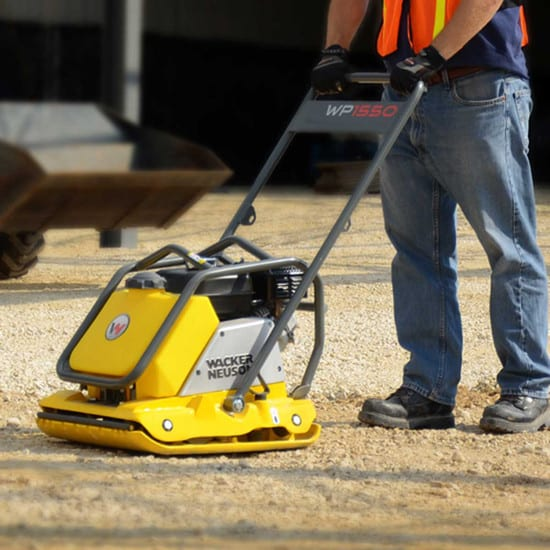
Granular soil is best compacted with a vibratory action, such as from a plate. As long as the area being compressed isn’t deeper than 6 inches, a plate vibrator will do the job well for a small- or medium-sized area. For deeper material or a large surface area, vibratory rollers are more efficient and work equally well.

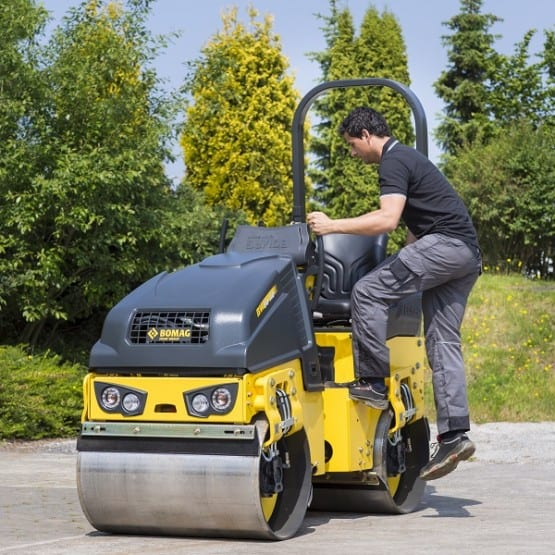
As a granular material, asphalt calls for compaction by vibration and pressure work for the best result. As mentioned above, use a vibratory plate unless you have a large area like a driveway or roadway. In that case, use a double-drum vibratory roller.

Cohesive Soils (Clay and Silt)

In general, the “stickier” the soil, the more difficult it is to compact. This is because the particles stick together, making it a challenge to rearrange them and force the air out.

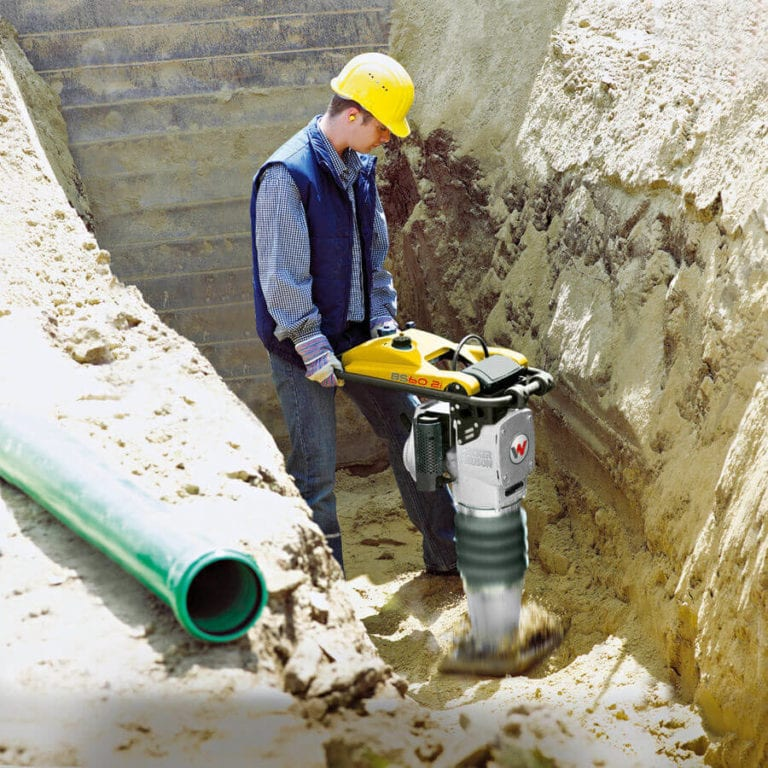
To compress clay and other cohesive material, you’ll need equipment with more “punch,” like a rammer. However, rammers are best suited for smaller work areas, such as in trenches and around foundations. If you have a large area to compress, a vibratory roller also does the job as long as you use a pad-foot type roller.

Consider Other Compaction Factors

Although soil type is the most important factor in choosing compaction equipment, other aspects affect compaction quality:

  • Moisture content
  • Size of soil particles
  • Over- and under-compaction

Moisture Content

While not significant for granular material, moisture is an extremely critical issue in cohesive soil.

Saturated Cohesive Soil

The amount of moisture in the soil affects compaction because it acts as a lubricant to help the soil particles slide more closely together. But if the soil is too moist, it can cause a problem. It might appear to be compacted, but water-filled voids will still exist. When voids are completely filled with water, there’s no force to hold the particles together, and compaction isn’t effective.

Dry Cohesive Soil

Overly dry soil doesn’t hold its shape well. This means that compaction will be inadequate, the material tending to crack.

Size of Soil Particles

When working with granular soil, the various sizes of the particles react differently to the various frequencies (vibrations) used.

  • Smaller particles—Need higher frequency, like those applied by vibratory plates.
  • Larger particles—Need lower frequency from larger equipment like a vibratory roller.

Over-compaction and Under-compaction

Professionals who regularly work with compaction equipment and different soil types usually don’t have issues with over- or under-compaction. However, a DIYer needs to be aware of these problems, as they can cause just as many difficulties as not compacting at all!

Over-Compaction

Over-compaction actually breaks the soil down into smaller particles, changing its composition. Overly compact material is more brittle, which can lead to cracks. To avoid this, review your equipment’s compaction rating (how deeply it compacts soil) and compare it to the soil depth you’re actually working with.

Under-Compaction

Under-compaction can occur if the operator chooses equipment that:

  • Isn’t powerful enough for the soil type.
  • Isn’t appropriate for the soil depth.
  • Isn’t efficient for the size of the job (i.e., missed spots or too few passes).

Questions About Compaction Equipment?

If you’re not sure which compaction equipment is best for your job, call Pro Group experts at 1-888-776-0007, and we can walk you through the selection process. You can also request a quote on any of our plate compactors, rammers, or rollers – for rent or for purchase.

Do’s and Don’ts of Using Diamond Blades

Diamond Cutting Blade

You want to make sure you do everything possible to extend the life of your diamond cutting blade. Diamond blades vary in size, style, and composition; however, the general best practices mentioned in this article are appropriate for all types of diamond blades.

DO: Use a hard bond to cut softer materials and a soft bond to cut harder materials

It sounds strange, but it has to do with the process of the diamonds being ground down while the blade spins through the material, sloughing off diamonds to reveal another diamond layer.

Hard bond → Soft material
A harder bond holds diamonds in place longer – meaning it’s more effective when grinding through softer material.

Soft bond → Hard material
When working with hard material, what’s important is to constantly wear away the diamonds to get to the next layer of diamonds beneath them. A soft bond allows this to occur.

DO: Use narrow gullets for hard materials and wide gullets for soft materials

On a segmented diamond cutting blade, the spaces between the segments help to remove the slurry of ground-down diamonds and matrix material. It’s important for the slurry to be removed efficiently, or the friction of the blade against the material can cause overheating.

Soft material → Wide gullets
When the softer material is being cut, the amount of slurry produced requires a wider gullet.

Hard material → Narrow gullets
Harder materials don’t produce as much slurry, so you can get away with using a blade with a narrower gullet.

DO: Consult a cutting tool expert before cutting material of unknown hardness or abrasiveness

Diamond blades are designed and manufactured to cut nearly any type of material, such as:

Asphalt over concreteGraniteRebar
BlockGreen ConcreteReinforced concrete
BrickLimestoneStone
CeramicsMarbleTile
Cured ConcretePavers (and other masonry)Travertine
GlassPorcelain

If you have a material that’s not mentioned here, it’s best to contact a cutting tool specialist to determine the best diamond cutting blade to use.

DO: Check the aggregate type before cutting concrete

“Aggregate” refers to the particles that are combined with the concrete to give it strength. Some aggregate types are harder than others. The most common materials used are crushed stone, gravel, recycled concrete, sand, slag, and geosynthetics (man-made). Once you know the aggregate composition, you can pick the best concrete cutting blade for the job.

DON’T: Allow the blade to overheat

An overheated diamond blade ages prematurely and can crack. If you are running a dry blade, make sure you pause occasionally to allow it to cool down. Otherwise, for a wet job, make sure you have enough coolant (such as clean, cold water). Even when running a wet blade, you may need to allow it to run freely every 10 seconds or so to allow air to cool it down.

Although you can use a dry cutting blade for a wet job, you cannot do the opposite. A wet diamond blade used for a dry job will overheat and possibly break apart, becoming a dangerous flying object.

DON’T: Use a blade designed for a low-horsepower saw on a high-horsepower saw

In this scenario, the diamond blade will wear out much more quickly than it would normally. On the other hand, it’s a bad idea to use a high-horsepower blade on a low-horsepower saw because the blade may damage the material or itself.

DON’T: Allow untrained saw operators to use diamond blades

An experienced saw operator knows how to use a diamond cutting blade so that it’s most effective. Besides properly matching the blade to the job (and the saw), a well-trained operator knows how and when to “dress the blade” (exposing new diamonds by cutting something abrasive).
It’s also important for the saw operator to observe the recommended operating speeds for both the saw and blade. The blade manufacturer will have a recommended speed for its diamond cutting blades as well as a maximum safe speed.

DON’T: Neglect saw maintenance

Besides the saw’s operation, its maintenance is also a factor in prolonging the life of a diamond blade. Although all parts are important, it’s particularly crucial to check the saw’s drive belts, bearings, spindle, water jet flow, and water pump. If you’re unsure which parts your saw is need of, our parts specialists can help.

Not sure which saw blades are right for your upcoming job?

Request a quote or call us at 1-888-776-0007 to speak with a Pro Tool & Supply representative. We also carry concrete and masonry saw and equipment for purchase or rent. After getting our expert assistance, we can supply you with a complete product solution of saw and blades for cutting concrete, masonry, or other difficult-to-cut products.

Search For Products

Product has been added to your cart